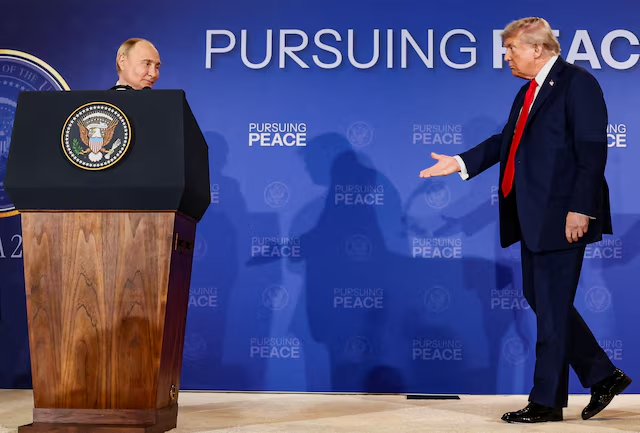
President Donald Trump late Friday, Oct. 16, waived nearly all of the new sanctions and tariffs in a Russia sanctions law he signed on Sept. 18. The measures were due to take effect Sunday, Oct. 18.
In an executive order, Trump waived duties of 500% on Russian goods and 100% on goods from the five largest importers of Russian crude oil and natural gas. China and India are among the biggest buyers. “I have submitted to the Congress a certification that the issuance of such a waiver at this time is in the national interests of the United States,” the order says.
The law directed the president, within 30 days, to raise duties on Russian goods to up to 500% and on goods from the five largest importers to up to 100%. It also required sanctions on senior Russian officials, including President Vladimir Putin, and on state-linked banks and companies. It passed the Senate 86-11 and the House 262-159.
The law is named for Sen. Lindsey Graham, R-S.C., who died on the evening of Saturday, July 11, at 71. His office said a preliminary finding by the District of Columbia’s medical examiner put the cause as an aortic dissection due to arteriosclerotic cardiovascular disease.
Graham and Sen. Richard Blumenthal, D-Conn., first introduced Russia sanctions legislation in April 2025. Graham secured White House support for the bill the day before he died, according to a release from Sen. Katie Britt, R-Ala. Five days after his death, 62 senators introduced an updated version under his name. The final text describes the measures “as championed by the late Senator Lindsey O. Graham.”
What the order does
The order formally sets the tariff rates, then waives them along with most of the law’s sanctions provisions.
Trump used Section 115, which lets the president waive any sanction, restriction or duty in the law after first giving Congress a written national-interest certification. The waivers stay in place until the president or the secretary of state determines “that further action is appropriate,” the order says. Sanctions imposed under earlier executive orders remain in force.
The order does not name the five largest importers. Section 115 requires a separate report to Congress explaining the basis for the certification, in unclassified form, though it may include a classified annex. The order says that report has been submitted. No copy has been made public.
A week after the diesel deal
On Oct. 9, Trump announced after a call with Putin that Russia would supply more than 300,000 tons of diesel to world markets, followed by larger amounts. The same day, the Treasury Department’s Office of Foreign Assets Control issued General License 135. It authorizes the sale, delivery, offloading and importation of Russian-origin diesel, including into the United States.
On Oct. 13, six Republican and six Democratic senators, including Sen. Thom Tillis, R-N.C., and Blumenthal, wrote to Trump calling the diesel deal “a betrayal of the people of Ukraine.” They urged him to “rescind General License No. 135, and execute the authorities” in the Graham law. Two days later, 22 House members from both parties asked that any waivers be “narrow, time-limited, and tied to measurable reductions in support for Russia’s war,” according to Newsweek.
Asked about the law, a White House official told the magazine, “The President signed the act and the administration will comply with the act’s requirements.”
Backlash in both parties
Rep. Don Bacon, R-Neb., said, “The President is prolonging the war, not ending it.”
Blumenthal wrote on social media, “These waivers have nothing to do with our national security, and everything to do with sucking up to Vladimir Putin.”
Sen. Elizabeth Warren of Massachusetts, the top Democrat on the Senate Banking Committee, called the waiver “another abject and predictable failure in leadership.” She said Congress “should reverse Trump’s diesel deal with Putin.”
Kyiv and Moscow respond
Ukrainian President Volodymyr Zelenskyy responded Saturday on X, after a Russian attack on his country’s power grid. “At a time when the Russians have carried out such a massive attack on our energy sector, a decision was unfortunately made in America to completely disregard the Lindsey Graham Act, which was supposed to impose truly effective pressure on Russia to bring this war to an end,” he wrote.
He added, “A U.S. sanctions blackout, easing pressure on the aggressor, financial rewards for Putin -- all of this only encourages him to keep attacking.”
Kirill Dmitriev, Putin’s special envoy for investment and economic cooperation with foreign countries, wrote on Telegram that the law could have completely halted economic cooperation between the two countries. He called the waiver “an important and truly historic moment.”
What Congress can do
On Friday, Rep. Gregory Meeks of New York, the top Democrat on the House Foreign Affairs Committee, introduced bipartisan legislation to block the diesel deal, RFE/RL reported.
Under the law’s text, a Section 115 waiver carries no congressional review period.
Section 117, which covers ending the law’s penalties, works differently. Ending sanctions on Russia requires certifying that Moscow has signed a peace agreement accepted by Ukraine and ended hostilities. Any termination is then frozen for at least 30 days, during which Congress can block it with a joint resolution of disapproval.President Donald Trump late Friday, Oct. 16, waived nearly all of the new sanctions and tariffs in a Russia sanctions law he signed on Sept. 18. The measures were due to take effect Sunday, Oct. 18.
In an executive order, Trump waived duties of 500% on Russian goods and 100% on goods from the five largest importers of Russian crude oil and natural gas. China and India are among the biggest buyers. “I have submitted to the Congress a certification that the issuance of such a waiver at this time is in the national interests of the United States,” the order says.
The law directed the president, within 30 days, to raise duties on Russian goods to up to 500% and on goods from the five largest importers to up to 100%. It also required sanctions on senior Russian officials, including President Vladimir Putin, and on state-linked banks and companies. It passed the Senate 86-11 and the House 262-159.
The law is named for Sen. Lindsey Graham, R-S.C., who died on the evening of Saturday, July 11, at 71. His office said a preliminary finding by the District of Columbia’s medical examiner put the cause as an aortic dissection due to arteriosclerotic cardiovascular disease.
Graham and Sen. Richard Blumenthal, D-Conn., first introduced Russia sanctions legislation in April 2025. Graham secured White House support for the bill the day before he died, according to a release from Sen. Katie Britt, R-Ala. Five days after his death, 62 senators introduced an updated version under his name. The final text describes the measures “as championed by the late Senator Lindsey O. Graham.”
What the order does
The order formally sets the tariff rates, then waives them along with most of the law’s sanctions provisions.
Trump used Section 115, which lets the president waive any sanction, restriction or duty in the law after first giving Congress a written national-interest certification. The waivers stay in place until the president or the secretary of state determines “that further action is appropriate,” the order says. Sanctions imposed under earlier executive orders remain in force.
The order does not name the five largest importers. Section 115 requires a separate report to Congress explaining the basis for the certification, in unclassified form, though it may include a classified annex. The order says that report has been submitted. No copy has been made public.
A week after the diesel deal
On Oct. 9, Trump announced after a call with Putin that Russia would supply more than 300,000 tons of diesel to world markets, followed by larger amounts. The same day, the Treasury Department’s Office of Foreign Assets Control issued General License 135. It authorizes the sale, delivery, offloading and importation of Russian-origin diesel, including into the United States.
On Oct. 13, six Republican and six Democratic senators, including Sen. Thom Tillis, R-N.C., and Blumenthal, wrote to Trump calling the diesel deal “a betrayal of the people of Ukraine.” They urged him to “rescind General License No. 135, and execute the authorities” in the Graham law. Two days later, 22 House members from both parties asked that any waivers be “narrow, time-limited, and tied to measurable reductions in support for Russia’s war,” according to Newsweek.
Asked about the law, a White House official told the magazine, “The President signed the act and the administration will comply with the act’s requirements.”
Backlash in both parties
Rep. Don Bacon, R-Neb., said, “The President is prolonging the war, not ending it.”
Blumenthal wrote on social media, “These waivers have nothing to do with our national security, and everything to do with sucking up to Vladimir Putin.”
Sen. Elizabeth Warren of Massachusetts, the top Democrat on the Senate Banking Committee, called the waiver “another abject and predictable failure in leadership.” She said Congress “should reverse Trump’s diesel deal with Putin.”
Kyiv and Moscow respond
Ukrainian President Volodymyr Zelenskyy responded Saturday on X, after a Russian attack on his country’s power grid. “At a time when the Russians have carried out such a massive attack on our energy sector, a decision was unfortunately made in America to completely disregard the Lindsey Graham Act, which was supposed to impose truly effective pressure on Russia to bring this war to an end,” he wrote.
He added, “A U.S. sanctions blackout, easing pressure on the aggressor, financial rewards for Putin -- all of this only encourages him to keep attacking.”
Kirill Dmitriev, Putin’s special envoy for investment and economic cooperation with foreign countries, wrote on Telegram that the law could have completely halted economic cooperation between the two countries. He called the waiver “an important and truly historic moment.”
What Congress can do
On Friday, Rep. Gregory Meeks of New York, the top Democrat on the House Foreign Affairs Committee, introduced bipartisan legislation to block the diesel deal, RFE/RL reported.
Under the law’s text, a Section 115 waiver carries no congressional review period.
Section 117, which covers ending the law’s penalties, works differently. Ending sanctions on Russia requires certifying that Moscow has signed a peace agreement accepted by Ukraine and ended hostilities. Any termination is then frozen for at least 30 days, during which Congress can block it with a joint resolution of disapproval.
Author

We cover the world’s chaos so you don’t have to scroll twelve feeds to understand it.
Sign up for Atlas newsletters.
Stay up to date with curated collection of our top stories.