Anthropic Refuses Pentagon Demands For AI Usage, Gets Blacklisted From All Federal Agencies As A Result
The dispute between Anthropic and the Pentagon ended Friday the way the Defense Department had threatened it might — with the Trump administration cutting ties entirely. President Trump ordered every federal agency to stop using Anthropic's AI technology, and Defense Secretary Pete Hegseth followed within the hour by designating the company a supply chain risk to national security, a classification that effectively bars any company doing business with the U.S. military from working with Anthropic as well.
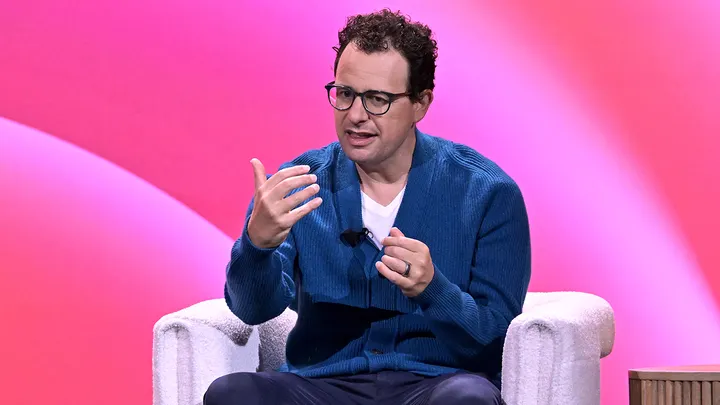
The announcements came roughly an hour before a 5:01 p.m. Friday deadline Hegseth had set for Anthropic CEO Dario Amodei to agree to allow unrestricted military use of the company's AI model, Claude. Amodei had publicly refused the day before.
It is believed to be the first time the supply chain risk designation has been applied to an American company. Until now, the label has been reserved for firms based in adversary nations, primarily China and Russia.
What Trump and Hegseth Said
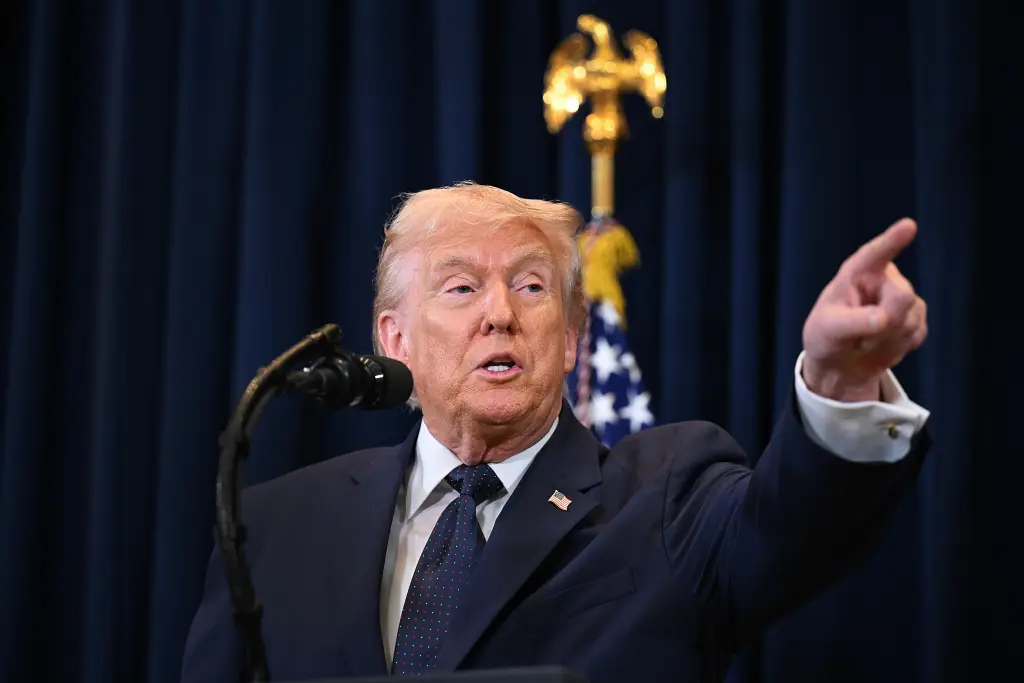
Trump announced the decision on Truth Social in characteristically direct terms.
"The Leftwing nut jobs at Anthropic have made a DISASTROUS MISTAKE trying to STRONG-ARM the Department of War, and force them to obey their Terms of Service instead of our Constitution," Trump wrote, using the administration's preferred name for the Defense Department. "Their selfishness is putting AMERICAN LIVES at risk, our Troops in danger, and our National Security in JEOPARDY."
He directed every federal agency to "IMMEDIATELY CEASE all use of Anthropic's technology," adding: "We don't need it, we don't want it, and will not do business with them again."
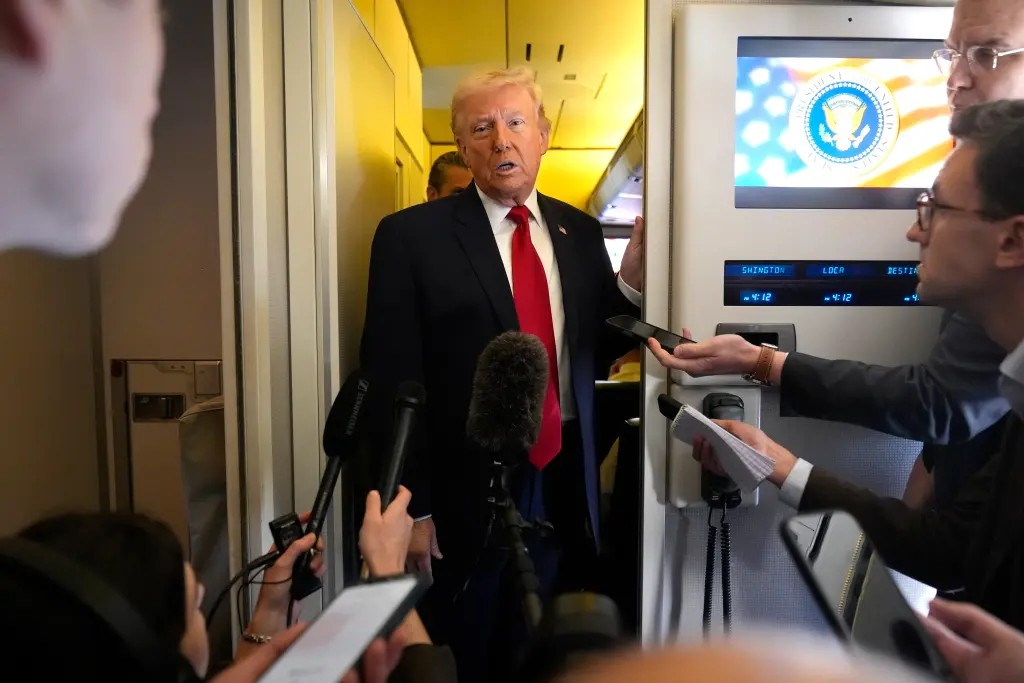
Trump specified a six-month phase-out period for agencies such as the Pentagon that have integrated Anthropic's products across multiple levels of classified and unclassified systems. He also left open the possibility of further action, writing that if Anthropic was not cooperative during the transition, he would use "the Full Power of the Presidency to make them comply, with major civil and criminal consequences to follow."
Hegseth, posting separately on X, said Anthropic had "chosen duplicity" and accused the company of attempting "to seize veto power over the operational decisions of the United States military." He framed the dispute as a matter of principle.
"Anthropic's stance is fundamentally incompatible with American principles," Hegseth wrote. "Their relationship with the United States Armed Forces and the Federal Government has therefore been permanently altered."
He said the supply chain designation was effective immediately, meaning any contractor, supplier, or partner doing business with the military must now sever commercial ties with Anthropic. The company is permitted to continue servicing the Pentagon's systems for up to six months to allow for transition, Hegseth added, calling the decision "final."
What Anthropic Refused to Agree To
The core dispute was narrow on paper but significant in practice. Anthropic maintained two conditions it would not drop: Claude could not be used to power fully autonomous weapons systems that fire without human oversight, and it could not be used for mass domestic surveillance of American citizens.
The Pentagon's position was that its personnel should be able to use Claude for any lawful purpose without those restrictions, arguing that mass surveillance is already illegal and that the company's limits were therefore unnecessary and operationally disruptive.
Amodei, in a public statement issued Thursday, said the proposed contract language the Pentagon described as a compromise "was paired with legalese that would allow those safeguards to be disregarded at will." He held firm.
"These threats do not change our position: we cannot in good conscience accede to their request," Amodei wrote. "We will not knowingly provide a product that puts America's warfighters and civilians at risk."
He also noted what he called an internal contradiction in the government's threats. "Those latter two threats are inherently contradictory: one labels us a security risk; the other labels Claude as essential to national security," Amodei wrote, referring to the supply chain designation and the proposed Defense Production Act invocation, which would have compelled Anthropic to comply regardless of its own objections.
The Pentagon ultimately opted for the supply chain designation rather than invoking the Defense Production Act.
The Stakes for the Military and the Broader Industry
Claude has been embedded across significant portions of the federal government's AI infrastructure. It was the first AI model approved for use on the Pentagon's classified networks, where it has supported intelligence analysis, cybersecurity operations, and various administrative functions. Amodei said it is "extensively deployed across all levels of the federal government." Losing access with a six-month window creates a real transition challenge for agencies that have built workflows around it.
Elon Musk's Grok has already received clearance for use in classified settings, and defense officials say OpenAI and Google are close to obtaining similar approvals. Both companies have agreed to allow their models to be used for "all lawful purposes" in unclassified environments, the terms Anthropic refused. Claude had been the only model operating in classified systems.
The fallout extended quickly into Silicon Valley. By Friday afternoon, more than 500 employees at OpenAI and Google had signed an open letter backing Anthropic's position and calling on their own company leadership to stand firm against Pentagon pressure. OpenAI CEO Sam Altman, despite being Amodei's direct competitor, publicly said he "mostly trusts" Anthropic and shares similar concerns about autonomous weapons and mass surveillance. Altman told CNBC he was working to see whether OpenAI could reach a deal that maintains comparable guardrails.
Sen. Mark Warner, the Virginia Democrat and vice chairman of the Senate Select Committee on Intelligence, raised concerns about the administration's motivations.
"The president's directive to halt the use of a leading American AI company across the federal government, combined with inflammatory rhetoric attacking that company, raises serious concerns about whether national security decisions are being driven by careful analysis or political considerations," Warner said. He added that efforts to damage Anthropic's reputation, potentially to redirect contracts to a preferred vendor, posed "an enormous risk" to defense readiness and would make private sector companies think twice before partnering with the federal government.
Retired Air Force Gen. Jack Shanahan, who led the Pentagon's original AI initiative and faced similar industry resistance during the Project Maven controversy in 2017, noted the stakes plainly. Shanahan, who said he might have been expected to side with the Pentagon given his history, nonetheless wrote that Anthropic's red lines were "reasonable" and that the large language models powering current AI systems are "not ready for prime time in national security settings," particularly in the context of fully autonomous weapons. "They're not trying to play cute here," he wrote.
Gregory Allen, a senior adviser at the Center for Strategic and International Studies who previously directed a Pentagon AI center, warned that the confrontation risked reversing years of progress in bringing the tech industry closer to defense work. "It has taken a lot to get to where we are now, such that leading lights of the U.S. tech industry are enthusiastically taking on national security work," Allen said. "You don't want to pointlessly light that on fire."
Anthropic did not respond to requests for comment Friday following Trump's announcement. Amodei had said the day before that the company would cooperate in ensuring a smooth transition if the Pentagon chose to move to another provider.
Author
We cover the world’s chaos so you don’t have to scroll twelve feeds to understand it.
Sign up for Atlas newsletters.
Stay up to date with curated collection of our top stories.