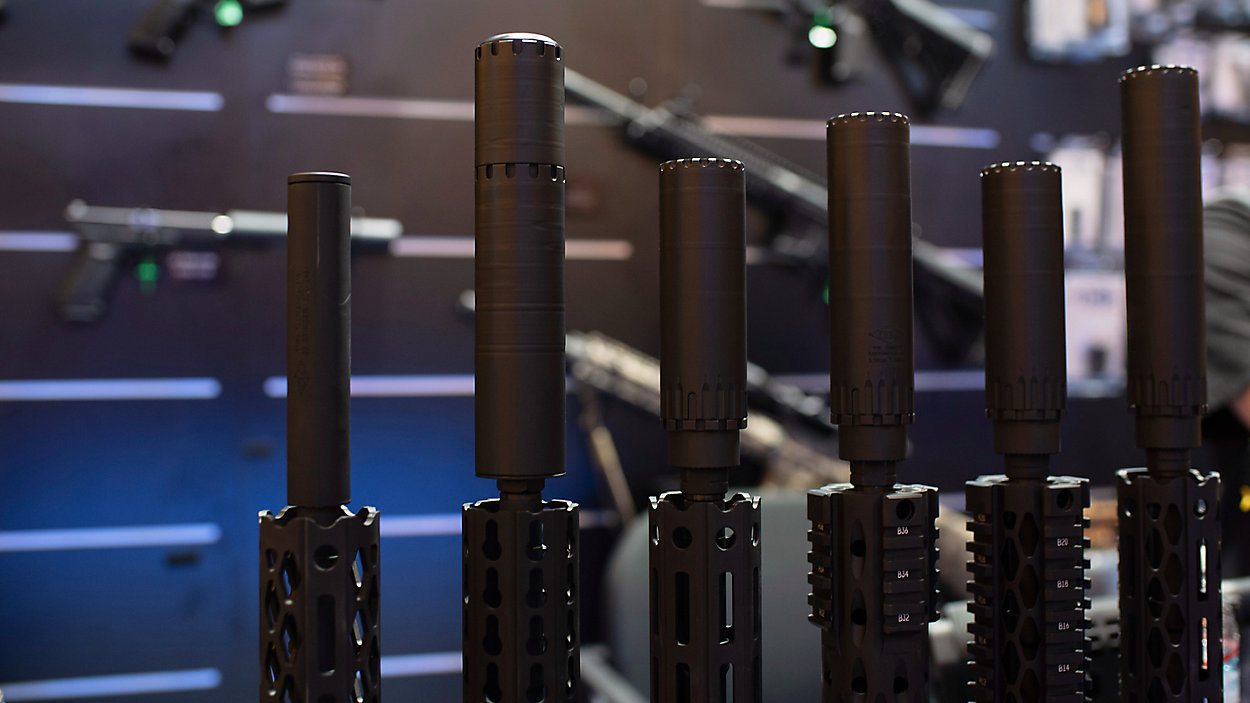
The Justice Department will not appeal a ruling that bars it from enforcing National Firearms Act registration and application rules for suppressors and short-barreled firearms against those who sued. Solicitor General D. John Sauer wrote on Sept. 24 that the department "has determined not to file an appeal" in Silencer Shop Foundation v. Bureau of Alcohol, Tobacco, Firearms and Explosives. The department quoted that sentence in an Oct. 1 filing and called the letter notice to Congress. The order is not a nationwide repeal, and it is not a Second Amendment ruling.
What the court decided
U.S. District Judge James Wesley Hendrix, of the Northern District of Texas, entered final judgment on Aug. 5 in No. 6:25-cv-56-H, consolidated with Jensen v. ATF. He held for the plaintiffs on the claim that Congress had exceeded its enumerated powers, and dismissed their Second Amendment claims without prejudice as abandoned.
On July 4, 2025, President Trump signed Public Law 119-21, the One Big Beautiful Bill Act. Section 70436 set the making and transfer tax on short-barreled shotguns, short-barreled rifles, silencers, and "any other weapon" at "$0," effective Jan. 1, 2026. The $200 tax on machine guns and destructive devices remained, as did the special occupational tax of $500 or $1,000 on importers, manufacturers, and dealers.
"Because today's NFA does not generate any revenue from untaxed firearms, its regulatory provisions cannot be upheld under the taxing power," Hendrix wrote. The department argued the occupational tax, or the commerce power, could still carry the rules. Hendrix wrote that they "cannot be sustained under the taxing power or the Necessary and Proper Clause," and cannot rest on commerce "because Congress never invoked that power in enacting the NFA."
The plaintiffs had pleaded the Second Amendment, then asked the court not to decide it. Hendrix set the claim aside, "especially when the plaintiffs will receive no less relief than they would get for prevailing under the Second Amendment."
Who the order covers
The injunction binds ATF, the Justice Department, then-Acting Attorney General Todd Blanche, and ATF Director Robert Cekada, and their successors. The Aug. 5 opinion substituted Blanche for former Attorney General Pamela Bondi. It bars enforcement "against the plaintiffs and, where applicable, the plaintiffs' agencies, political subdivisions, members, and customers—both current and future."
"But that is as far as it goes," Hendrix wrote. "Federal courts lack power to issue universal injunctions that provide relief to parties not before the Court."
The Silencer Shop plaintiffs include the Silencer Shop Foundation, Brady Wetz, and the companies B&T USA, Palmetto State Armory, and SilencerCo Weapons Research, along with those companies' customers, plus members of Gun Owners of America, the Gun Owners Foundation, and the Firearms Regulatory Accountability Coalition. The Jensen plaintiffs are John Jensen, Jeremy Neusch, David Lynn Smith, Hot Shots Custom and its customers, and members of the Texas State Rifle Association, FPC Action Foundation, and the Citizens Committee for the Right to Keep and Bear Arms.
Suppressors, short-barreled rifles, and short-barreled shotguns are covered for those plaintiffs. "Any other weapon" is covered for the Silencer Shop plaintiffs only. The judgment says the injunction "does not extend" to that category for the Jensen plaintiffs. Machine guns and destructive devices remain under the act.
Fifteen states sued. For them, the order reaches state agencies and political subdivisions, not residents generally. A Texan who is not a customer of one of the named companies and not a member of one of the named organizations is outside the injunction as written, and the registration and application rules still apply to that buyer.
Nine of the fifteen — Texas, Kansas, Alaska, Indiana, Louisiana, North Dakota, Oklahoma, South Dakota, and Utah — asked on Sept. 11 whether every relevant transfer inside their borders is covered, and whether ATF must say who is. Georgia, Idaho, Montana, South Carolina, West Virginia, and Wyoming did not join that request.
The National Shooting Sports Foundation told licensees on Aug. 17 that the court had not blocked the interstate offenses in 26 U.S.C. § 5861(j) and (k), or Gun Control Act background checks and Form 4473.
Why there will be no appeal
Hendrix stayed the judgment for seven days. CBS News reported that the department sought no further stay and that the injunction took effect early on Aug. 13. Emma Brown, executive director of Giffords, called the decision to let the stay lapse "a failure to defend public safety."
On Sept. 17, CBS News, citing people familiar with the matter, reported that President Trump ordered the department not to appeal. The sentence filed on Oct. 1 does not say the president gave that order. Sauer's Sept. 24 letter, which the filing describes as notice to Congress under 28 U.S.C. § 530D, advised "that the Department of Justice has determined not to file an appeal." News accounts name Senate Judiciary Committee Chairman Chuck Grassley as the addressee.
What Congress asked for
The Senate confirmed Blanche as attorney general on Aug. 8. Three days later, Representative Andrew Clyde of Georgia, 38 other House members, and eight senators, including Steve Daines of Montana, wrote him with three requests: decline the appeal, apply the ruling nationwide to everyone regardless of whether they fall within the injunction, and open rulemaking.
"An appeal would prolong regulatory uncertainty for law-abiding gun owners and businesses and would consume DOJ resources defending a position that this Congress and now a federal district court has said cannot stand," they wrote.
What is still open
The department has granted the first request and said nothing publicly about the second. A reply to the nine states was due Oct. 2. The department asked for ten more days, to Oct. 12, and said ATF "is currently working to finalize public guidance regarding the NFA." The states opposed the delay.
Brady President Kris Brown said of the decision not to appeal: "It is unconscionable that our government is turning its back on what has been, for nearly a century, a noncontroversial and incredibly effective means of preventing criminal access to the deadliest firearms and accessories."
Author

We cover the world’s chaos so you don’t have to scroll twelve feeds to understand it.
Sign up for Atlas newsletters.
Stay up to date with curated collection of our top stories.