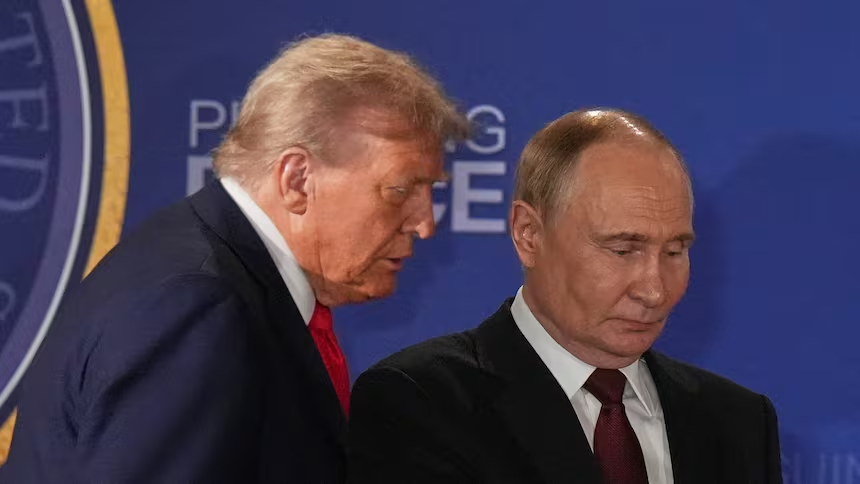
President Donald Trump said Friday, Oct. 9, that Russia had agreed to send millions of tons of diesel to world markets, and the Treasury Department eased U.S. sanctions on Russian diesel the same day. About six hours after his announcement, Russian officials reported a drone attack and a fire in Rostov-on-Don. An independent Russian outlet identified the burning site as a terminal that ships Russian fuel for export.
The deal is the administration’s latest attempt to bring down record diesel prices before the Nov. 3 midterm elections.
What the license allows
Trump announced the deal on Truth Social at 2:46 p.m. EDT (1:46 p.m. CT), after a call with Russian President Vladimir Putin. “Russia will immediately supply over 300,000 Tons of Diesel Fuel to the American and Global Marketplace, another 500,000 Tons during the month of November, and 1,000,000 Tons immediately thereafter,” he wrote. The 1 million tonnes would follow the November tranche, bringing the first three deliveries to 1.8 million tonnes. He added that Russia would later deliver 3 million tonnes more, “based on the condition of their Diesel Refineries.”
The Treasury Department said its sanctions office, OFAC, was acting at Trump’s direction to issue “a temporary general license to allow the supply of Russian diesel to the global market.” General License 135 authorizes the sale, delivery, offloading and importation of Russian-origin diesel, including into the United States, until 12:01 a.m. EDT on April 7, 2027. That is nearly six months, well past the midterms. The license was issued under existing Treasury rules, the Russian Harmful Foreign Activities and Ukraine-/Russia-Related sanctions regulations.
Putin gave no figures. “The Russian side confirmed its willingness to supply oil and petroleum products to the US market and global markets at large,” he said in a statement. Trump told reporters, “We need oil for the world, and this is diesel, which is what we need, so we’re very happy to get it.”
A fire in Rostov
Early Saturday Moscow time, Friday evening CT, Rostov Gov. Yuri Slyusar said in an online post that drones had attacked the city of Rostov and that “a fire broke out.” He did not name the site and reported no injuries.
Astra, an independent Russian outlet, geolocated residents’ videos to the Yug Rusi oil terminal in the city’s Zheleznodorozhny district. According to Astra, the terminal is designed to handle about 2.5 million tonnes of petroleum products a year from the Novoshakhtinsk refinery and others, partly for export. A year’s throughput there is roughly what Trump promised to deliver in his first three tranches. Russian officials have not confirmed damage to the terminal. Ukraine’s General Staff said it struck the same terminal on July 9. As of 8 a.m. CT Saturday, Ukraine had not claimed the latest attack.
At 6:09 a.m. Moscow time (10:09 p.m. CT), Slyusar reported one man injured and damage to a railway bridge and apartment buildings. At 8:36 a.m. Moscow time (12:36 a.m. CT), he said six people had sought medical help and four had been taken to hospitals, one of them for emergency surgery.
In the same post, Slyusar raised his overnight tally for the Rostov region from more than 50 to more than 100 drones destroyed or suppressed. That is a regional count. Russia’s Defense Ministry gave a nationwide figure of 560 drones downed from 8 p.m. Friday to 8 a.m. Saturday Moscow time across 17 regions, by its count including Crimea, and over the Azov and Black seas.
Axios reported that a Ukrainian official said U.S. envoys Steve Witkoff and Jared Kushner warned in Miami on Friday that Trump could cut off intelligence if Kyiv kept hitting refineries. A U.S. official denied it.
Collision with the sanctions law
On Sept. 18, Trump signed the Lindsey O. Graham Sanctioning Russia and Iran Act of 2026, named for the South Carolina Republican senator, who died in July. The law lets the president impose tariffs of up to 100% on the largest buyers of Russian oil or gas and sanctions Russian banks and officials. It allows the president to end its sanctions only after certifying to Congress that Russia has signed a peace agreement accepted by Ukraine. The move cannot take effect for 30 days, during which Congress can block it.
That certification requirement applies to sanctions imposed under the act. General License 135 eases restrictions under the older Treasury regulations, which it cites. Critics in both parties did not allege illegality. They said the move runs against the law’s intent. Rep. Michael McCaul, R-Texas, wrote on X that he understood “the desire to bring down diesel prices” but was “concerned the lifting of sanctions on Russian oil will only fund the Kremlin’s war machine.” Sen. Richard Blumenthal, D-Conn., called the agreement “a stain on our nation’s character, an insult to Lindsey Graham’s memory, and directly contrary to Congress’s intent in our bipartisan sanctions bill.”
What it means at the pump
AAA put the average U.S. diesel price at $6.28 a gallon on Oct. 9, down from a record $6.53 on Sept. 22. Prices have surged since the Iran war began in late February.
Tim Armitage, an investment strategist at Quilter Cheviot, said the first shipment equals about 2.25 million barrels, against U.S. consumption of about 3.8 million barrels a day. “It won’t make a material difference to pump prices in the US,” he said. By the same math, the first three tranches equal about three and a half days of U.S. use.
How much Russia can deliver turns on the same condition Trump attached to the later 3 million tonnes: the state of its refineries. The International Energy Agency estimated that Russian diesel output had fallen nearly 30% from 2025 levels after Ukrainian strikes. Data from the analytics firm Kpler, cited by the Financial Times, show Russian refineries running at about 60% of capacity.
Allies react
A British government spokesperson said that the U.K. would keep up pressure on Russia through “the toughest sanctions regime ever imposed by the UK.”
Ukrainian President Volodymyr Zelenskyy said that Russia would “repay” the diesel with “further terror and perfidy.” He added: “Allowing Russia to sell petroleum products is an investment in a war that must be ended, not prolonged.”
Author

We cover the world’s chaos so you don’t have to scroll twelve feeds to understand it.
Sign up for Atlas newsletters.
Stay up to date with curated collection of our top stories.