Iranian negotiators were in Doha on Saturday for another round with Qatari mediators, a day after more than 12 hours of talks in Tehran. The Qatari team has stayed in frequent contact with U.S. negotiators, Reuters reported, citing an official briefed on the talks.
The diplomacy is running alongside a military clock. Several news organizations, including The Associated Press and The Wall Street Journal, have reported that U.S. officials told allies to prepare for possible renewed strikes after Tuesday’s midterm elections. Only one, MS NOW, has reported a date. Iran’s supreme leader on Saturday ordered his commanders to answer any attack without geographic limits. At home, the war has killed 23 U.S. service members, 11 of them in hostile action, according to Pentagon casualty figures. A Pew Research Center survey cited by MS NOW found 65% of Americans disapprove of Trump’s handling of it.
Who is talking to whom in Doha
Accounts of the Doha round conflict, and they have not been reconciled. Al-Araby Al-Jadeed, a Qatar-based outlet, reported that a U.S. delegation is expected to join Iranian officials for direct talks there. Iran’s Tasnim news agency, which is affiliated with the Revolutionary Guard, said no negotiations with the United States are planned. An Axios correspondent reported that talks were continuing with Iran’s deputy foreign minister and that no agreement had been reached to resume direct negotiations.
Foreign Minister Abbas Araghchi gave an interview to Al Jazeera that was recorded Saturday and is set to air in full Sunday. In a version carried by Iran’s state news agency, he said any speculation about meetings with U.S. officials “is merely media assumption.” He said his aide was in Qatar and that the mediators “continue their consultations” on Iran’s conditions.
Those conditions are broad. Araghchi listed lifting sanctions imposed after the Islamabad memorandum, reducing U.S. forces in the region, restoring oil waivers and releasing frozen funds, including money held in Qatar. Axios reported, citing a U.S. official, that Iran wants the U.S. to first lift its naval blockade, release frozen funds and allow it to sell oil. Washington wants nuclear concessions as part of resuming talks.
Three timelines for Hormuz
The Strait of Hormuz sits at the center of the bargaining, and the reported timetables differ. Araghchi said Qatar proposed shortening the implementation period of Iran’s own plan to five days, and that “we have reached a proposal at this stage that reduces the implementation period to two days.” Al Arabiya said it obtained a preliminary draft framework, and it reported seven days, along with uranium shipped to a third country and China as a guarantor.
According to Axios, Qatar is also pressing Iran to let U.N. inspectors visit its bombed nuclear sites as a confidence-building step that the U.S. would answer with some sanctions relief.
A letter from Vice President JD Vance to Mohsen Rezaei, secretary of Iran’s Supreme National Security Council, has been described four different ways, and the accounts do not match. MS NOW, citing two people familiar, said it proposed a meeting between Iranian and American officials to resume talks. Al Jazeera reported that Vance is believed to have called for nuclear commitments, including inspections and the fate of Iran’s highly enriched uranium. President Donald Trump has said the letter concerned medical supplies. Araghchi said Iran studied it at high levels and called the effort to open the door to dialogue “a positive step.”
The debate in Washington
Trump told KCMO radio in Kansas City on Friday that the war would end soon. CBS News quoted him as saying “it’s going to get wrapped up soon” and “We need a guarantee there’ll never be a nuclear weapon.” MS NOW quoted the same interview as “is going to be over very soon.”
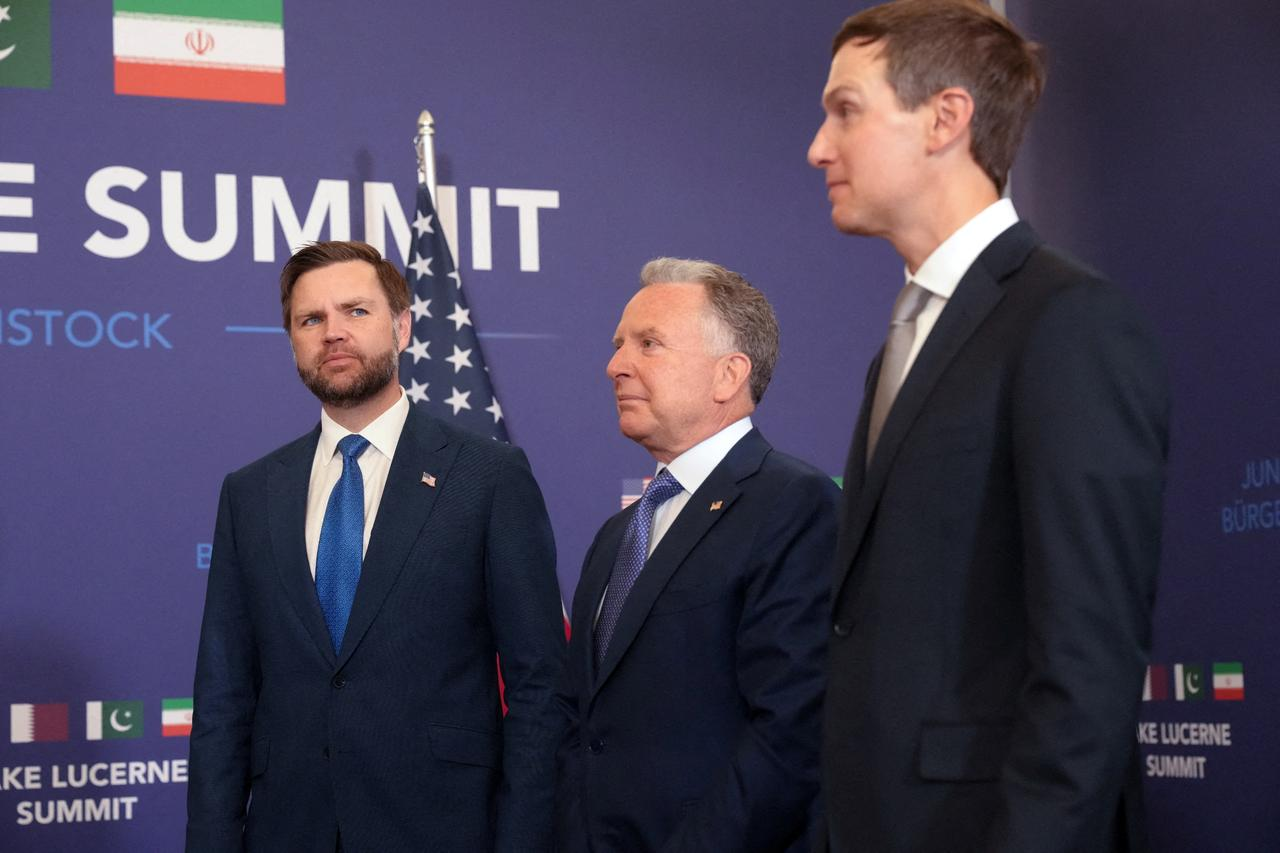
The administration is divided, according to one U.S. official who spoke to Axios. In that account, Secretary of War Pete Hegseth and Secretary of State Marco Rubio are highly skeptical of a nuclear deal and favor weakening the government in Tehran, including with further strikes. Vance and envoys Steve Witkoff and Jared Kushner want talks to resume. Treasury Secretary Scott Bessent favors letting economic pressure play out, and Trump is skeptical Iran will ever agree, the official said.
MS NOW reported Friday, citing three senior Gulf Arab officials, that Gulf allies were briefed to prepare for a short, intense round of strikes as soon as Nov. 4, the day after the midterms. Other reports of the briefings gave no date.
Iran’s warning and the fight at sea
Supreme Leader Mojtaba Khamenei was named by Iran’s Assembly of Experts in March, after his father, Ali Khamenei, was killed in a strike at the start of the war. In a written statement from his office Saturday, he said any threat “must be met with an immediate, impactful and geographically unrestricted response,” in a translation carried by CBS and AFP.
At sea, the two sides tell different stories. Iranian state media said Friday that a supertanker carrying more than 2 million barrels struck a mine on an “unauthorized route,” and state television said at least six tankers had been damaged in recent days. None of the vessels was named, and The Associated Press could not verify the claims. Adm. Brad Cooper, head of U.S. Central Command, said in a video Friday that U.S. forces had cleared the strait’s primary transit routes of Iranian mines and that Iran’s navy is “at the bottom of the sea.” The U.S. blockade has stopped Iran from exporting any oil through the strait, he said.
The fight in Congress
The Senate rejected an Iran war powers resolution 49-50 on Sept. 24. Sen. Chris Murphy, D-Conn., said this week that the administration’s plan is “insane” and would prolong and escalate the war, according to MS NOW. He was speaking after a classified briefing whose contents he did not detail publicly.
By late Saturday morning, Qatari and Pakistani mediators were meeting in Doha with an Iranian delegation present, CBS News reported. No outcome had been announced.
Author

We cover the world’s chaos so you don’t have to scroll twelve feeds to understand it.
Sign up for Atlas newsletters.
Stay up to date with curated collection of our top stories.