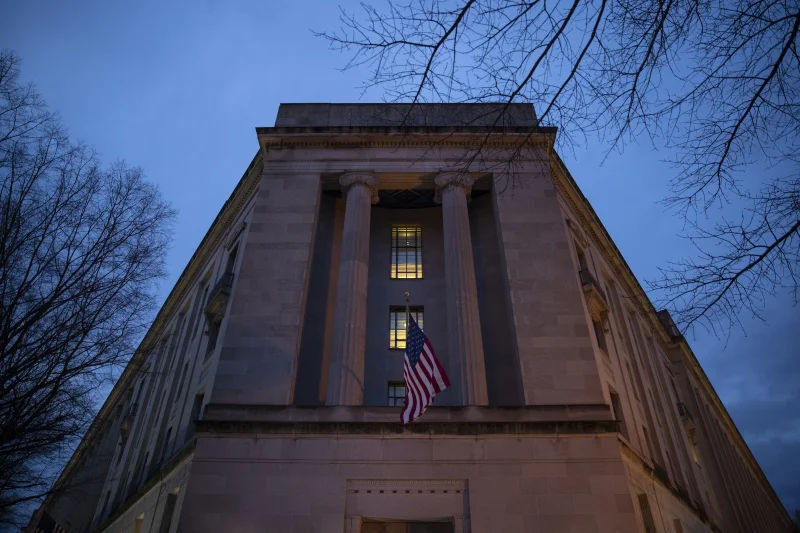
A Justice Department lawyer told a federal appeals court Friday, Oct. 16, that the law requiring presidents to preserve their records and hand them to the National Archives is unconstitutional, agreeing under questioning that it fails “from first word to last period.” The three judges hearing the case pressed him on what limits, if any, would remain.
The case, American Historical Association v. Trump, No. 26-5185, was argued in Washington before Judges Patricia Millett, Cornelia Pillard and Justin Walker of the U.S. Court of Appeals for the D.C. Circuit. Millett and Pillard are Obama appointees; Walker was appointed by President Donald Trump. The court’s recording of the argument runs just over two hours.
From an internal opinion to new White House rules in a day
Congress passed the Presidential Records Act in 1978, after the Watergate scandal and the fight over President Richard Nixon’s papers. It makes official White House records government property that go to the National Archives when a president leaves office. Records from Trump’s first term became eligible for public access requests under the law on Jan. 20, 2026, according to the American Historical Association.
On April 1, 2026, the Justice Department’s Office of Legal Counsel issued an opinion concluding that the law exceeds Congress’s powers and “aggrandizes the Legislative Branch at the expense of the constitutional independence and autonomy of the Executive.” It concluded that “the President need not further comply with its dictates.”
A day later, White House Counsel David Warrington sent staff a memo saying offices were “free to” keep their existing retention policies, according to The Washington Post and Bates’s later opinion. The memo said “text messages should only be preserved when they are the sole record of official decision-making, government action, or contain unique information not available elsewhere,” as quoted in the plaintiffs’ complaint.
The American Historical Association and the watchdog group American Oversight sued within a week. A similar suit by Freedom of the Press Foundation and Citizens for Responsibility and Ethics in Washington followed.
What the injunction requires
On May 20, Senior U.S. District Judge John D. Bates granted a preliminary injunction in part, writing that the act “democratizes the history of an indispensable institution.”
The order directs the White House Office, the National Security Council, the U.S. DOGE Service, the Office of the Vice President and other named offices and officials to “comply in full” with the act and to “preserve and not destroy or delete” presidential and vice presidential records. It bars covered staff from using Signal, WhatsApp or other non-official messaging accounts for official records unless they copy or forward them to an official account within 20 days. Trump, Vice President JD Vance, the National Archives and the Justice Department were not enjoined.
The government’s case
Justice Department lawyer John Bailey told the court that early presidents controlled their papers and that “some gave their papers away.” Asked whether the law has any constitutional applications, he answered, “As written, no.” When a judge put it to him that he was arguing the law is unconstitutional “from first word to last period,” Bailey replied, “I am, your honor.”
Judges press on national security
“You have adopted a position that says the president, whoever it is at the time on January 20, can take every record within the [Executive Office of the President and] destroy it, so that the incoming president has no information about national security threats, about planned terrorist attacks, about critical negotiations in an ongoing war,” Millett said, as quoted by the National Law Journal.
When Millett pressed him to imagine any limit Congress could impose, Bailey said, “I’m doing my best.” She asked whether a president could “pack these things up and take them away.” Bailey said yes, because the act is unconstitutional.
Millett then asked whether a president could “offer on eBay to sell them, all of our national security secrets to the highest bidder.” Bailey said the act, being unconstitutional, “would not be a bar to that.”
Later, a judge raised what he called “a mosaic theory”: that if large numbers of individually unprivileged documents were “fed a huge document dump into an AI type thing,” the public and “hostile foreign governments” could piece together sensitive information.
The challengers respond
Daniel F. Jacobson argued for the groups, according to the court’s argument calendar. Their brief says the government’s “sole argument on appeal is that the Records Act is facially unconstitutional,” which requires showing the law is invalid in every application, and “Defendants make no attempt to meet that standard.”
They also cite Nixon v. Administrator of General Services, in which the Supreme Court in 1977 upheld the 1974 Presidential Recordings and Materials Preservation Act against former President Nixon’s challenge.
“Right now, the court’s order is all that stands in the way,” Chioma Chukwu, executive director of American Oversight, said in a statement. “If it falls, the court-ordered requirement to preserve this White House’s records ends immediately. Records that are destroyed are gone for good.”
Sarah Weicksel, executive director of the American Historical Association, said, “Every time a record is destroyed, a piece of history is lost.”
Friend-of-the-court briefs backing the groups came from 106 members of Congress led by Rep. Jamie Raskin, D-Md., along with 25 former senior national security officials and seven former senior National Archives leaders, according to American Oversight.
The panel did not rule Friday and set no date for a decision. Bates’s injunction, in force since May 20, continues to require the White House to preserve its records unless the panel stays or reverses it.
Author

We cover the world’s chaos so you don’t have to scroll twelve feeds to understand it.
Sign up for Atlas newsletters.
Stay up to date with curated collection of our top stories.