Turkey's parliament approved a landmark law Monday creating the legal framework for the disbandment of the Kurdistan Workers' Party, the most concrete step yet toward ending an insurgency that began in 1984 and has killed tens of thousands — even as the PKK warned that key provisions will remain a "dead letter" while its founder sits in prison.
Lawmakers passed the 12-article measure 468 to 88, with six abstentions, in the 600-seat chamber. It drew support from President Recep Tayyip Erdogan's ruling AK Party, its nationalist MHP allies, the pro-Kurdish DEM Party, and the main opposition New Party, whose leader Ozgur Ozel called the bill superficial but backed it to avoid blocking the process. "Peace, democracy and justice will serve as a remedy" for Turkey, Ozel said.
The law offers a conditional, pardon-like mechanism rather than a general amnesty. Prosecutions and prison sentences for offenses including PKK membership, support, propaganda, and terrorism financing would be suspended — for five years in the case of sentences up to 15 years, and for 10 years for longer terms. If those covered commit no terror-related crime within that window, investigations are dropped and sentences considered served. Lawmakers said about 3,500 PKK-linked detainees are expected to be released in the first phase, roughly a third of those imprisoned in Turkey over alleged ties to the group.
The measure takes effect only after Turkey's National Security Council confirms the PKK and affiliated groups have fully disbanded and surrendered their weapons — an assessment whose timing and method remain unclear. Those seeking to benefit have six months to apply once the council's decision is published in the official gazette.
Who Is Excluded — and the Red Line It Draws
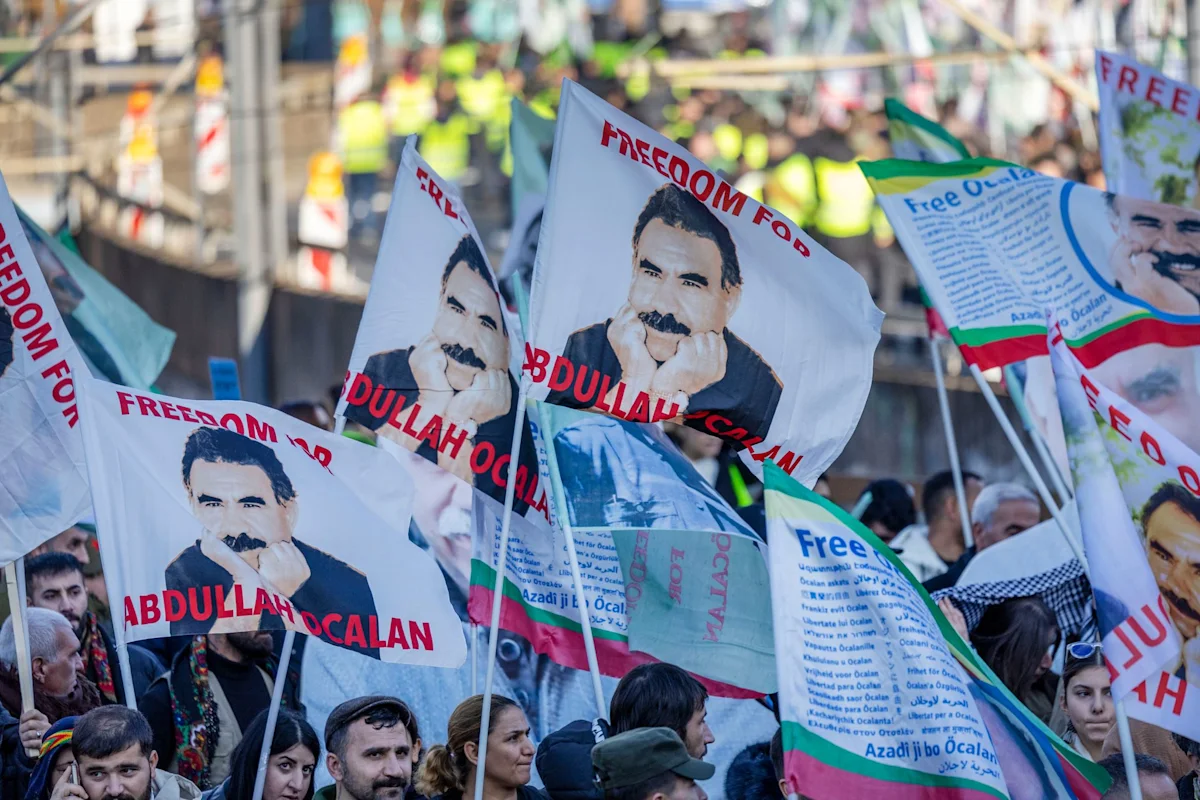
Militants convicted of intentional killings and those sentenced to life terms before June 1, 2005, fall outside the law. That excludes Abdullah Ocalan, the PKK's 77-year-old founder, who has been imprisoned on Imrali Island since 1999 and whose release is the group's central demand. Ocalan's case "does not fall within the scope of this law," Vice President Cevdet Yilmaz said last week, adding that Ocalan could still contribute to the process without explaining how.
The PKK, in a statement issued Sunday after the bill cleared the Justice Committee, said the legislation contained "serious errors and shortcomings" and warned that excluding Ocalan crossed a red line. The peace process can move forward, the group said, only if Ocalan "lives and works freely." It also faulted the bill for addressing disarmament without the word "Kurdish" appearing at all, and said fighters would not surrender weapons and return to Turkey if they "are unable to engage in democratic politics on the basis of freedom of thought and freedom of association, and if they are prosecuted and imprisoned because of their views or the organizations they establish."
Media reports have suggested Ocalan's prison conditions may be eased, with broader visitation and communication with the outside world, though the law itself is silent on his status. Selahattin Demirtas, the prominent Kurdish politician jailed since 2016, backed the bill Sunday, saying it would "radically transform the fate of our country and our region."
How the Process Got Here
The current initiative began in October 2024, when MHP leader Devlet Bahceli — long one of Turkey's most hardline voices against Kurdish militancy — unexpectedly suggested Ocalan could address parliament and announce the PKK's dissolution. Ocalan issued his call in February 2025, urging the group to disarm, disband, and pursue Kurdish rights through politics. The PKK announced its dissolution in May 2025, and militants symbolically burned weapons at a ceremony in the Qandil mountains of northern Iraq two months later, followed by an announced withdrawal of fighters from Turkey into Iraq.
A parliamentary commission established in August 2025 heard from politicians, officials, and civil society groups before recommending legislation to manage disarmament and reintegration. The group, designated a terrorist organization by Turkey, the United States, and the European Union, launched its armed campaign in 1984 seeking an independent Kurdish state before shifting to demands for autonomy and expanded rights. The conflict has claimed at least 40,000 lives by most counts — some estimates run to 50,000 — imposed a heavy economic burden on the mainly Kurdish southeast, and outlasted several failed peace attempts, most recently in 2015.
The DEM Party served as intermediary throughout, with delegations traveling to Imrali to relay messages between Ocalan and the state. "The people of Turkey, who have paid a heavy price for many years, now have an opportunity to consolidate peace and build democracy," DEM lawmaker Gulistan Kilic Kocyigit told parliament. "Of course, the proposal has shortcomings, and we now have a responsibility to address these shortcomings."
The Politics Behind the Votes
Not all of the opposition came along. The center-right nationalist Good Party voted against, with its leader Musavat Dervisoglu charging that the bill "would pave the way" for Erdogan to stay in power. "How can you negotiate with terrorists?" Good Party lawmaker Turhan Comez asked during the debate. "You said they would be laying down their weapons unconditionally."
The suspicion reflects a widely noted political calculation: Erdogan may seek DEM's support for a constitutional change, or for an early election call during his current term, either of which could allow him to run for president again beyond the two-term limit. Opposition figures have also accused the government of running the process opaquely, and Ozel noted that the system that has jailed political opponents, journalists, academics, and elected mayors remains untouched.
The government has framed the initiative as the path to a "terror-free Turkey." Kurdish politicians counter that lasting peace requires broader reforms — changes to anti-terrorism laws, expanded political and cultural rights, and education in the Kurdish language, a decades-old demand of Turkey's largest minority. DEM co-chair Tuncer Bakirhan called the law a first step, saying democratization, the rule of law, and a resolution of the Kurdish question must follow.
What the Law Doesn't Settle
The legislation answers one of the process's central questions — what happens to thousands of PKK members as the group dismantles its structures — while deferring nearly every other. It does not resolve Ocalan's status, address the broader Kurdish rights agenda, or specify how security authorities will verify that a group which still retains the bulk of its weapons has fully disarmed. Exiled members and fighters in Iraq and Syria are expected to benefit, according to media reports, and the process carries regional implications: closer ties between Ankara and Baghdad, and potential support for Syria's effort to integrate areas held by the Kurdish-led Syrian Democratic Forces, which Turkey views as a PKK affiliate.
Ministerial and parliamentary committees established by the law will monitor implementation. Whether the framework holds will depend on sequencing that the text leaves open — the PKK conditioning full disarmament on Ocalan's freedom and political guarantees, and the state conditioning the law's benefits on full disarmament first. Monday's vote settled what parliament could settle. The rest remains between Imrali and Qandil.
Author

We cover the world’s chaos so you don’t have to scroll twelve feeds to understand it.
Sign up for Atlas newsletters.
Stay up to date with curated collection of our top stories.