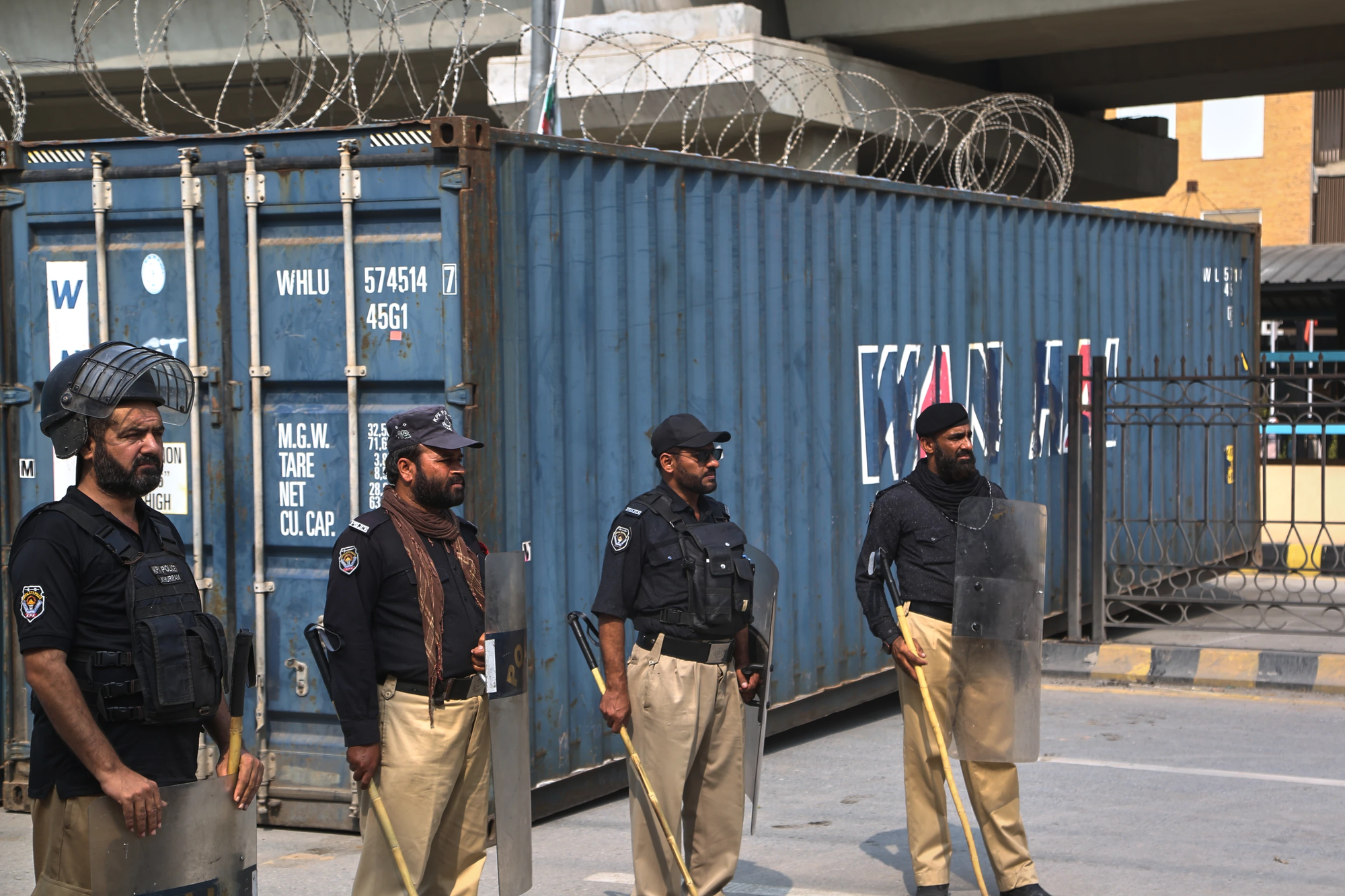
Pakistan’s federal government took direct control of Khyber Pakhtunkhwa on Sunday, Oct. 11, as President Asif Ali Zardari proclaimed an emergency and governor’s rule in the northwestern province and suspended its government. It was the only one of Pakistan’s four provinces led by jailed former Prime Minister Imran Khan’s Pakistan Tehreek-e-Insaf party.
Zardari acted on the advice of Prime Minister Shehbaz Sharif after an emergency cabinet meeting earlier in the day, the president’s office said. Sharif’s office said the cabinet had cited the “provincial government’s deliberate disengagement from the fight against terrorism.” The PTI called the move a coup.
Sharif told ministers that security forces and civilians had been under attack for two years. “We can’t just act a silent spectator,” he said, according to Reuters.
How the takeover works
The proclamation invokes Article 232 of the Constitution, which covers emergencies, and Article 234, which covers the failure of constitutional machinery in a province. The chief minister, provincial ministers and advisers ceased to hold office immediately, and the provincial assembly was suspended.
Governor Faisal Karim Kundi, a member of Zardari’s Pakistan Peoples Party, now runs the province with an 11-member advisory council. The federal government also authorized the army to deploy in aid of civil power.
Law Minister Azam Nazeer Tarar told a news conference in Islamabad that the arrangement would initially run for six months, the full period the Constitution allows.
The security case
The Pakistan Institute for Conflict and Security Studies, an Islamabad think tank, counted 225 militant attacks nationwide in September, the highest monthly total in 12 years. Mainland Khyber Pakhtunkhwa recorded 58 attacks, and deaths there more than doubled from August, to 90. The province’s former tribal districts recorded 34 more attacks and 33 deaths, for 92 attacks across the province.
On Sept. 18, a car bomb and a suicide attack on police lines in Kohat killed 23 people, including 17 police officers, not counting the attackers, police said.
Sharif says the province has received about 800 billion rupees for counterterrorism since 2010. The PTI says the federal government withheld funding and equipment, and its lawmakers asked why Balochistan, which the institute counted at 131 attacks in September, faced no such measure.
Who is detained
The government has not said where Chief Minister Sohail Afridi is being held or under what authority, and four accounts of his status circulated within a day.
PTI officials said Afridi and the party’s provincial president, Junaid Akbar, a member of the National Assembly, had been arrested. A close aide to Afridi told Reuters only that restrictions had been placed on his movements. Late Sunday, Information Minister Attaullah Tarar told Dunya News that Afridi was in “protective custody,” had not been arrested, and that his return to office was not under consideration. Dawn, citing unnamed sources and noting there was no official confirmation, reported early Monday that Afridi and Akbar were under house arrest under a public-order law.
Minister of State for Interior Tallal Chaudhry said some people had been detained, without naming Afridi.
Former Chief Minister Ali Amin Gandapur, Afridi’s predecessor, was placed under house arrest in Dera Ismail Khan, according to the PTI and local media reports.
The march and the backlash
The takeover came a week into a PTI “long march” demanding Imran Khan’s release and access to him. Afridi launched it Oct. 4 after talks with the government broke down. By Sunday it had stalled in Swabi, where local party leaders largely stayed away and police dispersed small gatherings, the Express Tribune reported.
Imran Khan, 74, has been jailed since August 2023. His one standing conviction is a 14-year sentence handed down Jan. 17, 2025, in the Al-Qadir Trust corruption case, which is under appeal. He denies wrongdoing.
PTI Chairman Gohar Ali Khan called the emergency “an extremely alarming and grave political mistake and an undemocratic measure.” “The people will never accept such actions against their rights,” he wrote on X. He later said there was still time to reverse course: “Revisiting political decisions is not a sign of weakness but of wisdom in the national interest.”
“This is more of a coup disguised as emergency,” said Zulfikar Bukhari, a PTI spokesman and aide to Imran Khan.
Maulana Fazlur Rehman, head of the opposition Jamiat Ulema-e-Islam-Fazl, whom the government had asked to mediate with the PTI, also condemned the move. “This is an assault on democracy and the rights of the people,” he told a news conference.
Why Washington is watching
The crisis comes as Pakistan, a U.S. security partner, takes on a military role in the Gulf. On Oct. 5, Pakistan, Saudi Arabia and Turkey agreed to put their Mecca defense pact into force and deploy forces to the kingdom, which is backing an offensive against Yemen’s Houthis, Al Jazeera reported. The pact, signed Aug. 7, came on top of Pakistan’s Strategic Mutual Defense Agreement with Saudi Arabia from September 2025. Pakistani forces are playing a supporting role, including reconnaissance, Defense Minister Khawaja Asif told Geo News on Oct. 5.
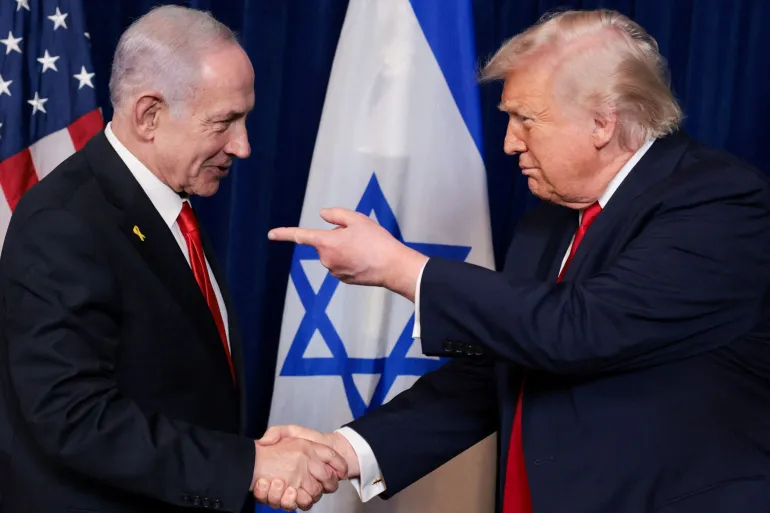
Asked on Oct. 10 outside the White House whether the United States would join Saudi strikes on the Houthis, President Donald Trump said, “We may. We’re going to look at it.”
Saudi Arabia’s civil aviation authority said a Pakistani resident was killed and 11 people were injured when a projectile struck Passenger Hall 4 of Riyadh’s King Khalid International Airport on Sunday. At the same cabinet meeting that recommended the emergency, Sharif called aggression against Saudi Arabia a “red line” for Pakistan.
Zalmay Khalilzad, a former U.S. special envoy for Afghanistan, wrote on X that the emergency could escalate instability and violence in Pakistan.
Governor’s rule lapses after two months unless a joint sitting of Parliament approves it. The National Assembly and the Senate meet in separate sessions on Tuesday, Oct. 13.
Author

We cover the world’s chaos so you don’t have to scroll twelve feeds to understand it.
Sign up for Atlas newsletters.
Stay up to date with curated collection of our top stories.