A magnitude 7.4 earthquake struck western Colombia on Monday morning, killing at least 111 people, injuring hundreds, and collapsing buildings across a swath of cities from Cali to the coffee-growing highlands. It was the strongest quake recorded in the country this century, according to the Colombian Geological Service, and rescue crews worked through the night searching rubble for the trapped.
The quake hit at 7:34 a.m. local time, centered near San José del Palmar, a mountain-ridge town of roughly 4,800 people in Chocó province, about 250 miles west of Bogotá. The US Geological Survey put its depth at 107 kilometers, or 66 miles. Shaking was felt across the western half of the country and in neighboring Ecuador, Panama, and Venezuela, and a magnitude 5.0 aftershock followed within the hour. Maritime authorities said there was no tsunami threat.
President Abelardo de la Espriella, inaugurated only three days earlier, declared a national emergency to expedite recovery funding. "As of 12:30, the toll stood at 111 dead and 87 injured, with 1,575 homes damaged, 37 completely destroyed, 61 buildings collapsed, and 18 health centers and 52 schools damaged," he said from Bogotá. By evening, figures reported by local officials suggested the toll would climb: the mayor of Pereira posted that 66 people had died in his city alone, with at least 53 still trapped under rubble, and some local media cited a national count of 132.
"We aren't going to leave people alone," de la Espriella said. "They are in our hearts and we are going to tend to people with our full determination."
Cali's Hospitals at Capacity, Curfews in Three Cities
In Cali, the country's third-largest city and home to more than 2 million people, at least 30 buildings collapsed with people inside, Mayor Alejandro Eder said. Local officials reported at least 15 dead and 380 injured. Seven major health facilities were evacuated for structural damage, including the Hospital Universitario del Valle, which partially collapsed; four patients were pulled from its rubble. The city declared a red alert for a hospital system running at full capacity, and 25 other health centers were under evaluation.
Power, water, and cellphone service failed in parts of the city, and dust still hung in the air more than five hours after the shaking stopped. In one neighborhood, a residential building fell onto the school next door, and rescue workers estimated 20 to 25 people might remain inside, some in a basement. Television footage showed crews raising fists to hush the crowds as they listened for voices under a concrete slab, with volunteers repeating the call: "Silence!"
"My entire house shook. I've never lived through such a powerful earthquake," said Jorge Moncayo, a 64-year-old taxi driver who watched plumes of dust rise across the city. "We're thanking God we're alive."
Authorities in Cali, Armenia, and Manizales announced curfews after reports of looting threats and disturbances. De la Espriella promised more than 1,000 additional security personnel for Cali by dawn while insisting rescue remained the priority. "Our greatest concern is the 188 people who are missing, and it is on this particular issue that we will focus the government's efforts," he said.
The Coffee Region Takes the Heaviest Blow
The worst single toll emerged in Risaralda province and its capital, Pereira, the commercial hub of Colombia's coffee region, where a section of the passenger terminal roof at Matecaña International Airport collapsed, killing three. "What Pereira is going through is historic," Mayor Mauricio Salazar said in televised remarks, his voice breaking. "Some hospitals have collapsed due to high demand."
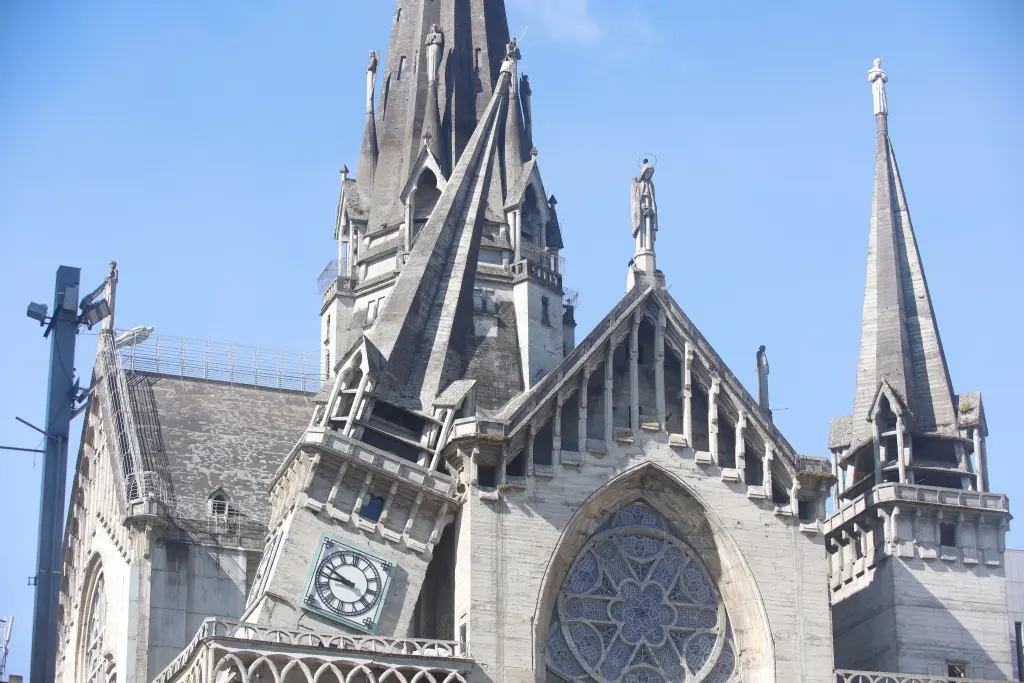
Valle del Cauca province reported 35 dead by evening, up from 27 earlier, including three children. Chocó's governor reported deaths in Quibdó, the provincial capital, where phone signals were down across much of the city; among the dead was the young son of the mayor of Bahía Solano, killed in a building collapse. In Manizales, a university city built along steep Andean ridges, the mayor reported deaths, a dozen damaged or collapsed buildings, widespread gas leaks, and damage to one of the towers of the Metropolitan Cathedral Basilica, the tallest cathedral in Colombia. A 73-year-old died in Antioquia.
Civil aviation authorities suspended operations at airports in Pereira, Manizales, Quibdó, Armenia, Cartago, and Buenaventura, later adding Cali's airport to the list. Little was known about conditions closest to the epicenter: much of Chocó, one of Colombia's poorest regions and home to a large Afro-Colombian community, is reachable only by boat or plane, and San José del Palmar has no airport.
By afternoon, families had begun logging missing relatives in online databases, echoing scenes from Venezuela's disaster weeks earlier. One database listed more than 2,000 names, mostly in Cali and Pereira, and climbing. Outside one collapsed Cali building, Viviana Pavón, 50, waited for word of her 30-year-old son and his girlfriend, both DJs, after her husband arrived to find their home in ruins. "We're here, waiting," she said, "in the hope of finding them alive."
A First Test for a Three-Day-Old Government
The disaster confronts de la Espriella with a national crisis in his first week. The right-wing president, an ally of President Donald Trump who endorsed him before June's runoff, was sworn in Friday in Cali — the same city now at the center of the emergency — in a break from the leftist government of Gustavo Petro. De la Espriella traveled to Quibdó to lead a unified command post, promising rent subsidies for those who lost homes. "Today, all Colombians, without ideological or political distinction, must unite behind a single cause: the victims of this natural disaster," he said.
Offers of help arrived quickly. Secretary of State Marco Rubio said the US "stands ready to support the people of Colombia." European Commission President Ursula von der Leyen said the EU had mobilized its Copernicus satellite service to aid rescue operations and stood "ready to provide more support." France, Israel, Mexico, Chile, Ecuador, and Spain also offered assistance, and the International Committee of the Red Cross said it was monitoring the affected regions.
Why the Damage Ran So Deep
Colombia's Pacific region sits along the Ring of Fire, the belt of faults and volcanoes encircling the Pacific that produces about a fifth of the world's large earthquakes, and the country registers thousands of mostly minor tremors each month. Monday's quake was unusual for the punch it delivered despite its depth. "This one was far below the crust, and in theory it shouldn't cause as much shaking. At this magnitude, it did actually cause a lot of shaking," said Suzan van der Lee, a seismologist at Northwestern University, noting that the quake's strike-slip motion — rock masses sliding horizontally past each other along a near-vertical fault — may have amplified damage in populated valleys.
The region carries hard memories. A 6.1 magnitude quake in 1999 devastated the nearby city of Armenia, killing an estimated 1,100 to 1,200 people and collapsing some 60% of its poorly engineered buildings — a catastrophe that reshaped Colombia's disaster policy and tightened enforcement of its seismic building code. And the timing sharpened nerves across the region: twin earthquakes of magnitude 7.2 and 7.5 struck neighboring Venezuela in late June, killing more than 6,300 people, with searches there still under way when Colombia's own crisis began. Colombian rescue teams deployed to help Venezuela then; on Monday night, the digging was on their side of the border.
Author

We cover the world’s chaos so you don’t have to scroll twelve feeds to understand it.
Sign up for Atlas newsletters.
Stay up to date with curated collection of our top stories.