South Korea on Wednesday formally blamed North Korea for land-mine blasts that wounded three South Korean soldiers inside the Demilitarized Zone, demanded an apology, and urged a halt to border fortification. The same day, President Lee Jae Myung visited the wounded at a military hospital and pledged due compensation.
Hours earlier, Kim Yo Jong, director of the General Affairs Department of the Workers' Party and sister of leader Kim Jong Un, dismissed Seoul's findings as a "conspiratorial farce" and called attempts to present physical evidence "the height of impudence." She warned that Northern border units would launch an "immediate and merciless retaliate attack" if South Korean forces fired on Northern fortification crews — live fire, not warning shots.
The U.S.-led United Nations Command separately found an Armistice violation after identifying an active North Korean antipersonnel mine south of the line.
The blasts and the forensic finding
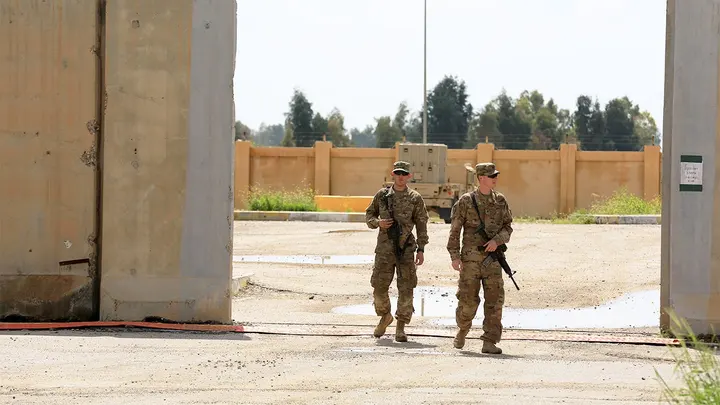
The Sept. 21 explosions occurred about 10 meters south of the Military Demarcation Line on the western front, inside a roughly four-kilometer-wide buffer zone, during South Korean route clearance for a joint United Nations Command inspection of suspected Northern mine-laying. Two blasts went off about a minute apart. Two of the three wounded soldiers were critically injured; the third was lightly hurt.
South Korea's Joint Chiefs of Staff, announcing preliminary findings late Monday after a joint site visit with the Command, said North Korean resin antipersonnel mines deliberately planted south of the line were "highly likely" the cause. Forensic analysis found TNT and brown synthetic residue consistent with Northern resin mines, Lt. Gen. Kwon Dae-won, Joint Chiefs vice chairman, said.
On Tuesday, investigators found another North Korean resin antipersonnel mine near the blast site. Defense Minister Kang Shin-chul told lawmakers it had been buried and was presumed linked to border-reinforcement work. Asked whether he was certain North Korean-planted mines caused the blasts, Kang answered yes. Officials assessed at least four mines present: the two that detonated, a third spotted as soldiers withdrew, and the fourth recovered Tuesday.
Kim Yo Jong calls findings a farce
Kim's statement, issued Sept. 29 and carried Wednesday by the Korean Central News Agency, rejected Seoul's attribution and likened it to the 2015 wooden-box mine incident Seoul also blamed on Pyongyang. She said North Korea had "seen through the true intention of the conspiratorial farce being staged by the ROK military gangsters" and accused the South of "cooking up the groundless results" to justify "political and military provocation."
"Clearly speaking, our soldiers have never crossed the border," Kim said, calling barrier work begun two years ago "only a thorough exercise of sovereignty unrelated with any military purpose."
"If the ROK military gangsters fire at our soldiers carrying on the permanent project for the southern border, not warning shots, our border units will take immediate and merciless retaliate attack," the statement said. Kim added that counteraction principles had already been issued to border units and that the army would increase "tactical counterattack means" opposite South Korea's 21st Infantry Division of the III Corps — eastern front, not the western blast sector.
The precise planting timeline remains contested: Seoul says Northern troops crossed south to lay mines; Pyongyang denies any crossing and calls the investigation fabricated.
United Nations Command cites Armistice breach
The United Nations Command said Wednesday a joint investigation team "identified an active Democratic People's Republic of Korea anti-personnel mine on the ROK side of the Military Demarcation Line."
"Based on the findings of the investigation, UNC determined that an Armistice Agreement violation occurred," the Command said, adding it was addressing the violation through established Armistice mechanisms and remained committed to preventing escalation on the peninsula.
The 1953 Armistice Agreement prohibits hostile acts "within, from, or against" the Demilitarized Zone and bars unauthorized crossings of the line. The Command cited the active mine south of the line but did not name a responsible party or list specific paragraphs, unlike its 2015 finding after mines maimed two South Korean soldiers.
Seoul demands apology as Lee visits wounded
Lt. Gen. Kang Hyun-woo, chief director of operations at the Joint Chiefs, delivered Seoul's first formal message to Pyongyang Wednesday at the Defense Ministry.
"This constitutes a blatant violation of the Armistice Agreement and undermines the spirit of existing inter-Korean agreements and must be halted immediately," Kang said. He demanded an apology and "responsible measures," urged Pyongyang to cease so-called border fortification, and said North Korea "bears full responsibility for any future consequences that may arise." Officials have also spoken of unspecified "corresponding measures" if Northern planting is confirmed.
Lee visited the three wounded soldiers at a military hospital the same day, pledging full support for treatment, rehabilitation and continued service, and directing officials to ensure compensation, the presidential office said.
Border fortification and warning thresholds
North Korea has been fortifying the inter-Korean border since April 2024 — reinforcing fences, laying mines, and erecting anti-tank barriers near the line — after Kim Jong Un redefined relations with the South as those between "two states hostile to each other." Seoul has reported mine work within several meters of the line. Inter-Korean hotlines have not functioned reliably since Pyongyang stopped answering routine calls in 2023.
Lim Eul-chul, a professor at Kyungnam University's Institute for Far Eastern Studies, said Kim's remarks appeared designed to justify future retaliation against South Korean warning shots or broadcasts near the border.
"North Korea is accumulating a narrative that any future clash is not the result of its own actions but a response to South Korean provocations," Lim said.
Author

We cover the world’s chaos so you don’t have to scroll twelve feeds to understand it.
Sign up for Atlas newsletters.
Stay up to date with curated collection of our top stories.