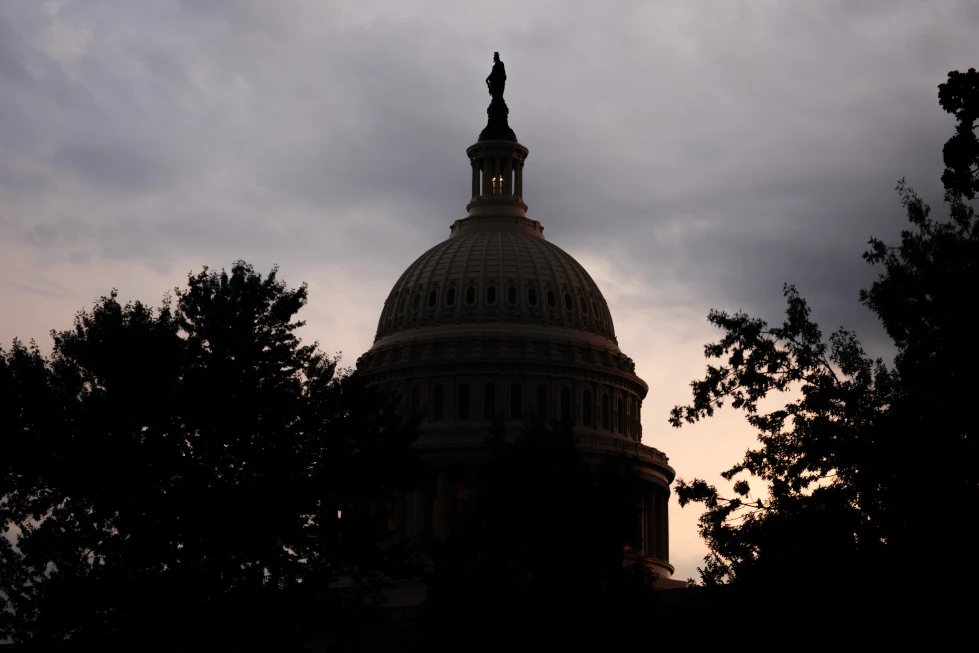
Senate negotiators reached agreement Saturday on a short-term spending bill that would keep the federal government funded into the fall, defusing for now the threat of a shutdown and buying appropriators time to finish work on full-year bills stalled by disputes over the cost of the Iran war and White House spending clawbacks.
The measure, negotiated by Senate Appropriations Committee Chair Susan Collins of Maine and the panel's top Democrat, Patty Murray of Washington, would extend current funding levels through November 20. Leaders in both parties signaled they expect the bill to clear the chamber early next week before heading to the House.
"This agreement keeps the government open and keeps our appropriations process moving," Collins said. "It is not the outcome anyone prefers, but it is the responsible course while we complete our work." Murray called the deal "a bridge, not a destination," adding that Democrats "will not accept a full-year continuing resolution that locks in cuts by default."
The agreement caps weeks of stalled talks and came together after negotiators dropped the most contentious riders from the package, leaving the toughest fights — including the administration's proposed rescissions and disputes over war funding — for the fall.
What's in the Package
The stopgap holds most agencies at current spending levels and includes a handful of narrow additions negotiators described as necessary to avoid disruptions. It provides additional funds for military munitions replenishment, addressing stockpiles depleted by five months of operations against Iran and continuing aid to Ukraine, and extends several expiring health programs, including community health center funding and telehealth flexibilities.
The bill also includes disaster relief for states hit by spring flooding and wildfires, and it maintains pay for the roughly 1.3 million active-duty service members without interruption. Negotiators left out the SAVE America Act, the voting restrictions bill President Donald Trump has pressed the Senate to pass, after Democrats made clear its inclusion would sink the deal.
Left unresolved is the administration's $9 billion rescissions request targeting foreign aid and public broadcasting, which Republicans agreed to consider separately. Also excluded was any language reauthorizing Section 702 of the Foreign Intelligence Surveillance Act, the warrantless surveillance authority that lapsed in June; senators in both parties said that fight will proceed on its own track when Congress returns in September.
"There are things in this bill both sides dislike, which is usually the sign of an agreement that can pass," said Senate Majority Leader John Thune. Senate Democratic Leader Chuck Schumer said the deal "avoids the pain of a shutdown that would have landed on federal workers and families already dealing with higher prices."
The War's Shadow Over the Budget
The Iran conflict loomed over the negotiations throughout. The Pentagon has told lawmakers the cost of operations since February 28 exceeds $37 billion, and the services have flagged shortfalls in air defense interceptors and precision munitions. Defense hawks pushed to attach a larger emergency supplemental to the stopgap, but negotiators opted for a smaller replenishment figure after Democrats and some Republicans balked at approving open-ended war funding without a floor debate.
"We should not be funding an undeclared war through a continuing resolution," said Senator Tim Kaine of Virginia, who has pushed for a war powers vote. Republican Senator Lindsey Graham's death last month removed one of the chamber's most vocal advocates for a larger defense package, and his successor has not yet been seated.
The White House budget office signaled Trump would sign the measure, with a spokesperson saying the president "expects Congress to deliver his full defense request in September." Fiscal conservatives in both chambers criticized the extension of current spending levels, with members of the House Freedom Caucus calling the bill "a punt" and pressing for deeper cuts to nondefense accounts.
A Tight Calendar in the House
The bill's path now runs through the House, which is on recess until August 31 — a full month before the fiscal year ends September 30. Speaker Mike Johnson said in a statement that he had been briefed on the agreement and expects the House "to act promptly upon our return," though he stopped short of endorsing the package. Conservative opposition means the bill will likely need Democratic votes to pass the chamber, a familiar dynamic in recent funding fights.
House Democratic Leader Hakeem Jeffries said his caucus would "review the details" but called the framework "a reasonable starting point." If the House amends the measure, the Senate would need to act again before the deadline, compressing an already narrow window.
Congressional aides in both parties said the November 20 end date was chosen deliberately to force action before the Thanksgiving holiday while avoiding a December cliff that has produced year-end omnibus packages lawmakers in both parties say they want to abandon.
What Comes Next
Appropriators have completed committee work on most of the twelve annual bills, but none has passed both chambers. The fall agenda now stacks the spending bills against the FISA reauthorization fight, the rescissions package, and possible war-related supplemental requests — all against the backdrop of November midterm elections that will decide control of both chambers.
Collins and Murray said they intend to move the remaining bills in packages beginning in September. Whether that timeline holds may depend as much on events in the Middle East as on the appropriations calendar: another escalation with Iran would renew pressure for emergency funding, while a durable ceasefire could ease one of the process's biggest sticking points.
For now, lawmakers leave Washington with a deal in hand and the largest questions deferred. The Senate is expected to hold its procedural vote Monday evening.
Author

We cover the world’s chaos so you don’t have to scroll twelve feeds to understand it.
Sign up for Atlas newsletters.
Stay up to date with curated collection of our top stories.