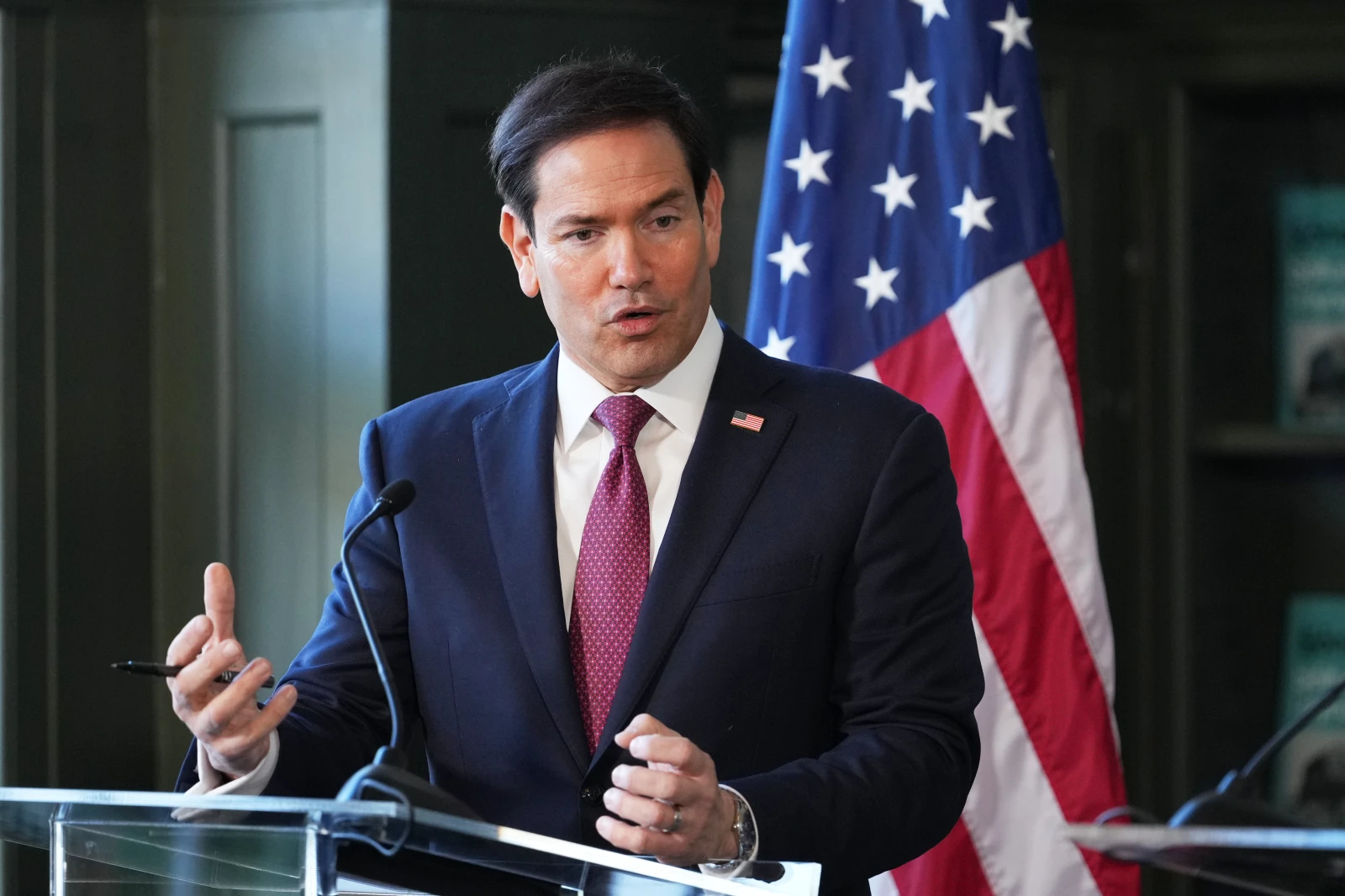
The Trump administration on Friday, Oct. 9, sanctioned the International Criminal Court as an institution. It is the first time Washington has designated the court as a whole, rather than individual judges and prosecutors.
“Either the ICC will end its threats, or we will end the ICC,” Secretary of State Marco Rubio said in a statement released Friday.
The court in The Hague called the step “an assault on the rule of law.” A Treasury license covering the court’s routine operations runs until April 7, 2027, and the administration says it built in time for the court’s 125 member states to negotiate.
What the sanctions do
The State Department designated the court under Executive Order 14203, which President Donald Trump signed on Feb. 6, 2025. The designation, effective Friday, blocks the court’s property under U.S. jurisdiction and generally bars Americans and U.S. companies from providing it funds, goods or services.
Four general licenses from the Treasury Department’s Office of Foreign Assets Control soften the blow, and only one carries a deadline. General License 13 authorizes transactions “ordinarily incident and necessary to the maintenance or wind down of operations” involving the court, including member states’ payments, salaries and rent. It expires at 12:01 a.m. Eastern time on April 7, 2027, 180 days after issuance, unless Treasury extends it. The expiry date matches General License 135, which Treasury issued the same day to allow sales of Russian diesel.
A separate license, General License 16, covers transactions “ordinarily incident and necessary to the continued detention” of nine people named in its annex, including “services for the health, safety, and welfare of such individuals” and the operation of detention facilities. The first name listed is Rodrigo Roa Duterte, the former president of the Philippines.
Two others, for telecommunications and software and for pensions, set no expiration date.
The administration’s case
“President Trump will never allow the International Criminal Court to prosecute Americans,” the statement said. “We will ban transactions with this rogue court, cutting off their resources and crippling its ability to operate.”
Rubio called on allies “to rein in the court.” If they do not, he said, the United States “will continue its campaign to dismantle the ICC, brick by brick, until Americans are threatened no longer.”
In a video, Rubio said “the United States and the American people are not subject to the jurisdiction of this fake ICC.”
The same statement that vows to dismantle the court also offers to negotiate with its members. “We have structured this action to provide an opportunity for States Parties to negotiate and present a solution to address our concerns,” it says.
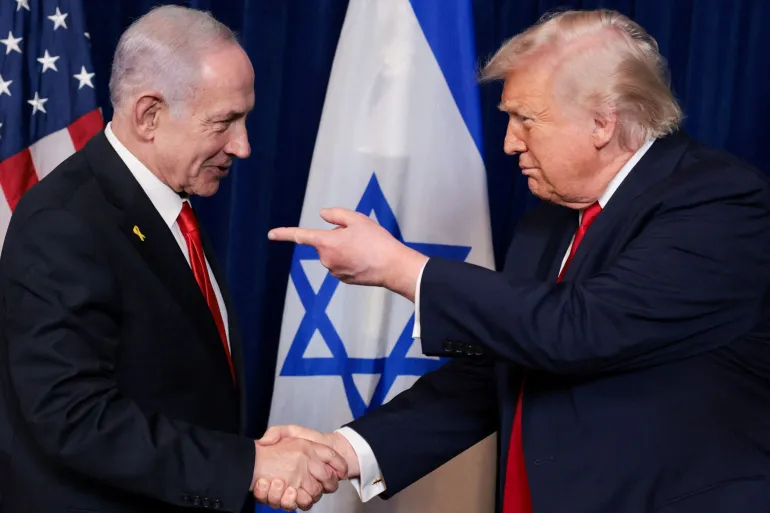
The administration cited no new ICC action as the trigger. Its objections center on the court’s November 2024 arrest warrants for Israeli Prime Minister Benjamin Netanyahu and former Defense Minister Yoav Gallant.
Netanyahu welcomed Friday’s action on X. “The ICC is not a court. It is a political body that poses a mortal threat to law abiding democracies worldwide and to the very idea of national sovereignty,” he wrote.
A campaign building since 2025
The first Trump administration sanctioned then-Prosecutor Fatou Bensouda in September 2020, and President Joe Biden lifted those sanctions in April 2021.
After Trump signed the February 2025 order, the administration sanctioned then-Prosecutor Karim Khan on Feb. 13, 2025. Four judges followed on June 5, 2025, then two more judges and both deputy prosecutors on Aug. 20, 2025. Three Palestinian human rights groups that had pressed cases at the court were added on Sept. 4, 2025, and two more judges on Dec. 18, 2025. Khan was removed from office by the court’s member states on July 24, 2026, after they found he had committed serious misconduct.
On Aug. 18, 2026, the administration sanctioned the court’s president, Judge Tomoko Akane of Japan, and senior trial lawyer Abdoulaye Seye of Senegal. By the court’s count, nine of its 18 judges, both deputy prosecutors, the former prosecutor and one staff member are now under U.S. sanctions.
A split in Washington
Rubio’s statement claimed bipartisan ground. “For decades, Republicans and Democrats alike rejected the idea that the International Criminal Court had the power to prosecute American citizens, military servicemembers, or political leaders,” it said.
Democrats objected. “Unfortunate and short-sighted,” said Sen. Jeanne Shaheen of New Hampshire, the top Democrat on the Senate Foreign Relations Committee. She said the administration was “further isolating the US and making it harder to bring perpetrators of atrocities to justice for victims in places like Ukraine and Darfur.”
Senate Foreign Relations Committee Chairman Jim Risch of Idaho had issued no public statement on the designation as of Saturday morning.
Allies weigh a counterstrike
The court said it “will not be deterred.” Akane, under U.S. sanctions herself since Aug. 18, said as court president that it “will continue to fully discharge its mandate, with independence and impartiality, acting only on the basis of the law and the evidence.”
The European Commission called the sanctions “deeply regrettable” and said the EU was “ready to take any necessary measures to enable the court to carry out its work.”
In a joint statement, the foreign ministers of Britain, Canada, Denmark, France, Germany, Italy, Japan and the Netherlands said they “regret and strongly disagree with” the sanctions. They represent eight of 125 member states, including every Group of Seven country but the United States, which is not a member of the court.
In the Netherlands, the court’s host, Foreign Minister Tom Berendsen called the action “a new and unwelcome escalation.” He has asked Brussels to prepare the EU’s Blocking Statute, which shields EU companies from foreign sanctions, while calling it a last resort. Belgian Foreign Minister Maxime Prévot called for activating it and said Belgium would raise it with EU foreign ministers on Monday, Oct. 12.
U.N. Secretary-General António Guterres called the sanctions “a serious blow to our collective pursuit of international criminal justice, of which the ICC is a key pillar.”
Author

We cover the world’s chaos so you don’t have to scroll twelve feeds to understand it.
Sign up for Atlas newsletters.
Stay up to date with curated collection of our top stories.