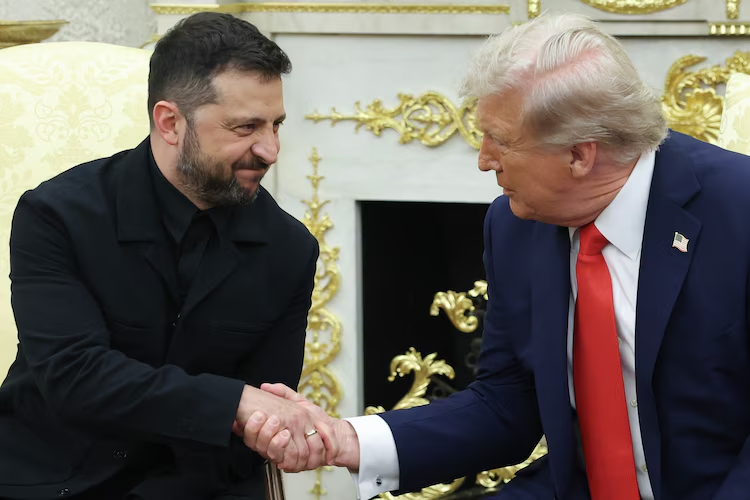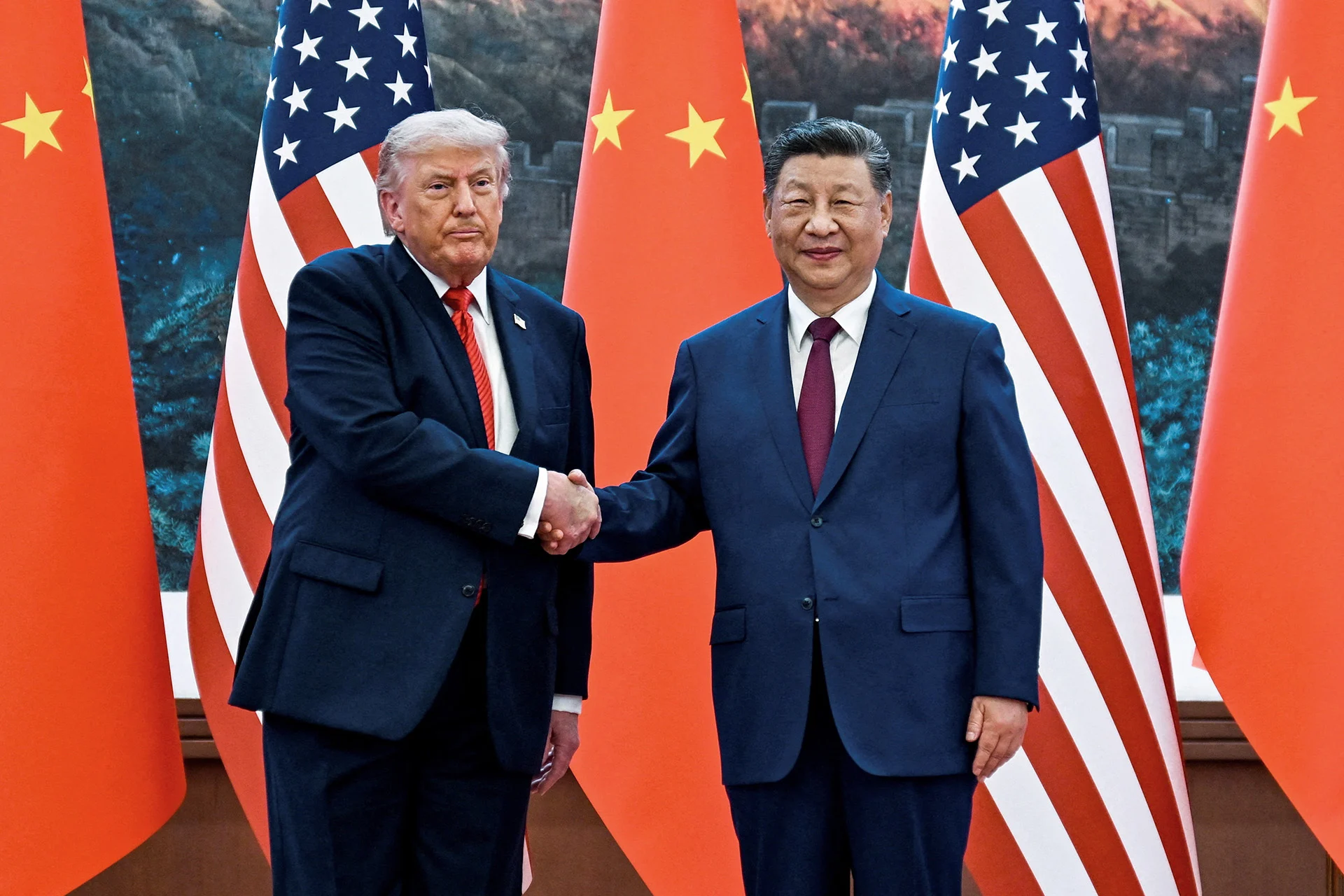
Chinese President Xi Jinping arrives in the United States on Wednesday for a three-day state visit that begins with a rare planeside greeting from President Donald Trump and first lady Melania Trump at Joint Base Andrews outside Washington. White House guidance has put wheels-down near 4:10 p.m. Eastern (3:10 p.m. Central). Formal bilateral talks and the full White House pageantry follow on Thursday. The visit is Xi's first U.S. state visit since September 2015 under President Barack Obama, and the third Trump–Xi meeting of this presidential term after Trump's May 2026 trip to Beijing.
Trump normally receives foreign leaders at the White House. Greeting Xi and Peng Liyuan on the tarmac breaks that habit; the White House confirmed Melania Trump will join the planeside reception. David Sacks, a fellow for Asia studies at the Council on Foreign Relations, has called an Andrews welcome unprecedented for a strategic adversary. The gesture is not reciprocal in kind: when Air Force One landed at Beijing Capital International Airport on May 13, Xi did not meet Trump on the tarmac. Vice President Han Zheng led the reception with an honor guard and a band.
Trump faces midterms in under six weeks. Xi returns home to a year-long run-up to next fall's Party Congress, where he is expected to secure another five-year term. Scott Kennedy of the Center for Strategic and International Studies has said the summit may produce "a small number of deliverables," an outcome he said could work mainly to China's advantage if managed rivalry is the goal.
Chinese state media confirmed that Cai Qi, a member of the Communist Party's Politburo Standing Committee who directs the party's General Office, and Foreign Minister Wang Yi are traveling with Xi. Xi is skipping the United Nations General Assembly in New York and limiting the U.S. stop to the White House track.
Taiwan, Iran, and a negotiating chip
Taiwan sits near the top of Beijing's list. Xi is expected to press Trump to keep holding — or drop — a proposed roughly $14 billion U.S. arms package for Taiwan that includes missiles, anti-drone systems, and air defenses. Trump has delayed approving the sale and previously described the deal as a potential "negotiating chip" with China.
China claims Taiwan as its territory and regularly stages drills and patrols around the island. Taipei leans heavily on U.S. military support. In their May meeting in Beijing, Xi warned that if Taiwan were handled "improperly," the two countries could "come into conflict," according to China's official account of the talks.
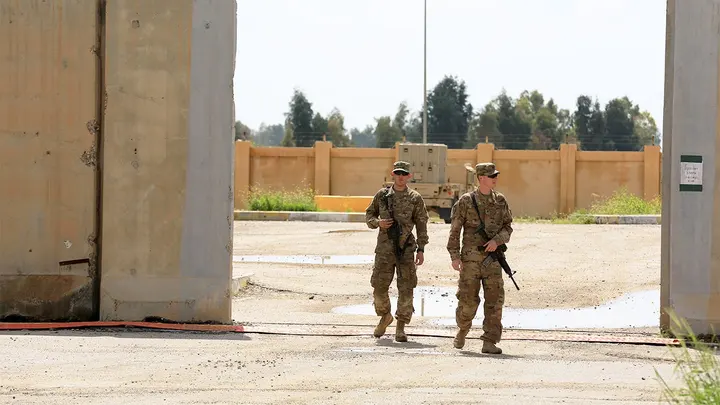
Iran is another pressure point. Democratic veterans in Congress, including Rep. Pat Ryan, urged Trump in a letter this week to confront Xi over China's role arming and enabling Tehran, including reports that Chinese entities provided satellite imagery tied to a July strike on a U.S. base in Jordan that killed three American soldiers. China has denied those allegations.
Trump has shrugged at the imagery reports, saying he thinks Xi has "behaved reasonably well," and adding that when people say China spies on the United States, "You're right, and we spy on them too."
Trade truce, minerals, and AI notices
A fragile tariff truce struck in Busan in October 2025 is due to expire in November 2026. Renewal is on the table, along with possible announcements on agriculture, aircraft, rare earths and other critical minerals, and Chinese purchase commitments. In May, Trump said tariffs "wasn't brought up" in Beijing even as he claimed commercial deals on aircraft, engines, and soybeans.
Artificial intelligence is newly prominent on the agenda. After weekend talks with Chinese counterparts, including Vice Premier He Lifeng, Treasury Secretary Scott Bessent said the sides discussed a notification system for incidents that rise to "a national security level from AI," and moving "from opaque to more transparency" between the world's top two AI powers. White House officials briefing reporters ahead of the visit confirmed AI would be discussed but did not preview specific guardrails.
Thursday's choreography
Thursday's schedule is heavy with protocol. Trump and Melania Trump are to greet Xi at the White House, then move to the Rose Garden for an honor-guard review involving roughly 479 troops, with a flyover by a B-2 bomber and four F-22 fighters. Private bilateral talks follow, then an East Room state dinner where both leaders are expected to speak. Trump has joked that the dinner is a "very tough ticket."
Guests expected include Jeff Bezos, Elon Musk, Mark Zuckerberg, Sundar Pichai, Michael Dell, Jensen Huang, Sam Altman, Jane Fraser of Citigroup, and Tim Cook, who recently stepped down as Apple's chief executive. Friday brings a private tea in the Red Room, a National Archives tour, and Xi's departure later that day.
On Tuesday at the United Nations, Trump previewed the encounter in upbeat terms. "We're going to talk about a lot. It's going to be a great meeting. And we're going to have a look — we have a very good relationship," he said. "It's a big deal tomorrow night. Everybody wants to be there."
Author

We cover the world’s chaos so you don’t have to scroll twelve feeds to understand it.
Sign up for Atlas newsletters.
Stay up to date with curated collection of our top stories.