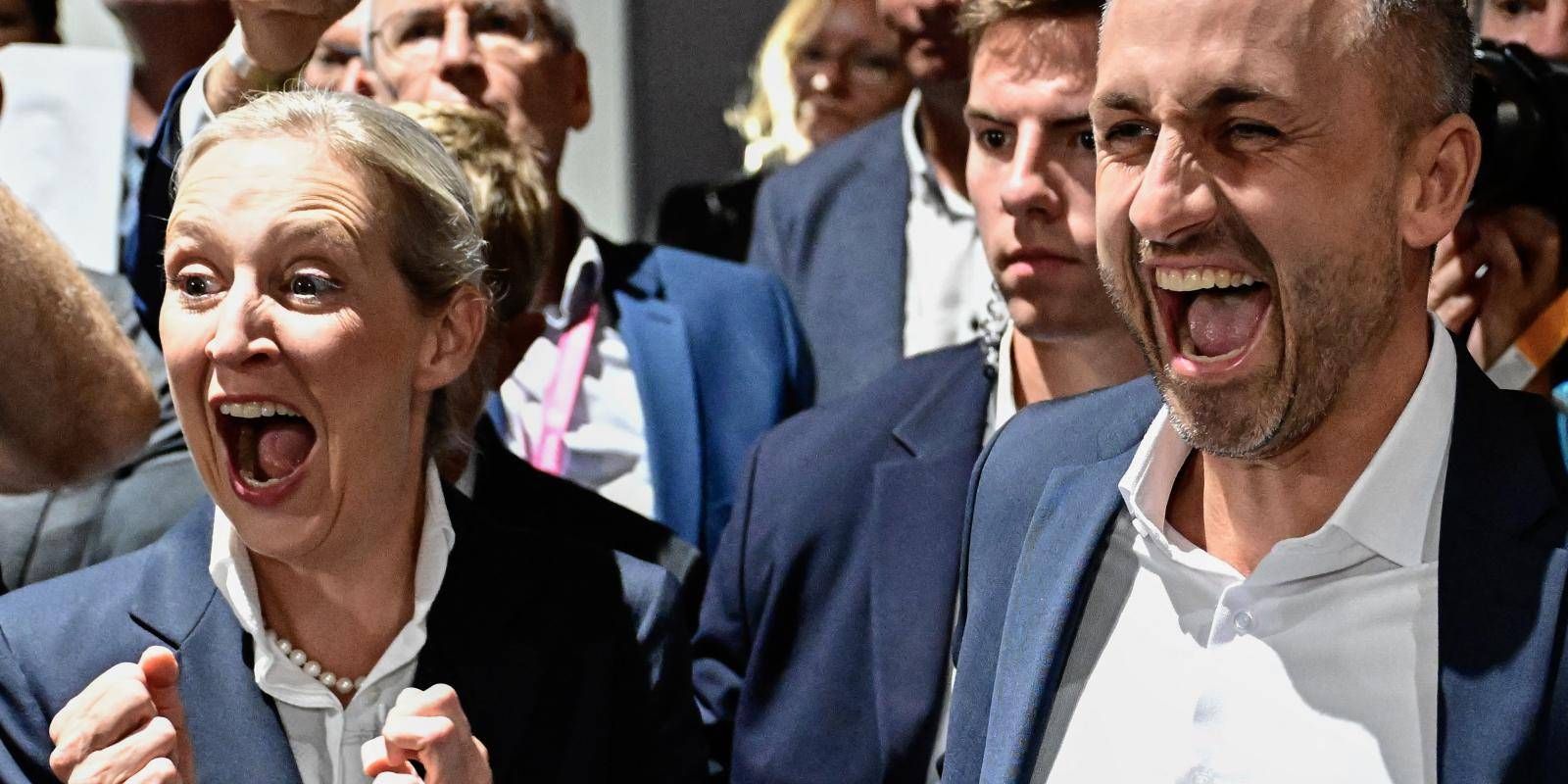
The Alternative for Germany scored its strongest result in any German state election on September 6, winning 43.8 percent in Saxony-Anhalt and 39 of 83 seats in Magdeburg — three short of the majority needed to govern alone. Turnout hit 77.8 percent in a state of about 2.1 million people, more than doubling the party’s share from five years earlier and leaving Germany’s established parties to confront whether a long-standing barrier to AfD participation in government will hold.
AfD lead candidate Ulrich Siegmund called the outcome a clear mandate to govern and said the party had "written history." He first dismissed minority-government "games," then opened consultations with other parties and individual lawmakers, framing Magdeburg as a signal for the whole country. Germany’s domestic intelligence service labels the AfD in Saxony-Anhalt a right-wing extremist organization; Siegmund rejects that designation. Defeated Christian Democratic Union premier Sven Schulze conceded that the mandate "now lies with the AfD."
Firewall Politics And A Missing Majority
Under state rules, electing a minister-president requires at least 42 votes in the 83-seat legislature. The AfD’s 39 seats leave it three short. Chancellor Friedrich Merz’s CDU, which had governed the eastern state for decades in shifting coalitions, fell to 17.2 percent and about 15 seats — roughly half its previous strength.
The Social Democrats took 9.3 percent, the Greens 8.9 percent, and the Left 8.6 percent, about eight seats each. The Sahra Wagenknecht Alliance cleared the five-percent threshold with roughly five seats.
Most mainstream parties maintain a "firewall" against formal cooperation with the AfD. AfD deputy federal figure Beatrix von Storch argued that democracy demands talks and warned of chaos or a new election if the cordon holds, claiming outreach to unhappy CDU individuals. Failure to elect a minister-president after successive ballots can dissolve the chamber and force fresh elections — a path Siegmund himself floated on election night as potentially even better for his party.
Merz Confronts A Party Crisis
Merz said he was "deeply shocked," calling the result "seismic" for the country and for his own party. He described it as the CDU’s worst showing in years, if not decades, and said the party needs profound reforms and a way to reach voters emotionally. Regional votes in Mecklenburg–Western Pomerania and Berlin loom, raising the stakes for a chancellor already under pressure from eastern discontent and national polling that has seen the AfD compete at the top of German politics.
Surveys after the vote pointed to economic anxiety, anger at federal policy, and dissatisfaction with the CDU’s local ticket as drivers. The AfD’s surge also reflected mobilization of former non-voters and a campaign built around Siegmund’s high visibility. Even so, the geography matters: Saxony-Anhalt holds a small share of the national electorate, yet a state government led by the AfD would control policing and education — portfolios with direct consequences for migration enforcement and schools.
BSW As Kingmaker And Policy Clash
The BSW is the only significant force that has not ruled out engagement with the AfD. State figure Thomas Schulze said the alliance will talk with all parties, including the AfD, and called the firewall "undemocratic." National leader Sahra Wagenknecht has urged using majorities for an energy course change, an end to Russia sanctions, education policy, and public-broadcasting reform. BSW voices have also floated a cross-party minister-president rather than automatically elevating Siegmund — a formula the AfD leader has rejected as power games.
Tension cuts both ways. Siegmund previously described the BSW as "not part of the solution but part of the problem." The parties share a hard line on migration but diverge sharply on Ukraine and Russia: Wagenknecht’s camp wants an end to support for Kyiv and restored ties with Moscow, while AfD priorities center on remigration and domestic security. Whether those overlaps produce votes for a minister-president, a limited deal, or prolonged deadlock remains the central unanswered question in Magdeburg.
Stakes Beyond Magdeburg
An AfD-led government would be the first far-right administration in a German state since World War II. Party plans discussed in the campaign include placing child refugees in special classes and a "remigration" agenda that AfD officials describe as targeting criminals and people without legal status; critics hear a broader program of mass deportations. Those claims and counterclaims will shape any coalition arithmetic and any court or intelligence scrutiny that follows.
International reaction was swift and polarized. U.S. President Donald Trump commented publicly on projected results; Kirill Dmitriev, a prominent Russian economic envoy, praised the outcome; Polish Prime Minister Donald Tusk said only idiots and traitors rejoice. Earlier public support from U.S. Vice President JD Vance for the AfD remains contested in Germany as foreign interference.
The closest recent precedent is Thuringia in 2024, where the AfD finished first but did not enter government and a CDU-led minority arrangement followed. Saxony-Anhalt’s next weeks will test whether that pattern holds — or whether the firewall finally cracks.
Author

We cover the world’s chaos so you don’t have to scroll twelve feeds to understand it.
Sign up for Atlas newsletters.
Stay up to date with curated collection of our top stories.



