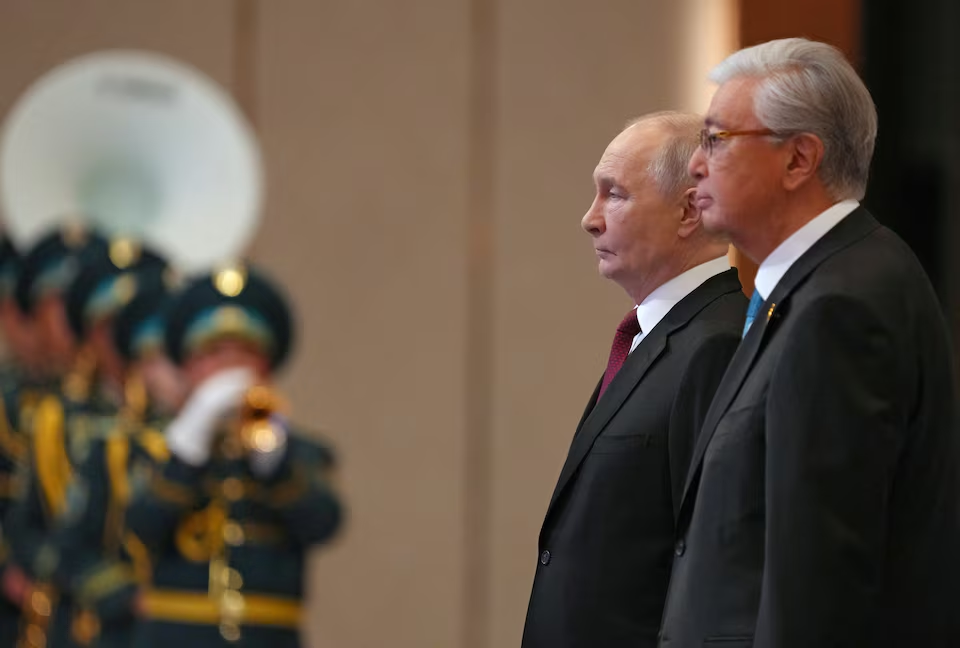
Kazakhstan has signed an agreement with Russia to build its first nuclear power plant since independence, a project due for completion in the mid-2030s. It will be financed largely by a loan from the Russian government and built by the Russian state company Rosatom.
The deal carries a weight most energy projects do not. Kazakhstan holds one of the world's most fraught nuclear legacies, and the decision to build has dragged that history back into view, along with the question of whether the country's relationship with Moscow is finally changing or simply deepening.
A Legacy Written in Fallout
During the Soviet era, the Kazakh republic served as Moscow's main proving ground for nuclear weapons. More than 450 detonations were carried out in the northeast, at a site known today as the Polygon, officially the Semipalatinsk test site, which became one of the most heavily used nuclear testing grounds anywhere in the world.
The Soviet Union chose the area for what it considered a barren, isolated, and uninhabited location. It was not uninhabited. Farmers and herders lived across the region, and whole villages were exposed to fallout, a fact withheld for decades. The consequences showed up in rising rates of cancer and birth defects.
Weapons testing ended with the Soviet collapse in the 1990s, but the harm did not. The population near the site is still living with the health effects generations later, alongside ecological damage that has left soil and some waterways contaminated. In the years since, Kazakhstan renounced the nuclear arsenal it inherited at independence and became a vocal advocate for non-proliferation.
The irony runs deep. Kazakhstan produces and exports more uranium than any other country, roughly 40 percent of the global total, yet has had no way to use it in its own power sector, and it did so while campaigning against nuclear weapons. By turning to Russia to finance and build the reactor, Kazakhstan binds itself to Moscow through loan repayments and through the plant's operating life, including maintenance that will run for decades. That reliance echoes an older pattern of control, one that traces directly back to Moscow's authority over Semipalatinsk.
The Deal and the Referendum
Kazakhstan's grid runs mostly on aging coal plants, and President Kassym-Jomart Tokayev is looking to nuclear power for an alternative. The government also plans to use the Semipalatinsk site to store the waste from the new reactors, a decision freighted with history.
Given that history, the government put the plant to a national referendum, letting citizens vote on whether construction should proceed. The measure passed with about 70 percent in favor, but the campaign around it drew criticism for a lack of balance. Kazakh state media pushed a pro-nuclear line while independent polls were censored and anti-nuclear activists were sidelined.
The choice of builder tells its own story. Rosatom, the Russian state-run company awarded the construction contract, already controls a large stake in Kazakhstan's uranium reserves, which raises questions about how internal influence shaped the outcome. Several other vendors were in contention, including firms from China, France, and South Korea, before the contract went to Moscow.
Walking the Line Between Moscow and the World
Russia's reach into Kazakhstan is real, but it is not total. Kazakhstan has shown it can exercise autonomy over major projects, turning to China, for instance, to help build Astana's new monorail system. It is also weighing Chinese and American vendors for future reactors.
That mix suggests Tokayev is carefully balancing two impulses: honoring the post-Soviet alliance with Moscow while opening doors to Western and other partners. It may also signal a country trying to move into new ventures and leave the events of the past behind. Whether the nuclear deal marks a deepening of Russian control or one more managed step away from it will not be clear until long after the reactor comes online.
Author
We cover the world’s chaos so you don’t have to scroll twelve feeds to understand it.
Sign up for Atlas newsletters.
Stay up to date with curated collection of our top stories.