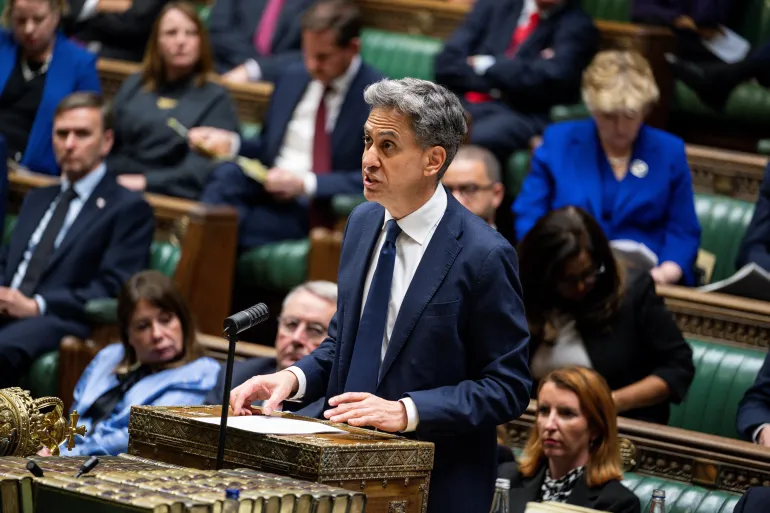
The United Kingdom announced on Sept. 8 an import ban on goods from Israeli settlements in the occupied West Bank and a new sanctions regime that officials said would take six to nine months to bring into force. Foreign Secretary Ed Miliband set out the package in the House of Commons. Prime Minister Andy Burnham backed the shift.
The measures were coordinated with France and Canada and joined to an 11-country statement that also included Denmark, Spain, Finland, Ireland, Iceland, Norway, Poland, Portugal, and Sweden. Britain now treats the occupation as unlawful, citing the International Court of Justice’s advisory opinion. Settlement goods imports are estimated at about £38 million a year inside a wider UK–Israel trade relationship of roughly £6 billion in 2025.
What The Package Does And What It Does Not
The ban targets goods produced in settlements the British government deems illegal under international law. New designation powers would reach companies and individuals involved in financing, construction, infrastructure, and real estate that expand those settlements. Advertising settlement property in the United Kingdom would be banned. Five additional settlers designated by the government as extremists would be sanctioned, bringing the total under settler-activity designations to 38. Britain is also widening its Global Human Rights sanctions regime so it can more readily target people and firms linked to serious breaches of the laws of war, including settlement-related violence.
Miliband said the regime targets settlements, not the state of Israel, and that the government opposes boycott, divestment, and sanctions campaigns against Israel as a whole. On arms, Britain will refuse new licenses that would materially contribute to the occupation; more than 30 suspended licenses remain in place.
Officials pointed to tenders for the E1 area east of Jerusalem as a trigger for acting now. Building there would sever East Jerusalem from the rest of the West Bank — the reason governments have long treated E1 as a red line. The legal frame is the ICJ advisory finding and Britain’s updated view that the occupation’s entrenchment, claim to permanent sovereignty, and settlement enterprise make it unlawful.
Miliband’s Language And The Politics At Home
In the Commons, Miliband accused “settler terrorists” of “ethnic cleansing” in areas of the West Bank. Miliband’s characterization goes beyond any finding by an international court. He said the occupation is unlawful because of how it has been entrenched through settlements and assertions of permanent control.
He also stressed that he is a proud British Jew and that blaming Jews for the Israeli government’s actions is antisemitism. Chief Rabbi Ephraim Mirvis called the day a dark one for the community’s relationship with the government.
Burnham’s government says it can separate settlement commerce from bilateral ties with Israel. Critics say any such line will not hold once designation lists and advertising bans begin.
Israel’s Response And The American Rebuff
Israeli Foreign Minister Gideon Saar called the British case an “outrageous lie,” said Israel would close the British consulate in East Jerusalem, banned 11 British MPs including Jeremy Corbyn, Diane Abbott, and Green Party members from the country, and moved to end some British training support for the Palestinian Authority and staffing help for a Gaza support center. President Isaac Herzog said Britain was on the wrong side of history.
U.S. Secretary of State Marco Rubio said the United States would not do what the United Kingdom had done. Mike Huckabee, the U.S. ambassador to Israel, warned of possible heavy economic impact on British businesses. The Palestinian presidency welcomed the ban as pressure on settlement expansion.
Trade Scale, Timeline, And What Comes Next
Thirty-eight million pounds in settlement imports is small beside £6 billion in total trade, which is why British officials call the ban targeted. Implementation over six to nine months will test customs definitions of origin, corporate designation evidence, and whether Israeli retaliation stays diplomatic or widens to commercial counters.
Author

We cover the world’s chaos so you don’t have to scroll twelve feeds to understand it.
Sign up for Atlas newsletters.
Stay up to date with curated collection of our top stories.



