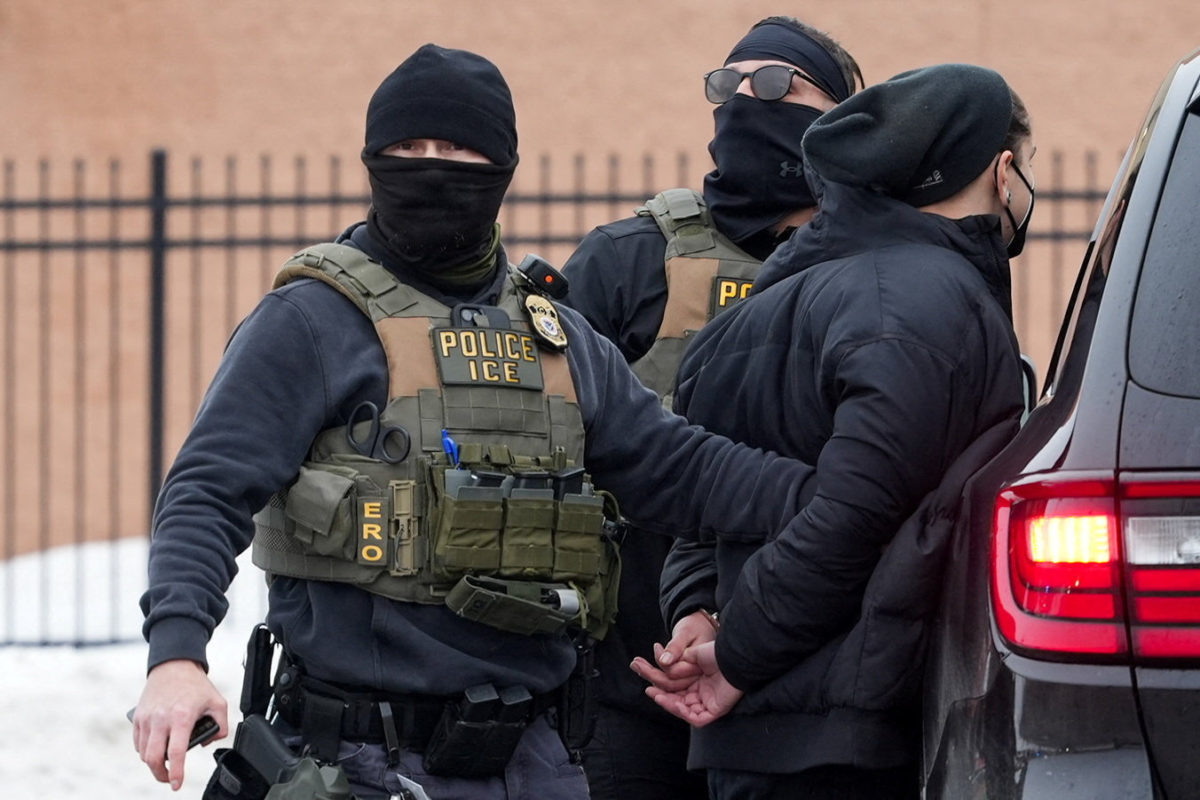
Five plaintiffs — the League of United Latin American Citizens, Common Cause, the Common Cause Education Fund, UnidosUS, and the City and County of Denver — filed suit Thursday in the U.S. District Court for the District of Columbia against the Department of Homeland Security, Secretary Markwayne Mullin, Immigration and Customs Enforcement, and Acting ICE Director David Venturella, who has held that post since June 1, 2026. The case is League of United Latin American Citizens v. U.S. Department of Homeland Security. Democracy Forward and Public Rights Project are counsel.
The complaint challenges what plaintiffs call the “Polling Place Policy” under the Administrative Procedure Act. They ask the court to set the policy aside as arbitrary and capricious and contrary to law, and as action in excess of statutory authority, under 5 U.S.C. § 706.
Mullin, speaking at a news conference in New York on Sept. 1, said ICE is not at polling places to patrol. Officers would appear, he said, only if there were a threat to the polling place or if they were serving a warrant on someone they had already been actively tracking. DHS said ICE is not planning operations that target polling locations, described its work as intelligence-driven targeted enforcement, and said that if an active public safety threat endangered a polling location, arrests could follow as a result.
A Civil Challenge Built Around A Criminal Backdrop
Plaintiffs argue the policy collides with 18 U.S.C. § 592, a Civil War–era felony that bars the deployment of armed men to the vicinity of open polls except in narrow circumstances written into the statute. That criminal prohibition is the substantive backdrop for the suit. It is not a charge the plaintiffs can bring.
Private parties do not prosecute § 592 cases. They filed an APA action in Washington instead, seeking declaratory and injunctive relief against an agency policy they say is unlawful. The complaint frames a reasoned-decisionmaking challenge: whether DHS lawfully adopted a rule that puts armed immigration officers at the doors where ballots are cast.
Fear At The Door And Who Feels It
“Stationing ICE agents near polling places is only meant to scare people and suppress votes. We’ll fight tooth and nail to prevent it,” Denver Mayor Mike Johnston said.
Janet Murguía, president and CEO of UnidosUS, said, “Sending armed ICE officers to polling places is not immigration enforcement — it is voter suppression, plain and simple.”
Juan Proaño, CEO of LULAC, said voters should be able to cast ballots “without fear of intimidation by armed ICE officers at polling places.”
The complaint puts the same worry in court language: “The specter of armed officers at polling places threatens the freedom of this upcoming election.”
Denver is a plaintiff for a specific reason. The city has about 740,000 residents, nearly 30 percent of them Hispanic or Latino. Officials say naturalized citizens and mixed-status families will feel the chill if armed ICE officers can enter polling sites, even on a warrant-only theory, and stay home rather than risk a confrontation at the library or school gym where they vote.
October 12 In Denver And Retraining At The Polls
Early voting in Denver begins Oct. 12. The main Voter Service and Polling Center at the Denver Central Library opens that day. Justice Department Civil Rights Division monitors are also at voting sites this cycle — including a Pawtucket, Rhode Island, primary on Sept. 9 under a 2024 consent decree on Spanish-language assistance under Voting Rights Act Section 203 and the Help America Vote Act — separate from ICE enforcement.
Clerk and Recorder Paul López and election staff are already rewriting poll-worker training: how to identify federal agents, including those in plain clothes; how to document their presence; how to de-escalate; and when to request assistance.
Author

We cover the world’s chaos so you don’t have to scroll twelve feeds to understand it.
Sign up for Atlas newsletters.
Stay up to date with curated collection of our top stories.



