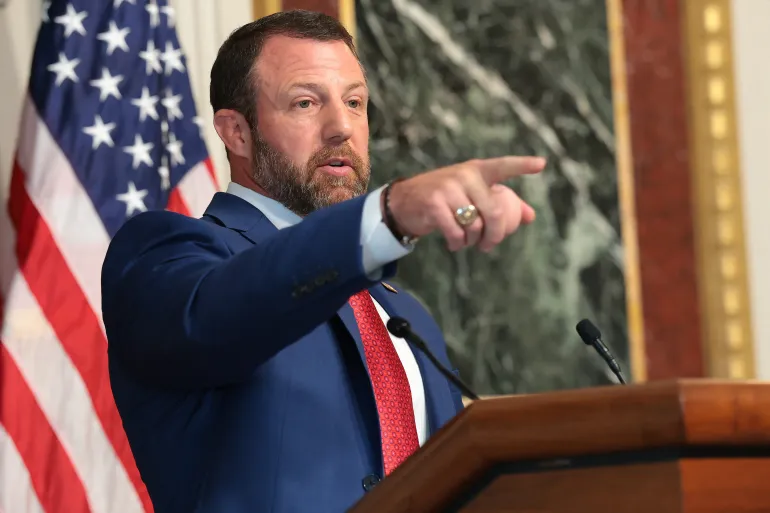
Homeland Security Secretary Markwayne Mullin pledged a "maximum pressure" campaign against states that refuse the Trump administration's election security demands, warning Friday that officials who decline to cooperate could lose federal grants, face fines, or, in his words, even prison time. Speaking from the Eisenhower Executive Office Building a day after President Trump's primetime address on the subject, Mullin said the administration would make its security measures mandatory for any state seeking federal election funding.
The announcement drew immediate pushback from Democratic state officials, legal experts, and some election administrators, who called the threats legally dubious and noted that federal courts have repeatedly blocked the administration from accessing state voter data. The confrontation arrives months before November's midterms, which will decide control of Congress.
The Demands and the Threats
Mullin laid out two central requirements: that states secure their voting machines and that they "scrub" their voter registration lists to remove noncitizens and dead voters. To do the latter, he urged states to run their rolls through the Systematic Alien Verification for Entitlements database, or SAVE, a DHS tool originally built to check eligibility for benefits like Medicaid and food stamps.
"We are going to make our security enhancements mandatory, meaning that if these states want a grant, and they want to be reimbursed to run federal elections, they're going to have to implement security measures," Mullin said. He said 23 states are participating in the expanded SAVE program, and that DHS would prioritize scrutiny of those that decline.
The secretary went further on consequences for officials. "If the election officials, once we gave them the information they need to secure their elections, and they chose not to, then those individuals can also be held accountable by fines, by penalties, and even, depending on how far it goes, prison time," he said. He did not specify what law such officials would violate or what charges could be brought. On potential voters, he was blunt: "If you are an illegal and you attempt to vote, we will find you, and we will charge you," noting that illegal voting can carry up to five years in prison and a $250,000 fine.
Mullin said the department would pursue what he called maximum pressure, monitoring early voting and reviewing records after the election. He sent letters to four secretaries of state asking for a response within two weeks, and said the DHS cybersecurity agency would release an updated election infrastructure plan within 30 days.
The Disputed Numbers
At the center of the announcement was a claim that DHS had identified more than 250,000 noncitizens registered to vote across four states: California, New Jersey, Nevada, and Pennsylvania, none of which cooperated with the administration's review. Mullin said the department obtained the data from public voter rolls, and cited additional figures of roughly 23,000 more noncitizens and some 400,000 dead people registered in cooperating states. Trump had put the nationwide total near 278,000 in his speech.
Those figures came under scrutiny. Copies of the DHS letters obtained by The Hill showed gaps between the numbers publicized and those communicated privately to states; the outlet calculated that DHS could point to roughly 118,000 records that it said might match a noncitizen on file. In Pennsylvania, for instance, the department said as many as 14,576 noncitizens might be registered but that 8,594 actually matched name, date of birth, address, and Social Security number in its files. Mullin did not detail the criteria used to reach the topline estimate, and neither he nor Trump said how many of the flagged registrants, if any, had actually cast a ballot.
Election experts say noncitizen voting is exceedingly rare. The Brennan Center for Justice found about 30 suspected instances out of 23.5 million votes it reviewed in the 2016 election, while the conservative Heritage Foundation documented 24 instances over the two decades from 2003 to 2023. Voting rights advocates also warn that the SAVE database has flagged newly naturalized citizens as noncitizens, raising the risk of wrongful purges.
State Officials Push Back
Democratic leaders rejected the demands outright. California Governor Gavin Newsom wrote, "California has free, fair, and secure elections and we will fight for them. Try us." Nevada Secretary of State Cisco Aguilar called the DHS numbers "wildly speculative" and said the department had shared nothing to substantiate them, adding that the administration "lacks a fundamental understanding of how elections work."
Even some Republican officials were skeptical. Pennsylvania Secretary of State Al Schmidt, a Republican, said the state would review any information DHS provided but would not hand over voters' private data, noting that Pennsylvanians must verify their identity every time they register or vote and that noncitizen voting is "extremely rare."
Legal experts questioned the administration's authority. The Constitution assigns the running of elections to the states, and courts have repeatedly blocked federal efforts to obtain voter rolls. David Becker of the Center for Election Innovation and Research said every court to consider the Justice Department's demands, 15 to date, including six judges appointed by Trump, had found the federal government cannot legally compel access to state voter data. "What he's suggesting is illegal," Becker said. Election law scholar Rick Hasen argued that if the government had real evidence of noncitizen voting, "there would be indictments," and the absence of them suggested the claims lacked substance. A federal judge has separately blocked the overhauled SAVE program over privacy concerns and the risk of wrongful purges.
The Broader Campaign
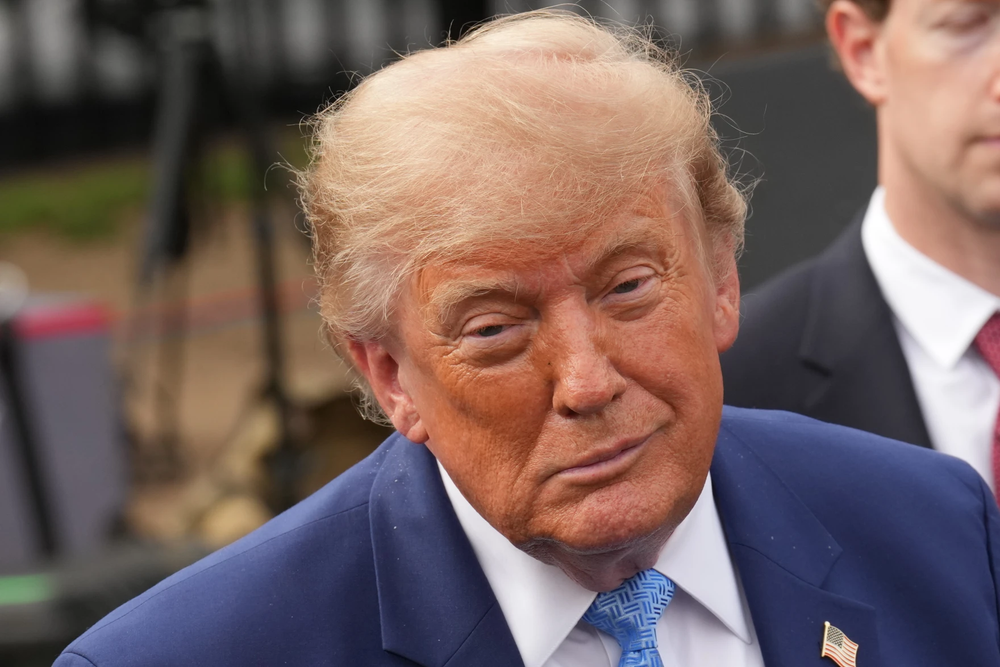
The announcement followed Trump's Thursday primetime speech, in which he declassified documents he said showed foreign interference in U.S. elections, including claims that China hacked voter registration databases and accessed 220 million voter files. Trump continues to assert, without substantiation, that his 2020 loss resulted from fraud, a claim rejected by courts, recounts, and his own first-term attorney general. Mullin said the effort was not about relitigating 2020 but about "exposing what took place and making sure it never happens again," and said the department was examining figures in the intelligence community and the Biden administration as possible targets.
Mullin also amplified Trump's concerns about voting machines, saying foreign adversaries "have parts that are vital pieces" in them and could alter registrations and votes. The U.S. intelligence community has concluded no such manipulation has ever occurred; machines are generally not connected to the internet and are backed by paper ballots in most of the country. A declassified analysis the White House released pointed to an alleged effort by Venezuela's former Maduro government to develop such a capability, though officials cited no instance of it being used.
The push comes as the administration has cut the very agencies that support election security. The Cybersecurity and Infrastructure Security Agency has seen deep staffing reductions to its election teams, and Trump recently removed the remaining leadership of the Election Assistance Commission, which helps fund state elections. It also unfolds against a difficult political backdrop for Republicans, whose control of Congress is at stake in November amid an unpopular war with Iran and elevated energy prices. The underlying legislative vehicle, the SAVE America Act, remains stalled in the Senate, where Majority Leader John Thune has said his party lacks the 60 votes needed to overcome a Democratic filibuster.
Author

We cover the world’s chaos so you don’t have to scroll twelve feeds to understand it.
Sign up for Atlas newsletters.
Stay up to date with curated collection of our top stories.