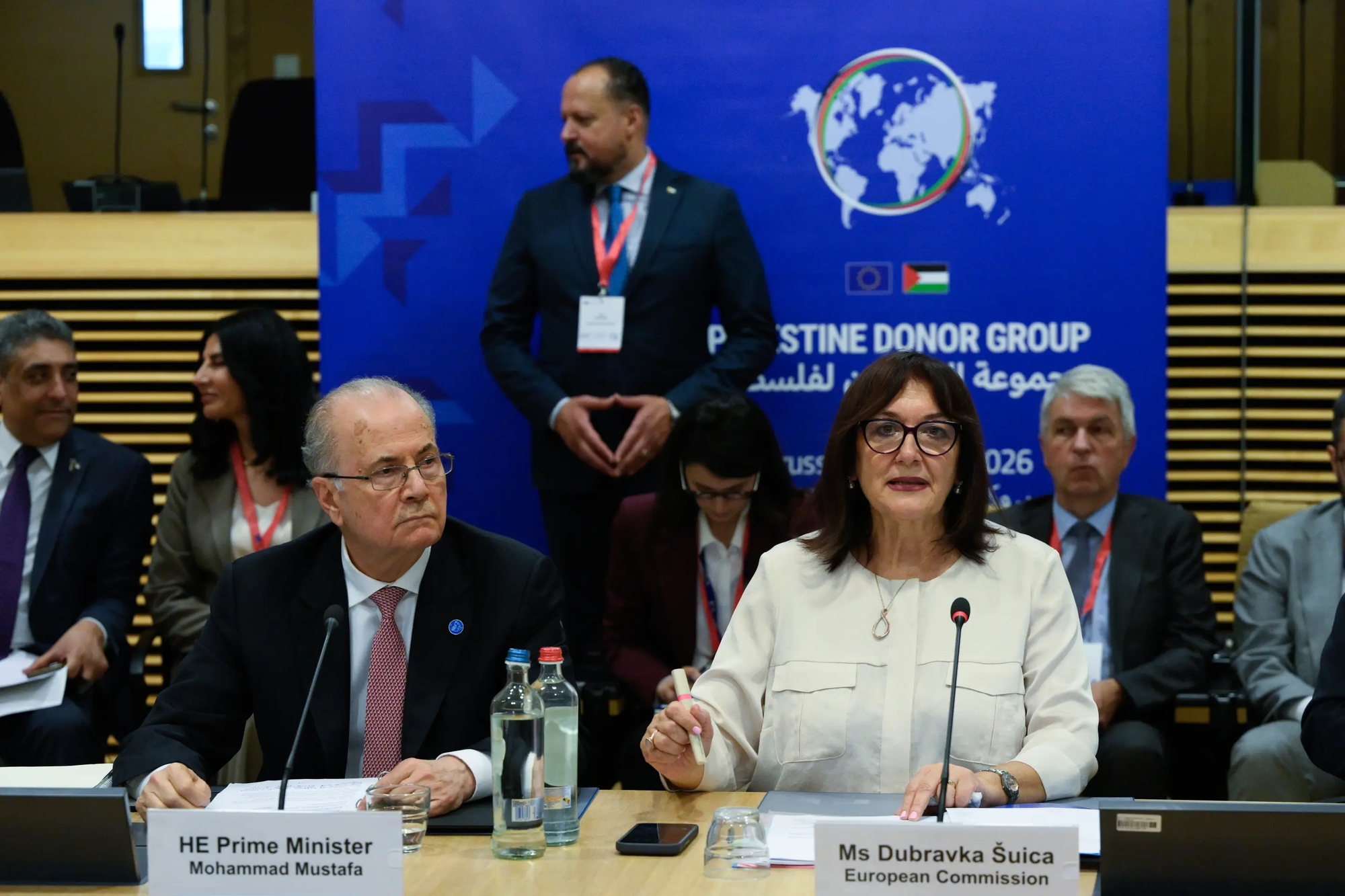
The European Commission and more than a dozen partner countries launched a $1 billion package Monday to fund early recovery work in Gaza, money aimed at clearing rubble, restoring water and sanitation, and getting hospitals and food systems running again. The sum, 883.6 million euros, is real. It is also roughly one-seventieth of what the United Nations and the World Bank say the enclave will need.
The announcement came at a donors' meeting in Brussels, with 65 delegations present, nine months into a ceasefire that has largely stopped the heaviest fighting without producing much of a peace. Whether the money can actually reach Gaza remains an open question, one European officials raised themselves.
What the Package Funds
The "Team Gaza Initiative" is designed to coordinate what officials call early recovery, as distinct from reconstruction. That means restoring water and sanitation infrastructure, hauling away debris and solid waste, and bringing back health, energy, agricultural, and food systems.
Participating governments include Spain, Denmark, Britain, Germany, Norway, Finland, Italy, the Netherlands, France, Japan, Switzerland, Sweden, and Belgium, alongside the European Commission, the European Investment Bank, and the World Bank. Australia and Canada are expected to join. The Commission did not say how much each partner is contributing, and officials acknowledged the total includes money already pledged.
"Our objective is clear: to help build hope, resilience and a better future for the Palestinian people," said Dubravka Šuica, the EU commissioner for the Mediterranean, who co-chaired the meeting with Palestinian Authority Prime Minister Mohammad Mustafa. Donors, she said, "want to start with so-called early recovery, and it is very important to show that we are willing to do it."
Šuica said she had reached agreement with Israeli authorities during a recent visit on next steps for two large projects covering waste and water management inside Gaza. Britain separately announced a £10 million contribution to a UN fund supporting Palestinian-led recovery.
The Gap Between the Money and the Need
The scale problem is not subtle. A joint assessment by the EU, the UN, and the World Bank released in April put Gaza's recovery and reconstruction needs at roughly $71 billion over ten years, with $26.3 billion required in the first 18 months alone just to restore essential services and critical infrastructure.
The physical numbers behind that figure are staggering. The UN counted 371,888 homes damaged, about three quarters of Gaza's housing stock, with 85 percent of those destroyed outright. More than 60 million tons of rubble sit across the strip, enough to fill nearly 3,000 container ships, and clearing it is expected to take over seven years, with demining on top of that. Nearly the entire population of roughly two million was displaced during the war, many of them repeatedly; about half now live in tents.
Other money exists on paper. At the Board of Peace's first meeting in February, the United States pledged $10 billion toward Gaza's reconstruction, and Kazakhstan, Azerbaijan, the UAE, Morocco, Bahrain, Qatar, Saudi Arabia, Uzbekistan, and Kuwait together committed more than $7 billion. Combined with Monday's package, that is roughly $18 billion, still a quarter of the estimated need, and little of it has moved.
The Disarmament Wall
The obstacle blocking the road from early recovery to actual reconstruction is Hamas's weapons, and European officials said so plainly.
"But to do that, we need disarmament of Hamas in order to start proper recovery," Šuica said.
Nickolay Mladenov, the Bulgarian diplomat who heads the Board of Peace, the body Trump created to oversee Gaza's rebuilding, has said the next steps of the ceasefire are stalled on the same issue. He attended the Brussels meeting alongside Ali Shaath, who leads the National Committee for the Administration of Gaza, the technocratic body meant to run the enclave's daily affairs and which still cannot enter it, remaining in Egypt. Jared Kushner joined by telephone.
Hamas said last week it had dissolved its Government Emergency Committee and would hand civilian administration to the National Committee. The Board of Peace said it would judge that by actions rather than words. Israeli Foreign Minister Gideon Sa'ar said Israel does not believe Hamas intends to give up military control.
Conditions on the Ground
The ceasefire, brokered by the United States, Egypt, and Qatar, took effect in October 2025. It has not ended the killing. Gaza's health ministry said Monday that 1,108 people have been killed and 3,578 wounded since it began, bringing the cumulative toll since October 7, 2023, to 73,231 dead and 173,686 wounded. Those figures come from the Hamas-run ministry and have not been independently verified. The war began with the Hamas-led attack on southern Israel that killed roughly 1,200 people and took about 250 hostages.
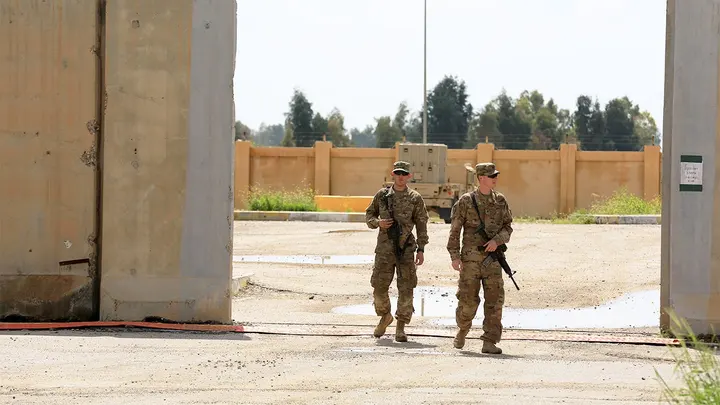
Israeli troops control close to 70 percent of Gaza, patrolling what Prime Minister Benjamin Netanyahu calls a buffer zone. He has said Israel will not withdraw.
Hadja Lahbib, the EU crisis management commissioner, called the situation "unbearable." "Nine months after the so-called ceasefire, shelling continues, disease is spreading, people are dying," she told reporters. Gaza's health ministry said last week that about 70 percent of its ambulance fleet is out of service for lack of parts and tires. A senior UN official, separately, accused Hamas of obstructing aid deliveries and intimidating aid workers.
British Foreign Secretary Yvette Cooper was blunt about the pace. "The scale of destruction is devastating, and the pace of support despite all the promises made in the peace plan is still shockingly slow," she said, criticizing Israeli restrictions on humanitarian aid and shelter.
The Palestinian Authority Question
Running underneath the aid conversation is a second one about who governs and who gets funded. EU foreign policy chief Kaja Kallas tied continued support to reform in the Palestinian Authority, and Mustafa was in Brussels partly to brief officials on that agenda: fiscal changes including a VAT that took effect in 2025, governance measures including presidential elections announced for next year, and the end of the payment system to families of Palestinians imprisoned or killed by Israel, which Mahmoud Abbas scrapped in February. An EU audit verifying that is due by summer's end.
Mustafa rejected the label critics use for those payments, describing the program as a social care system based on need and administered transparently. He also pressed for international pressure on Israel to release withheld Palestinian tax revenues, without which the authority faces bankruptcy. Donors in Brussels raised an additional 41.7 million euros for a mechanism to channel funds to the PA, on top of a 310 million euro Commission pledge. Since 1994, the EU has given Palestinians nearly 30 billion euros, making it their largest donor.
Separately Monday, EU foreign ministers debated how to answer rising settler violence in the West Bank, with options on the table including cutting off trade with Israeli settlements. Ireland and Spain want forceful action; Germany, the Czech Republic, and others prefer incremental pressure, and some states have signaled they would veto sanctions. Kallas said the Council's legal service found that severing settlement trade ties would require only a majority vote, not unanimity.
Šuica, for her part, kept returning to the same caveat. "We now need the conditions on the ground that will allow the support to reach the people in Gaza," she said. That, more than the money, is what nobody in Brussels could promise.
Author

We cover the world’s chaos so you don’t have to scroll twelve feeds to understand it.
Sign up for Atlas newsletters.
Stay up to date with curated collection of our top stories.