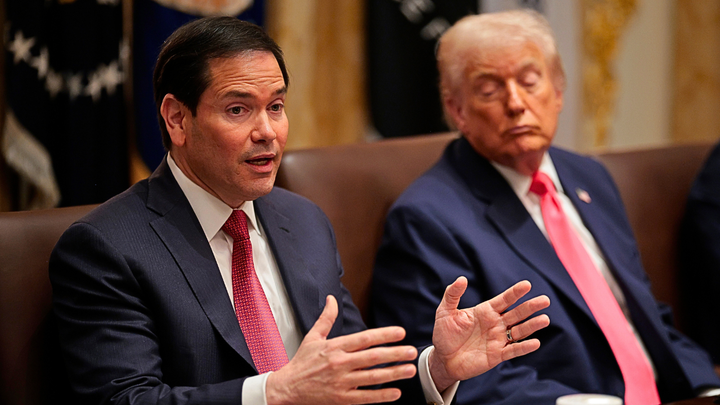
A federal judge struck down the Trump administration's suspension of immigrant visas for nationals of 75 countries, ruling that Secretary of State Marco Rubio exceeded his legal authority by ordering consular officers to refuse applicants the law otherwise deemed eligible — and vacating every denial issued solely under the policy.
US District Judge Jeannette Vargas of the Southern District of New York held in a 61-page decision Friday that the policy "is contrary to law and was issued in excess of Secretary Rubio's statutory authority." The ruling requires the government to reconsider the refused cases under normal immigration law, restoring visa processing for applicants from a list of countries that spanned nearly 40% of the world — including Russia, Afghanistan, Iran, Egypt, Somalia, Haiti, Brazil, Nigeria, Pakistan, and Bosnia.
The State Department announced the policy in January, directing embassies and consulates to suspend immigrant visa adjudications for the designated countries while the department reassessed vetting procedures. Applicants from those nations, the department said at the time, were "at a high risk for becoming a public charge and recourse to local, state and federal government resources in the United States." A department statement promised that "the generosity of the American people will no longer be abused." The freeze did not affect visas issued before the announcement and did not apply to student or tourist visas.
The government can appeal. The State Department did not immediately comment on the ruling or indicate whether it would.
"The Outcome Is Predetermined"
Vargas, a Biden appointee sitting in Manhattan, rested her decision on the structure Congress built into the Immigration and Nationality Act. The statute, she wrote, gives consular officers "exclusive authority and discretion" over immigrant visa adjudications and "categorically prohibits" discrimination based on nationality in visa issuance.
The policy nominally preserved individual review — Rubio's cable instructed officers to evaluate each applicant. But even applicants who overcame the public-charge concern and had no other ground for refusal were still denied if they came from a listed country. "While the Policy permits consular officers to exercise their normal functions up to a point, whatever determinations they make as to eligibility for the applicants subject to the Policy are ultimately irrelevant," Vargas wrote. "The outcome is predetermined. The visa will be refused."
The administration argued the denials were lawful because officers formally entered them under Section 221(g) of the INA, an existing refusal provision. Vargas rejected the rationale in unusually pointed terms, writing that the government "engages in what is best described as an exercise in Orwellian logic" and had failed to identify any law permitting an officer to refuse an applicant already found eligible. The policy, she wrote, drew "pernicious distinctions based upon nationality" and "displaces consular officers from the role Congress assigned them in the visa issuance process."
She also distinguished the case from the Supreme Court's 2018 decision upholding the first-term travel ban. That ruling concerned the president's authority over entry into the country, she noted; this case turned on whether the secretary of state could override the visa adjudication scheme Congress assigned to consular officers — authority the INA expressly withholds from him. "The Policy is thus patently unlawful and must be vacated under the Administrative Procedure Act," she wrote.
The Families Behind the Lawsuit
The challenge was brought by the Catholic Legal Immigration Network and African Communities Together, joined by visa applicants and US citizens sponsoring family members from the designated countries, with the National Immigration Law Center among the groups representing plaintiffs.
"The suspension of lawful visa processing across 75 countries separated spouses, parents, and children who were simply following the legal immigration process," said Anna Gallagher, executive director of the Catholic Legal Immigration Network. "Today's decision affirms both those values and the rule of law, allowing families to once again move forward toward reunification."
Joanna Cuevas Ingram, a senior staff attorney at the National Immigration Law Center, called the ruling a "significant victory." "The court made clear that immigration laws cannot be used to justify discrimination," she said. "We are determined to ensure every person and family this ban harmed receives appropriate relief and will continue to hold this administration accountable to its obligations under the law."
One Piece of a Larger Crackdown
The vacated policy was one layer in a rapid sequence of restrictions on legal immigration. A broader travel ban covering 39 countries took effect January 1, following a pause on diversity visa issuance in late December, and a federal judge in June separately blocked the administration's bar on processing immigration applications — work permits, green cards, and citizenship requests — from 39 countries. Another June ruling struck down a $100,000 fee on new H-1B visa applications as an unconstitutional tax.
The administration has meanwhile wielded the visa system aggressively in other directions: revoking more than 175,000 visas for foreign nationals citing violations, pulling roughly 6,000 student visas after a presidential order to review for security risks, imposing time limits on foreign students and journalists, and rolling out a $750 fee to fast-track visa interviews. The Supreme Court has allowed the administration to end temporary protected status for over a million migrants, and the first deportation flight to Haiti since that program's termination departed this month.
What Happens to the Denied Applicants
The immediate effect of Friday's ruling is procedural but consequential: denials based solely on the policy are set aside, and those applications return to consular officers for individualized adjudication under the statute — the process Congress prescribed and the policy short-circuited. How quickly the State Department resumes processing, whether it seeks a stay pending appeal, and how it treats the months applicants lost in the queue will determine what the decision means in practice.
For now, the ruling stands as the judiciary's most direct rebuke yet of the administration's effort to reshape legal immigration through the visa pipeline rather than through Congress — a holding that the secretary of state cannot instruct officers to refuse what the law tells them to grant.
Author

We cover the world’s chaos so you don’t have to scroll twelve feeds to understand it.
Sign up for Atlas newsletters.
Stay up to date with curated collection of our top stories.



