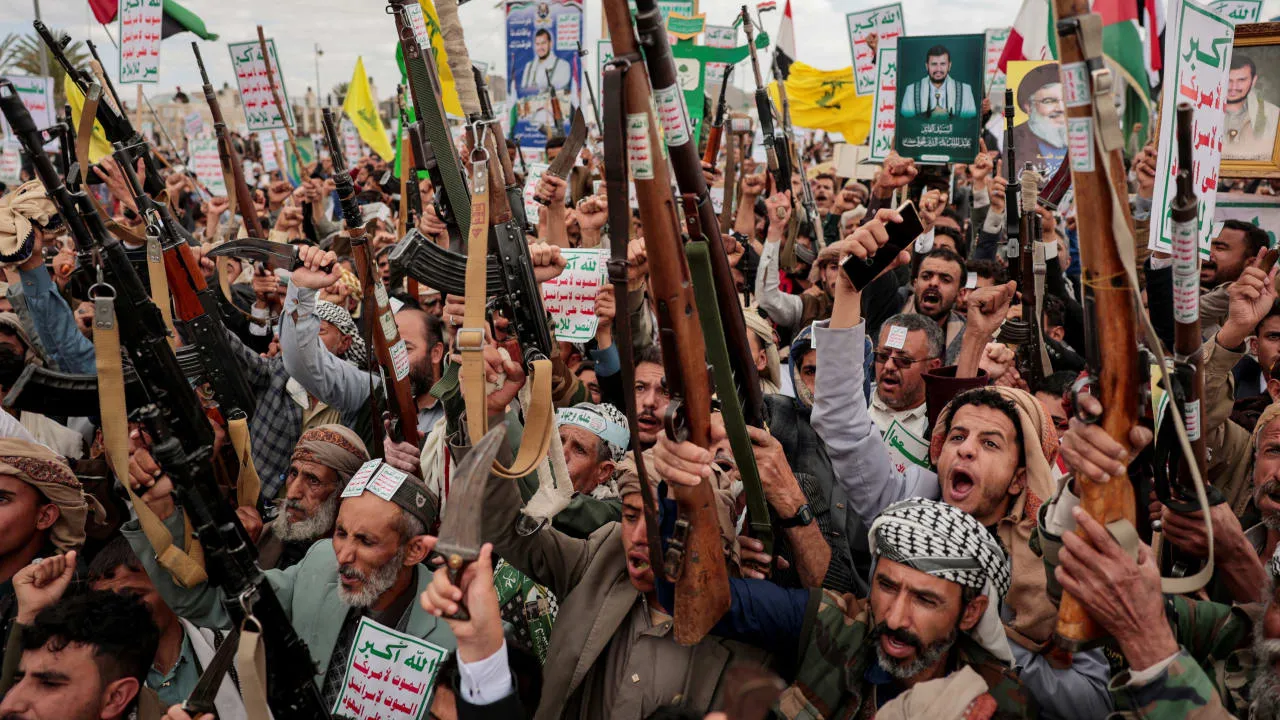
Yemen's Houthis announced a maritime blockade of Saudi Arabia on Monday, effective immediately, opening a second front on the world's energy map at a moment when the Strait of Hormuz is already largely shut. The Saudi-led coalition answered within hours, saying it would respond with force and had begun protecting its ships transiting the Bab el-Mandeb Strait.
The declaration lands on the one route Riyadh has left. With Hormuz traffic reduced to a trickle by the war between the United States and Iran, the kingdom has been pushing more than 70 percent of its crude west across the country by pipeline to the Red Sea port of Yanbu, then out through Bab el-Mandeb. That is precisely the corridor the Houthis now say they are closing.
What the Houthis Said
Military spokesman Brig. Gen. Yahya Saree delivered the announcement in a televised address. "The Yemeni Armed Forces declare a maritime embargo against the criminal Saudi enemy, based on the equation of 'an eye for an eye,' effective immediately upon the issuance of this statement," he said, adding that any "foolish act committed by the reckless Saudi enemy through all escalation will be met with a comprehensive and decisive escalation."
Saree framed it as reciprocity, asserting his people's right to answer a blockade with a blockade. He accused Riyadh of imposing "an unjust and oppressive siege on our dear people for nearly 12 years, plundering our resources and imposing a comprehensive blockade on our ports and airports by land, sea, and air." He also called for continued general mobilization and urged supporters to reinforce the fronts with fighters.
The statement itself did not name Bab el-Mandeb. Nasruddin Amer, deputy head of the Houthi media office, filled that gap on X, writing that the group's forces were closing the strait to Saudi ships. A senior Houthi official, Hizam al-Assad, went further, warning that Yemen's forces were "moving toward all-out war if the blockade on our country is not lifted."
Saudi Arabia's Response
The Saudi-led coalition said it would meet the blockade with force and had already started implementing protection measures for its vessels moving through the strait.
The Foreign Ministry took a separate line, condemning the declaration while insisting the kingdom "aims to achieve peace in Yemen and end the suffering of the brotherly Yemeni people." It said Saudi Arabia "will take all necessary measures to protect its ships in accordance with international law," and recalled earlier Houthi attacks, including the 2020 assault on Aden airport and the 2022 targeting of oil export terminals in southern Yemen. Riyadh also called on the international community to enforce Security Council resolutions on freedom of navigation in the Red Sea.
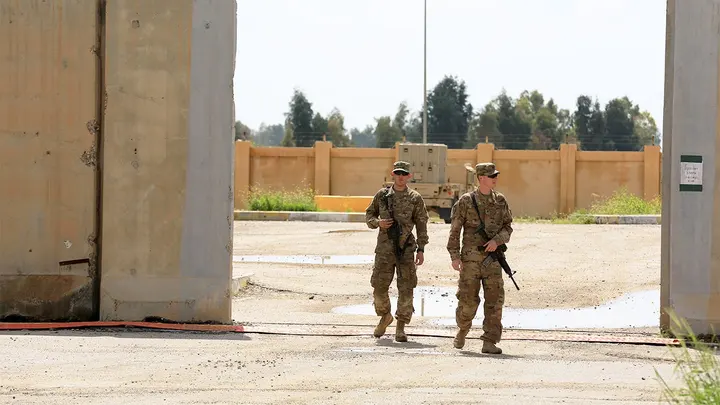
Washington has been reinforcing the kingdom's defenses. The United States approved nearly $2 billion in weapons sales to Saudi Arabia last week, aimed at bolstering air defenses as the risk of escalation with the Houthis grew.
How the Truce Broke
For four years, the Houthis and Saudi Arabia held to an informal truce that took effect in March 2022, ending a period of Houthi strikes on Saudi energy infrastructure. It survived the Gaza war, the Red Sea shipping campaign, and the first months of the Iran war. It broke last week.
The trigger was an airstrike on Sanaa International Airport. The Houthis blamed Saudi Arabia; Yemen's internationally recognized government claimed responsibility, saying it acted to stop an Iranian plane from landing without authorization. That aircraft was carrying a Houthi delegation returning from the funeral of Iran's late supreme leader, Ayatollah Ali Khamenei. It diverted and landed at Hodeidah. The delegation had refused a government offer to fly home on a non-Iranian aircraft under its supervision.
The Houthis retaliated with ballistic missiles and drones aimed at Abha International Airport in southwestern Saudi Arabia. The coalition said it intercepted the salvo. Those were the first Houthi strikes on the kingdom since the 2022 truce.
The blockade also follows pressure from Tehran. Iran had asked the Houthis to close Bab el-Mandeb if the United States followed through on threats to strike Iranian power plants and bridges, a demand made public days before Monday's announcement.
What It Means for Oil
The strait is 18 to 20 miles wide at its narrowest, running between southwestern Yemen and the Horn of Africa, and connecting the Gulf of Aden to the Red Sea and the Suez Canal beyond. In 2024 roughly 4.1 billion barrels of crude and refined products moved through it, about 5 percent of the global total. Traffic has since surged: petroleum volumes hit 7.4 million barrels per day in June, up from 4.2 million a year earlier, as shippers rerouted away from Hormuz.
Saudi shipments out of Yanbu now average about 4 million barrels per day, against roughly 973,000 a year ago, carried by the 746-mile East-West pipeline built in the 1980s. A full closure of Bab el-Mandeb would strip roughly 7 percent of global supply, on top of the 10 percent already lost to the Gulf war, potentially putting a quarter of the world's oil and gas out of reach.
Markets moved, then hesitated. Brent briefly topped $90 before easing back near $88 as traders weighed reports of renewed ceasefire efforts, with West Texas Intermediate around $82. War-risk insurance premiums for Red Sea transits jumped to about 0.75 percent of a vessel's value from 0.3 percent on Friday, which translates into hundreds of thousands of dollars in added cost for a seven-day voyage. U.S. gasoline averaged $4 a gallon on Monday.
Whether the declaration becomes action is the open question. Mohammed Albasha of the Basha Report noted it is not yet clear whether the Houthis will actually target ships. "Even if no ships are attacked, the announcement alone is likely to disrupt shipping and create uncertainty for Saudi ports," he said. "Whether the Houthis move from threats to direct action remains the critical issue."
The group's record suggests they can. Beginning in October 2023, they launched more than 100 attacks on merchant vessels in the Red Sea and Gulf of Aden, sinking four ships and killing nine crew members, and transits through the strait fell to record lows before the campaign paused with the Gaza ceasefire last October. Traffic has never fully recovered.
Meanwhile, diplomacy continues in parallel. A senior Iranian official said Tehran had received a mediator proposal for a 10-day ceasefire, and Iran's interior minister arrived in Islamabad on Monday to ask Pakistan to resume its mediation role. Yemen's own war, which began in 2014 and drew in the Saudi-led coalition in 2015, has killed more than 150,000 people and left over 22 million in need of aid.
Author

We cover the world’s chaos so you don’t have to scroll twelve feeds to understand it.
Sign up for Atlas newsletters.
Stay up to date with curated collection of our top stories.