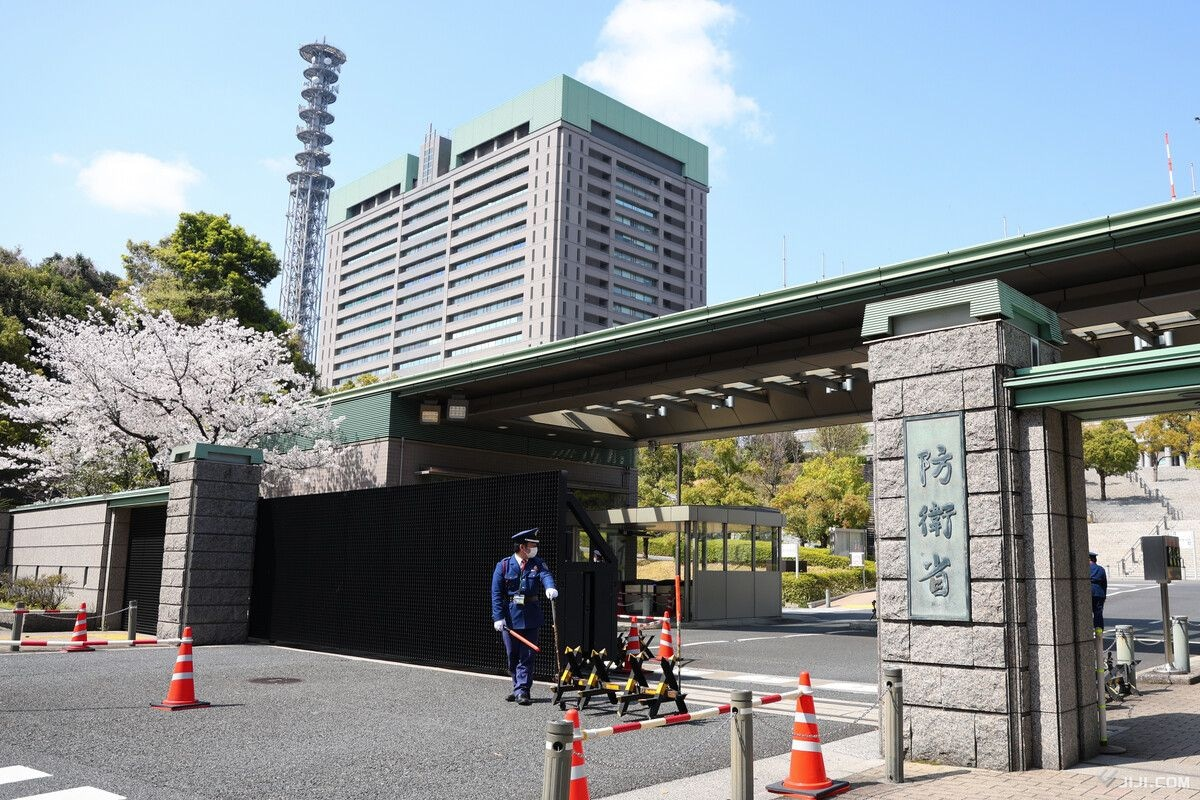
Japan’s Defense Ministry on Monday asked for a record 8.89 trillion yen, about $55.6 billion, for fiscal 2027, which begins in April. The figure is the ministry’s opening request, not a Cabinet-approved budget and not a law. It is the 15th consecutive annual increase and the 13th consecutive record, a slight rise from the roughly 8.8 trillion yen sought for the current fiscal year.
The request lands in the last year of the five-year Defense Buildup Program adopted in 2022, a plan of about 43 trillion yen covering fiscal 2023 through 2027. Tokyo already reached the equivalent of 2 percent of GDP in fiscal 2025, two years earlier than that plan had implied. Monday’s number continues that climb. It does not set the final total.
Finance Ministry officials will now review the bid. A Cabinet decision typically comes in late December. Until then, the 8.89 trillion yen headline is the amount the Defense Ministry has asked to fund, not the amount Japan will spend.
Unpriced items and the year-end security document rewrite
A large share of the request is incomplete on purpose. Officials left many lines as unpriced “item requests,” the ministry’s device for flagging programs before attaching a yen figure. Reporting on the count has varied, with some accounts putting the blank lines near 160 and others nearer 100. Either way, the published total does not capture the full list of projects the ministry wants considered.
Prime Minister Sanae Takaichi’s government intends to revise the National Security Strategy, the National Defense Strategy, and the Defense Buildup Program by the end of 2026. The ministry said projects likely to be affected “will be treated as ‘requests for items,’ to be deliberated during the budget formulation process.” The three documents and the budget are being prepared on overlapping timelines, not one after the other.
One Liberal Democratic Party lawmaker has said the final package could exceed 10 trillion yen. That is political speculation, not a ministry figure. What is firm is narrower: Monday’s request is incomplete, the security documents are being rewritten, and the Finance Ministry still has to approve the numbers.
AI, drones, and stand-off missiles
The ministry grouped the request around three pillars: new ways of warfare, including artificial intelligence, unmanned systems, stand-off missiles, integrated air and missile defense, space, and cyber; a sustained ability to respond, including sea-lane defense; and the industrial and personnel base that would have to support both.
Officials said they “will aim to transform into the world’s leading organization in the utilization of unmanned assets.” A ministry pamphlet said Japan would “drastically strengthen its deterrence and response capability by transforming its defense capability.” The request treats production, not only inventory, as part of that deterrent. The ministry’s phrase is that “production capacity itself is deterrence.”
Program lines illustrate the mix of priced money and blank follow-ons. The Global Combat Air Programme next-generation fighter is listed at 234 billion yen, about $1.5 billion, plus an item request. The Acquisition, Technology and Logistics Agency is down for 9.7 billion yen, about $61 million, plus an item for collaborative unmanned combat aircraft. Another 292.2 billion yen, about $1.8 billion, plus an item, is listed for 17 MQ-9B SeaGuardian aircraft. The request also covers counter-drone work, research on underwater-launched hypersonic weapons, artificial intelligence at Joint Operations Command, an “AI orchestrator,” a Defense Ministry cloud, and state-owned factories to be run by contractors.
Those figures are request amounts. They can shrink, move, or grow once the unpriced items are filled in and Finance finishes its review.
Industry, yen, and staying power
The industrial lines address production as well as new platforms. State-owned, contractor-operated plants are meant to keep production lines available. Unmanned systems and stand-off munitions require industry that can replace what is used. The ministry has tied that requirement to its claim that factory capacity is a form of deterrence.
The exchange-rate assumption in the request is 149 yen to the dollar, compared with 108 in the 2022 buildup plan. A weaker yen raises the cost of imported systems and of work done with foreign partners, including the fighter program. It also makes the dollar conversion of the headline total look larger than a constant-yen comparison would.
About $1.4 billion is requested for the operations of U.S. Forces Japan, covering Japanese workers and utilities. Costs tied to the realignment of U.S. forces, including Marine moves to Guam and the Futenma replacement, were left unpriced. Those bills will appear later in the formulation process, if they appear in this cycle at all.
What Finance and the Cabinet decide next
The Finance Ministry will review whether unmanned systems, missiles, cloud services, and factory lines can be funded at the requested scale while so many items still lack prices. The Cabinet will then have to reconcile that review with the rewritten security documents due by year’s end.
Monday did not produce a Diet-passed budget. It produced a record request, a set of unpriced lines, and a government plan to recast strategy and force design before the money is locked. The 8.89 trillion yen figure is the Defense Ministry’s opening bid. What Japan actually spends in fiscal 2027 will be set between this request and the December Cabinet decision, including how much of the unpriced list is funded.
Author

We cover the world’s chaos so you don’t have to scroll twelve feeds to understand it.
Sign up for Atlas newsletters.
Stay up to date with curated collection of our top stories.



