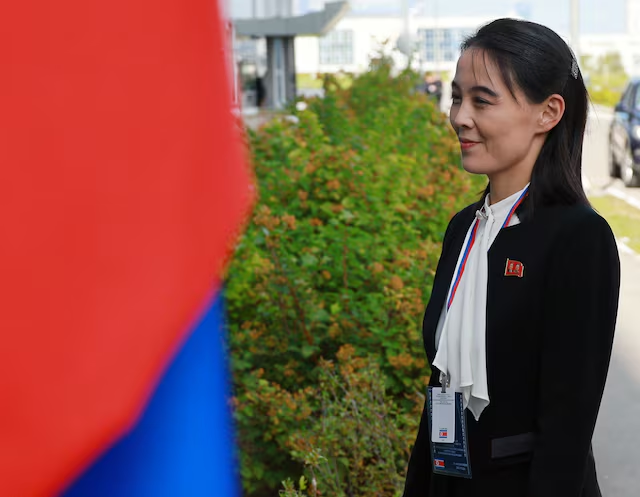
Kim Yo Jong, the influential sister of North Korean leader Kim Jong Un, warned Wednesday that Pyongyang will adopt "additional military options" in response to what she called Japan's transformation into a military power, days after Tokyo test-fired a US-made Tomahawk cruise missile for the first time.
In a statement carried by the state-run Korean Central News Agency, Kim accused Japan of moving beyond a defensive posture and reshaping its armed forces into a force capable of preemptive attacks and overseas operations. She branded the country a "war criminal state" pursuing rearmament with American backing.
"Japan, a war criminal state, is accelerating its transformation into a war state, taking advantage of the acute and variable trend of the present international situation in which global geopolitical conflicts and inter-camp confrontation are getting fiercer," she said.
"I make it clear upon authorization that the armed forces of the DPRK and the military leadership will set up additional military options, which are obviously due to Japan's transformation of these days," Kim said, referring to North Korea by the initials of its official name. She did not elaborate on what those options would entail.
The statement, issued under the title "The war-criminal state Japan's possession of preemptive strike capabilities is a grave threat that destroys international peace and stability," contained some of her strongest rhetoric toward Tokyo in recent months. "We should make it regret," she said.
The Tomahawk Test That Prompted the Warning
Kim's remarks came roughly a week after Japan's Maritime Self-Defense Force conducted its first test-firing of a Tomahawk cruise missile, launched July 28 from the Aegis destroyer Chokai in the Pacific Ocean with support from the US Navy.
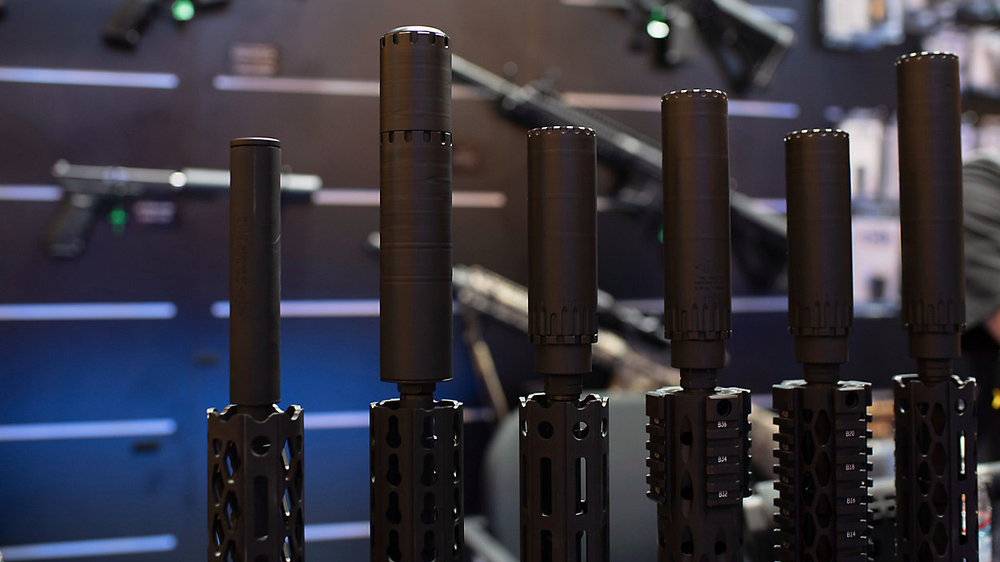
The Tomahawk is a long-range precision-strike cruise missile with a range of roughly 1,600 to 2,500 kilometers, placing North Korea and other neighboring countries within reach. Japan plans to procure 400 of the missiles between 2025 and 2027 through a Foreign Military Sales contract with the United States.
Kim cited the test alongside other recent Japanese military activities, including test-firings of additional missiles, the deployment of ground-to-ship guided missiles and glide bombs with the Self-Defense Forces, and participation in a US-led joint military drill in the Philippines in May. Such moves, she said, prove that Japan's push to acquire preemptive strike capability is "entering the stage of the actual act."
She argued that Japan's decadeslong cultivation of a "peace-loving country" image had been cover. "It is now clear that such moves were, after all, a camouflaged tactic to cover up its ambition for a military giant," she said, calling on the international community to "heighten vigilance against the reckless military ambition of the descendants of the war criminal state keen on realizing the old daydream" of Japan's wartime expansionism.
Washington drew equal blame. Kim accused the US of enabling the buildup by supplying the Tomahawks, modifying vessels to operate them, and supporting the tests, saying America is using Japan and South Korea as a "shock brigade" to encroach on the security of other countries in the Asia-Pacific. "The U.S. is behind such dangerous military moves of Japan," she said.
Japan's Break From Its Postwar Posture
The statement lands as Japan continues a deliberate shift away from the pacifist stance it adopted after World War II. The national security strategy Tokyo approved in 2022 paved the way for the country to acquire the ability to strike enemy missile bases as a self-defense measure within the bounds of its war-renouncing constitution, and the government has since increased military spending, expanded defense pacts, and deployed missile launchers to its outer islands.
Japan raised its military expenditure by 9.7% to $62.2 billion in 2025, equivalent to 1.4% of GDP — its highest share since 1958. On Tuesday, the country's defense minister said the military must be strengthened with a "sense of urgency and crisis" as a new government assessment warned of growing threats from China, Russia, and North Korea. A separate defense report called for a stronger industrial base and expanded arms exports.
History gives the dispute added weight on both sides. Japan occupied the entire Korean Peninsula until its 1945 surrender, after which the peninsula was divided along the 38th parallel, and the legacy of the colonial period continues to shape the foreign policies of both Koreas. "If the descendants of militarism, who have inherited the genes of cunning and aggression, have seized deadly weapons in their hands, something unpleasant will happen," Kim said.
China, North Korea's key ally, has voiced similar alarm at what it describes as "new militarism" in Tokyo. Relations between Beijing and Japan have deteriorated since hawkish Prime Minister Sanae Takaichi suggested in November that Chinese action to seize Taiwan could merit a response from Japan's military.
Groundwork for What Comes Next
Analysts in Seoul read the statement as preparation rather than a standalone protest. Yang Moo-jin, a professor at the University of North Korean Studies, said Kim's comments attempt to frame Tokyo's steps as part of a broader US effort to strengthen proxy military capabilities against the North — a framing that casts Pyongyang's own weapons development as defensive necessity.
The messaging could set the stage for future military demonstrations, including missile tests or displays of undersea strike capabilities, said Lim Eul-chul, a professor at Kyungnam University's Institute for Far Eastern Studies. North Korea has recently concentrated on strengthening its navy, and Kim's statement conspicuously left the nature of the promised countermeasures open.
The warning extends a sustained rhetorical campaign. Since July, KCNA has published at least six editorials and commentaries denouncing security cooperation among the United States, South Korea, and Japan as a threat to regional stability, and Pyongyang recently vowed to answer a US-led naval exercise with "deterrence of a new level."
"We will never remain a passive onlooker to the military evolution of Japan, which may pose a grave threat to the security of the Democratic People's Republic of Korea," Kim said.
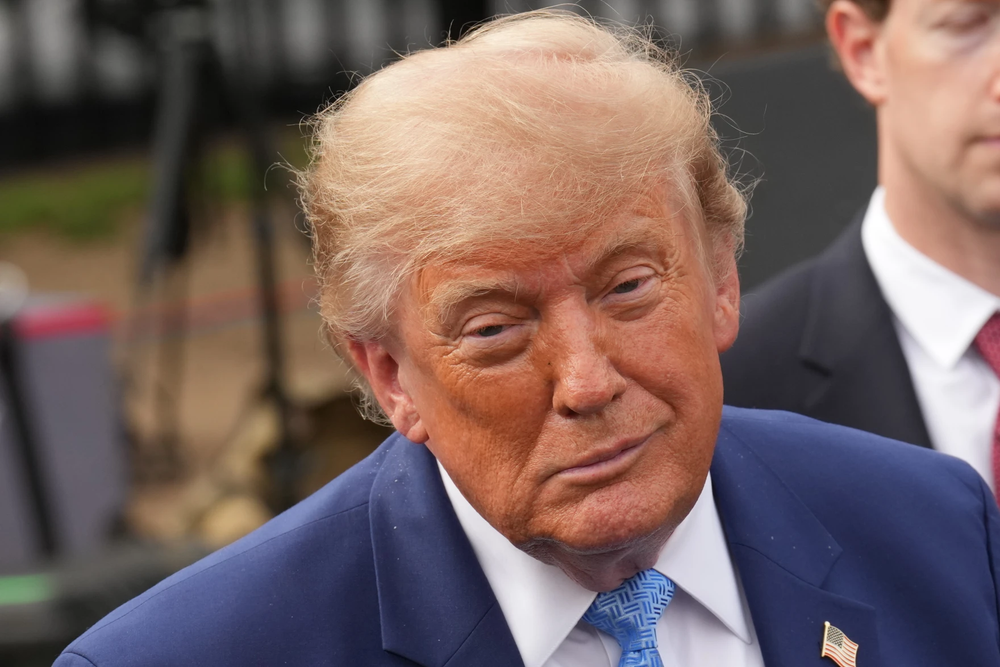
North Korea has declared itself an "irreversible" nuclear state repeatedly since Kim Jong Un's 2019 summit with President Donald Trump collapsed over the scope of denuclearization and sanctions relief. Kim Yo Jong, who holds a senior post in the ruling party, has in recent years served as the regime's most prominent voice on foreign policy, and her statements have often preceded weapons tests or shifts in military posture — a pattern that leaves the region watching for what Pyongyang's "additional options" turn out to be.
Author

We cover the world’s chaos so you don’t have to scroll twelve feeds to understand it.
Sign up for Atlas newsletters.
Stay up to date with curated collection of our top stories.