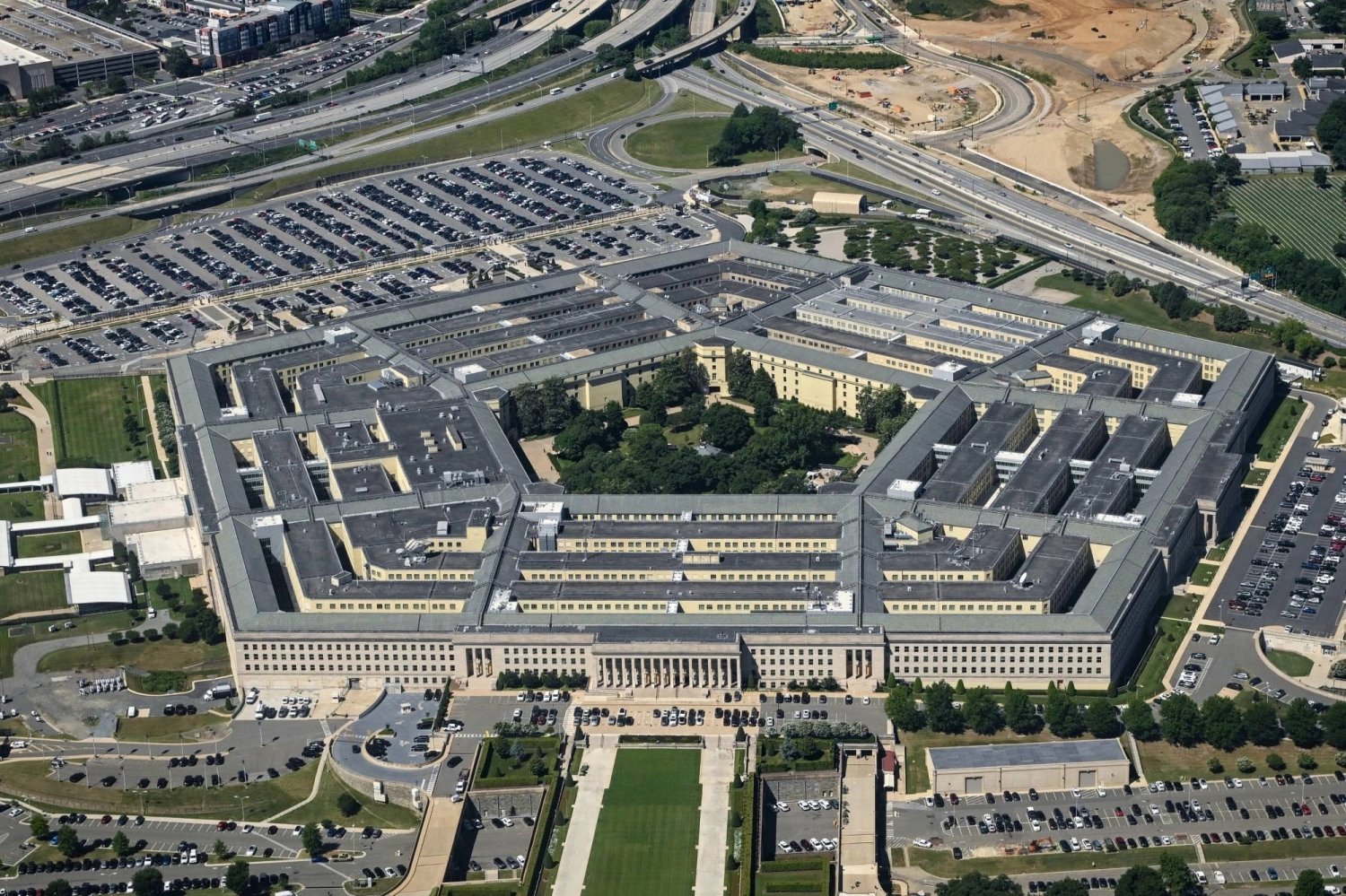
The Pentagon on Friday fired the editor-in-chief of Stars and Stripes, its retiring publisher, and a reporter covering the Middle East, moving against the leadership of a newspaper that has served American troops since the Civil War after its journalists publicly defended the outlet's editorial independence.
Editor-in-Chief Erik Slavin said he received a notice of proposed separation charging him with insubordination for comments he made in a "CBS Sunday Morning" segment last month about the Pentagon's efforts to overhaul the paper. Asked in that interview whether he had any red lines, Slavin answered: "'Don't run a perfectly accurate story, run this instead. Here it is, written by the Pentagon.' That would be a red line."
"I stand by the principle that Stars and Stripes must remain editorially independent, as required by law and by the department's own policies," Slavin said Friday. He said he is reviewing the notice; the dismissed staffers were given five days to appeal.
Middle East reporter Lara Korte was cited for the same interview, in which she said she works "for Stars and Stripes — not the Pentagon, not any administration and not any policy maker." Publisher Max D. Lederer Jr., who announced his retirement Tuesday effective September 30, also received a separation notice. A source familiar with the matter said Lederer was fired for refusing a directive from Pentagon leadership to dismiss the two journalists, whose CBS appearance the department deemed unauthorized.
A Pentagon official confirmed the notices and, when asked for comment, pointed to an open letter published Friday by Navy Captain William Urban, the paper's newly installed military deputy to the publisher.
A Yearlong Squeeze
The firings cap a steady tightening of Pentagon control over the newspaper, which is partly funded by the Defense Department but has operated with editorial independence protected by law and department policy for decades.
Chief Pentagon spokesman Sean Parnell announced the overhaul in January, writing that the paper would be "custom tailored to our warfighters" and focus on "warfighting, weapons systems, fitness, lethality, survivability and ALL THINGS MILITARY. No more repurposed DC gossip columns; no more Associated Press reprints." A March directive barred the use of some wire services, ended comics and other syndicated features, and required that content be consistent with "good order and discipline" — language borrowed from the Uniform Code of Military Justice.
In April, the department fired Jacqueline Smith, the paper's ombudsman, a position Congress established to safeguard editorial independence. Weeks ago, it installed Urban — an active-duty officer — as deputy publisher without Lederer's prior knowledge, a move that prompted three Democratic senators to write Defense Secretary Pete Hegseth on Thursday asking why. A lawsuit filed by plaintiffs alleging illegal limits on the paper is pending.
Lederer, an Army veteran who joined Stars and Stripes in 1992 and had been publisher since 2007, told staff in his retirement memo that his "philosophy of leadership, and my understanding of the value and mission of Stars and Stripes, differ in fundamental ways from the direction the leadership of the Department of Defense has for the organization."
The timing carried an additional edge: the separation notices came days after Stars and Stripes reported on deteriorating conditions aboard the USS Abraham Lincoln, the carrier whose 260-plus-day deployment enforcing the Iran blockade generated criticism the Pentagon publicly disputed before announcing the ship would be relieved.
The Journalists Being Removed
Slavin was named editor-in-chief in September 2025, two decades after joining the paper as a reporter in Japan. His career included embeds with US forces in Iraq, reporting in South Korea, and oversight of news operations in Europe and the Middle East.
Korte joined in December 2024 and reported heavily on the war with Iran from the paper's European headquarters in Kaiserslautern, Germany. "I consider it a great privilege to live alongside members of the military and share their stories," she wrote on X. "These firings are a shame for the institution and service members, who swore to defend the Constitution and deserve the right to a free and independent press." She added: "Military families and service members have trusted us to share their experience with the world, and I don't take that lightly."
National Press Club President Mark Schoeff Jr. called Slavin's firing "another brazen attempt by the Pentagon to dictate coverage of the military" and demanded it be reversed. "Firing a newspaper editor after he publicly defended his newsroom's editorial independence is deeply troubling," he said, "and it should concern every journalist and every member of the U.S. military who depends on independent reporting."
The Man Now Atop the Masthead
Urban's open letter laid out a vision of digital growth. "My vision for the future of Stars and Stripes is simple: More eyeballs on our content and more impact on our service members while maintaining the highest standard of professional journalism with the credibility that comes with editorial independence," he wrote, adding that the paper may never match the impact it had "during World War II in a vastly different media environment, but I also believe that we can do better."
In an interview, Urban said he has no formal journalism experience, citing instead more than 20 years as a Navy public affairs officer in "some of the hardest Public Affairs assignments." He said the paper must improve digitally to reach service members who are "digital natives," and declined to say whether he would become publisher. "I can't comment on what my role will be in the future," he said.
Part of a Wider Pattern
The dismissals land amid a broader administration posture toward the press that has included sharply curtailed access for the Pentagon press corps, legal and policy fights with the Wall Street Journal, the Associated Press, and the New York Times, and Federal Communications Commission pressure on broadcast networks. A federal judge sided with the Times in March in a challenge to Pentagon restrictions on reporters' access.
For Stars and Stripes, the question is now institutional: whether a newspaper whose independence is written into law can retain it when the department that funds it selects its leadership, defines its content, and disciplines its journalists for defending the arrangement in public. The paper's own newsroom covered the firings Friday. Whether it will be able to cover the next chapter the same way is the story still unfolding.
Author

We cover the world’s chaos so you don’t have to scroll twelve feeds to understand it.
Sign up for Atlas newsletters.
Stay up to date with curated collection of our top stories.



