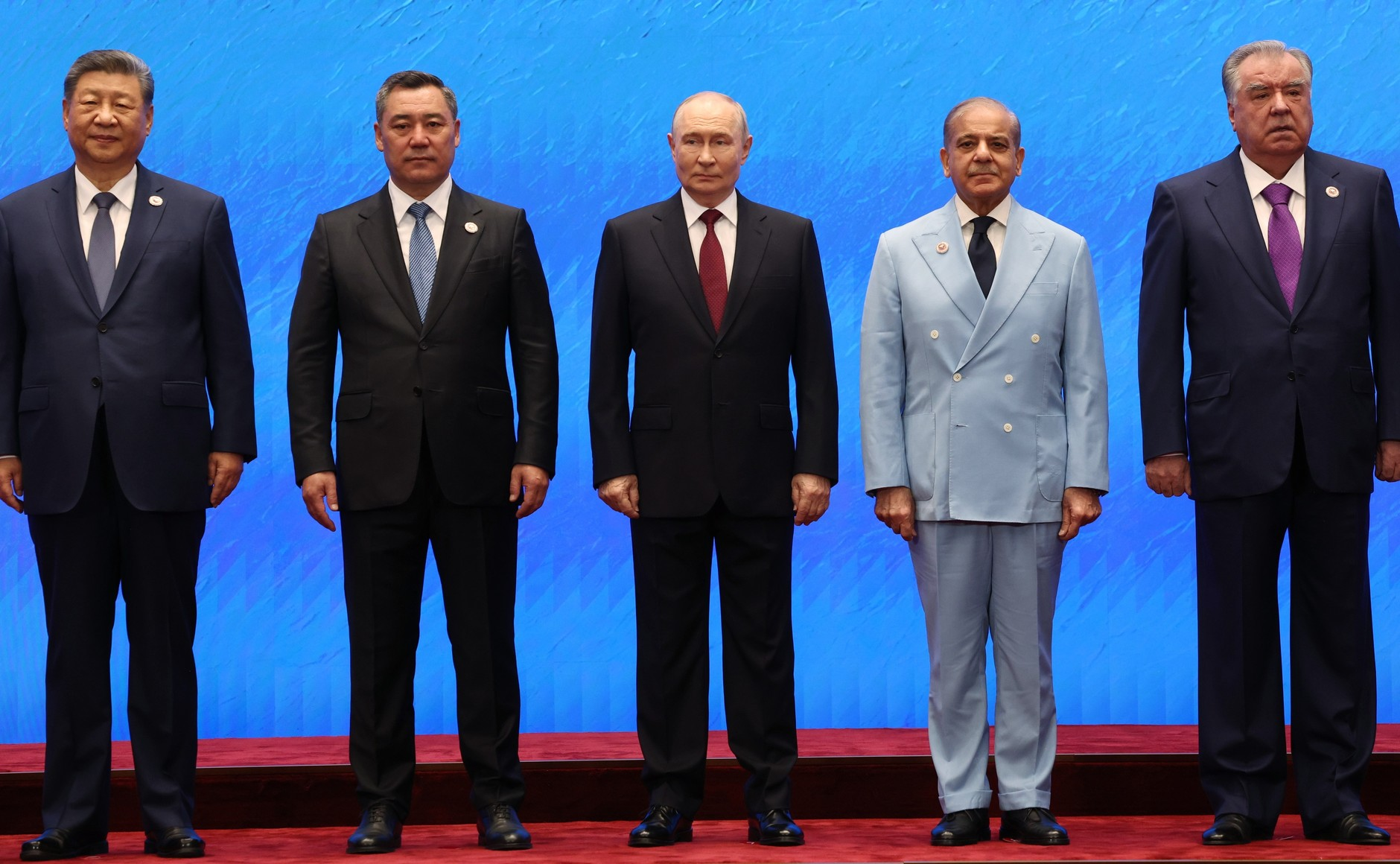
Leaders of the Shanghai Cooperation Organization met Tuesday at Yrys-Ordo in Bishkek and adopted the Bishkek Declaration, along with a protocol amending the SCO Charter and about 28 other documents. Kyrgyz President Sadyr Japarov hosted. Chinese President Xi Jinping, Russian President Vladimir Putin, Indian Prime Minister Narendra Modi, Iranian President Masoud Pezeshkian, Pakistani Prime Minister Shehbaz Sharif, Belarusian President Alexander Lukashenko, and the presidents of Kazakhstan, Uzbekistan, and Tajikistan attended, with SCO Secretary-General Nurlan Yermekbayev.
Beyond the declaration, the summit advanced statements on emergency assistance, a path toward a memorandum with the African Union, a Universal Centre for Countering Security Challenges and Threats, and an SCO Anti-Drug Centre executive committee. Lahore was named SCO Tourism and Cultural Capital for 2026–27. Pakistan assumed the 2026–27 chair under the theme of turning vision into action.
Xi cast the gathering in systemic terms. He said multipolarity was irreversible and criticized hegemony, unilateralism, and protectionism. “Dominance by just one or several countries, or bloc politics, are not true multilateralism,” he said.
The Bloc Condemns Strikes On Iran
The Bishkek Declaration condemned military strikes on Iran that caused civilian casualties and economic damage. It said the attacks violate international law and the United Nations Charter, offered condolences on the death of Supreme Leader Seyyed Ali Khamenei, and backed Iran’s sovereignty and a political-diplomatic path out of the crisis. The text also supported peaceful nuclear rights under the Nuclear Non-Proliferation Treaty and opposed unilateral coercive measures. The condolences and supreme-leader language appear as they are written in the declaration.
That wording aligns the organization with Iran’s legal position without committing members to military action or to reopening the Strait of Hormuz. The declaration is a political statement. It is not a mandate for SCO forces.
Modi, speaking in the plenary, called terrorism a grave challenge and said there should be no double standards. Separately he urged Putin toward an end to the war in Ukraine and met Pezeshkian on Hormuz, seafarers, and the Chabahar port. Those bilateral tracks sat beside the collective Iran wording rather than rewriting it.
Putin, Pezeshkian, And Solidarity With Tehran
Putin told Pezeshkian that Russia was supplying necessary goods and stood in solidarity with Iran. Pezeshkian thanked Moscow and said Iran was at the SCO to “fight against unipolarity” and would “prevail.”
The exchange matched the declaration’s political line: solidarity, sovereignty, and rejection of pressure outside the U.N. system. It did not announce new weapons transfers or a joint military response. For Tehran, the value was public alignment from Russia and from the SCO text on the same day U.S. and Iranian forces were exchanging fire elsewhere.
For Moscow, standing with Iran at Bishkek reinforced a wider argument against what Xi called bloc politics. The practical limits remained visible. No SCO member claimed the organization would police the strait or enter the fight.
Ukraine: Peace Talk, Energy Strikes, And “Terrorists”
Ukraine ran through the summit in two registers. Modi pressed Putin for an end to the war. Putin’s post-summit press conference pointed the other way.
The Russian president said he had ordered his armed forces to prepare and launch massive strikes on Ukraine’s energy facilities in response to Ukrainian attacks on Russian refineries and infrastructure. “They are hitting ours, they will get a response,” he said. He claimed Ukrainian defenses would “crumble,” ruled out talks with “terrorists,” dismissed reports of a new Russian mobilization as “absolute nonsense,” acknowledged Ukrainian drone damage to Russian refineries, and said Russian forces were advancing toward Sloviansk and Kramatorsk.
Those lines landed on the same day as the Bishkek Declaration. They are Russian claims and orders as stated by Putin, not SCO decisions. The organization did not endorse the energy strikes. The press conference made clear that, whatever diplomatic language Modi used in the hall, Putin was framing the next phase of the war as retaliation against power and fuel infrastructure and as incompatible with talks he described in those terms.
Pakistan Takes The Chair
Pakistan took over the rotating chair for 2026–27 as the summit closed. Sharif’s government inherits a denser institutional slate than a routine handover: new or expanded centers on security threats and narcotics, a tourism designation for Lahore, an African Union outreach track, and a declaration that condemns strikes on Iran and offers the condolences cited above.
The chair’s stated theme, turning vision into action, will be tested against that backlog. Bishkek produced documents, declaration language on Iran, and the institutional handoffs listed above. It did not announce a mechanism to stop strikes on Iran, reopen maritime routes, or restrain the energy strikes Putin described after the summit.
What Tuesday fixed in the record is still substantial. The SCO adopted the Bishkek Declaration and condemned strikes on Iran. Putin and Pezeshkian stated public solidarity. Xi restated a multipolar critique of bloc politics. Modi kept terrorism and Ukraine diplomacy in the mix. Pakistan took the gavel. And Putin, once the summit ended, said he had ordered preparations for massive strikes on Ukrainian energy sites and closed the door on talks with people he called terrorists.
Author

We cover the world’s chaos so you don’t have to scroll twelve feeds to understand it.
Sign up for Atlas newsletters.
Stay up to date with curated collection of our top stories.



