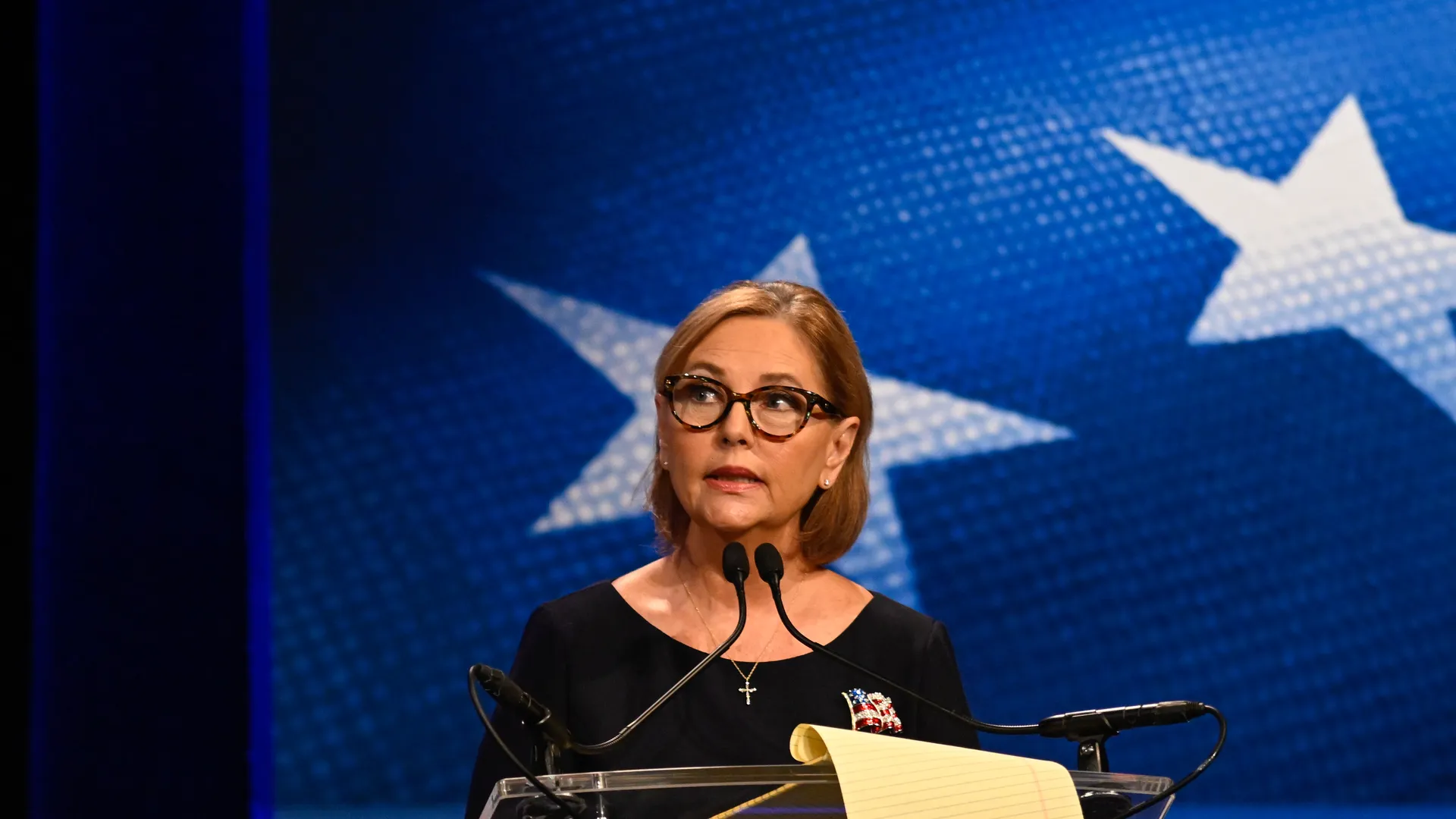
Sen. Darline Graham won South Carolina's special Republican primary runoff Tuesday, defeating Rep. Ralph Norman to claim the nomination for the seat held for a quarter century by her brother, the late Sen. Lindsey Graham — and handing President Donald Trump a needed victory after a string of his endorsed candidates faltered this cycle.
The race was called about two hours after polls closed, with Graham leading Norman 52.3% to 47.7% with 89% of the vote counted; her margin stood at roughly four points as the tally neared completion. The two advanced from a 10-candidate primary on August 11, in which Graham took about 33% and Norman 25%, short of the majority needed to avoid a runoff.
Graham, 62, grew emotional addressing supporters in Columbia, saying she misses her brother every day and there is "still a big hole in my heart." "The past few weeks have been an unbelievably challenging time for our family, but you know what? We did it," she said. "I know he's looking down right now — very proud of everyone in this room."
She reserved particular thanks for the president, calling South Carolina "truly Trump country." "Our victory would not have been possible without you and we are truly grateful," she said.
Graham will face Democratic nominee Annie Andrews, a pediatrician, in the November 3 general election for a full six-year term. No Democrat has won a Senate race in South Carolina since 1998, and the winner will become the first woman from the state to serve in the US Senate.
Trump Goes All In
The result owed much to a presidential effort of unusual intensity. Trump encouraged Graham to enter the race days after Gov. Henry McMaster appointed her to fill her brother's seat, endorsing her before she had formally declared. He stood by her as questions about her inexperience mounted, headlined a rally in Myrtle Beach on Friday — telling the crowd, "I am on the ballot" — and joined a tele-rally Monday night. "I think she's great. I asked her to do it. I got her into this whole thing," he said. "I have to make sure she gets in, because there will be nobody better."
His super PAC put money behind the words. MAGA Inc. spent $827,711 on get-out-the-vote calls and text messages for Graham, according to Federal Election Commission filings — the first time this cycle the organization has deployed its reserves for a Trump-endorsed candidate, despite anxious waiting from Republicans in competitive battlegrounds. Graham and her allies also dominated the airwaves, running more than $7 million in television ads over the two-week runoff sprint against roughly $2 million for Norman, who poured more than $1 million of his own fortune into the closing week.
The stakes for Trump were larger than one safe seat. His endorsed candidates have lost at least 10 primaries this year, including high-profile defeats in Iowa, Georgia, Tennessee, Florida, and Wyoming, and his national approval has sunk into the low 30s amid elevated prices and an unpopular war with Iran. Tuesday demonstrated that when the president commits fully — endorsement, travel, and money — his backing remains decisive with Republican voters in a state he carried by 18 points in 2024.
Surviving "National Security Is Not My Thing"
Graham's path nearly buckled in the final stretch. At the runoff's single debate, asked whether the United States has a national security interest in Taiwan and the South China Sea, she struggled before admitting "national security is not my thing" and "I'm not that informed on national security" — a startling answer for a candidate seeking the seat of a senator who spent decades as one of the chamber's leading voices on foreign policy.
Norman pounced, posting that "South Carolina deserves a Senator who UNDERSTANDS Foreign Policy," and public polling tightened from a double-digit Graham lead to a tie in a Trafalgar Group survey released a week before the vote. Former Gov. Nikki Haley, backing Norman, joined the criticism.
Trump defended his candidate as simply "being honest," and Graham leaned into the moment rather than away from it. "Guilty as charged," she told the Myrtle Beach rally, pivoting to affordability, immigration, and her co-sponsorship of the voting bill that has become a key presidential priority — domestic ground she argued matters more to South Carolinians than the foreign policy portfolio that defined her brother's career.
Norman's Second Statewide Defeat of the Summer
Norman, 73, a wealthy developer and vice chair of the House Freedom Caucus with nine years in Congress, ran on experience against celebrity. "This election is not for sale," he said in one ad. "You shouldn't have to guess where your next senator stands. With me, you already know." He collected endorsements from Sens. Rick Scott and Mike Lee, former Sen. Jim DeMint, former Gov. Mark Sanford, CPAC, and Turning Point Action, along with dozens of county parties and grassroots leaders — a reflection of lingering distrust of the Graham name among the MAGA base, which booed Lindsey Graham off a rally stage in 2023.
It wasn't enough. Norman's 2024 endorsement of Haley over Trump shadowed his outsider credentials, the solar industry spent $1 million against him, and the loss marks his second statewide defeat this summer after finishing third in June's gubernatorial primary. "I never understood why he got in this race," Norman said of Trump at his watch party. "It is what it is and we accept it."
Graham's camp countered the experience argument by noting Norman's thin legislative record — while absorbing hits over state records showing she skipped the 2024 presidential primary and the 2016 general election entirely.
An Improbable Ascent
Graham's rise has no recent parallel: from private citizen to senator to major-party nominee in six weeks. Before McMaster's appointment, she had never held elected office, spending her career in disability services and leading the South Carolina Commission for the Blind since 2019. Her bond with her brother ran deeper than politics — after their parents died young, Lindsey Graham became her legal guardian and later adopted her so she could receive military benefits.
Voters split along the race's central divide. "Trump wants her, he's doing a great job and I believe we should give him what he wants," said Robert Tropiano, who cast an early ballot near the rally site. Mike Sellers of Rock Hill went the other way: "Just because her brother was senator doesn't give her an easy pass in."
In November, in a state that has not elected a Democrat statewide in two decades, the pass is hers to lose.
Author

We cover the world’s chaos so you don’t have to scroll twelve feeds to understand it.
Sign up for Atlas newsletters.
Stay up to date with curated collection of our top stories.



