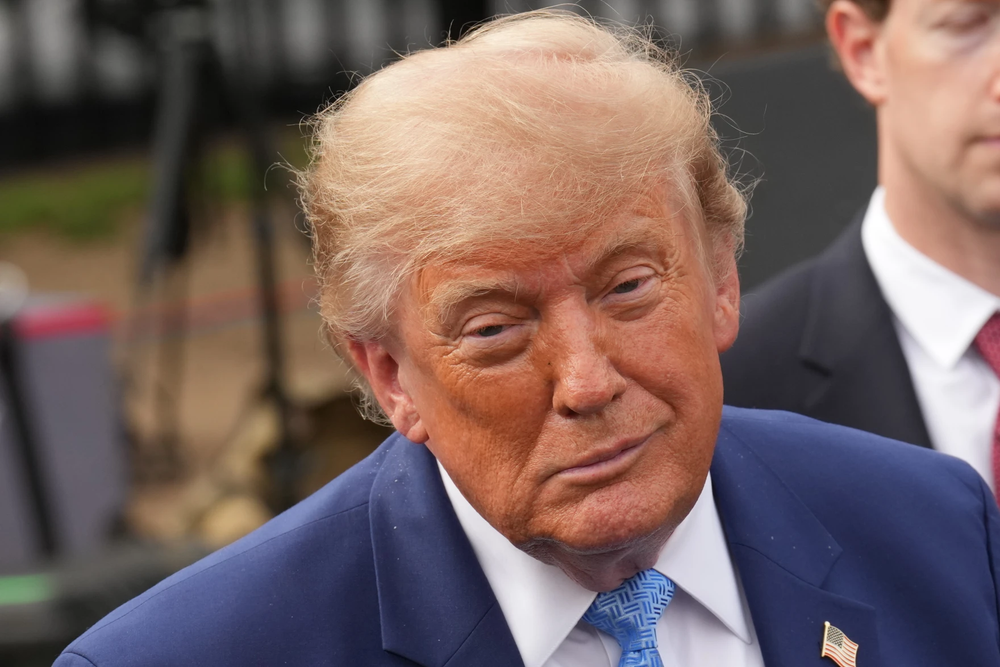
President Donald Trump announced Thursday that his administration brokered a pathway for Hamas to lay down its arms in Gaza in exchange for an eventual Israeli withdrawal from the territory, calling it a potential breakthrough to end nearly three years of conflict — though early reactions from both Hamas and Israel underscored the obstacles ahead.
"Today, the Board of Peace reached a HISTORIC agreement for the COMPLETE DISARMAMENT of Hamas and all other armed groups in Gaza. This is a monumental step toward lasting PEACE and SECURITY," Trump wrote on Truth Social. "This agreement is a critical step towards Gaza finally being governed by a new Palestinian government that will work closely with the Board of Peace to help the Palestinian people. At the same time, Israel will have the security it deserves, with Gaza no longer used as a base for terror attacks."
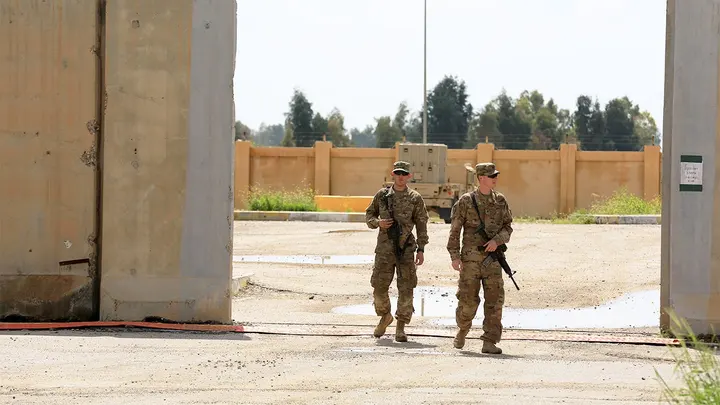
The framework envisions Hamas disarming in stages, with the Israeli military pulling out of the territory gradually and being replaced by an international stabilization force working alongside a revamped Palestinian police force. Speaking Friday from Camp David, Trump called the deal "a great breakthrough" and said Israel was "very happy" about it. "Will it go through its ups and downs? It's a very complex situation over there," he added.
The agreement was mediated by Egypt, Qatar, and Turkey through Trump's Board of Peace, and followed an eight-month process to turn the president's 20-point plan into an implementable framework. A US official said Hamas agreed to the framework through Egyptian mediators, with Egypt hosting senior Hamas officials in recent weeks for the final push. The announcement came two days after Trump met Israeli Prime Minister Benjamin Netanyahu in Washington, though an Israeli political source said Gaza did not come up during that meeting.
What the Roadmap Contains
The Board of Peace published the 15-point roadmap Friday, calling on Israel, Hamas, and other Palestinian factions to fully implement the ceasefire agreement reached last year in the Egyptian resort of Sharm el-Sheikh, particularly the end of military operations in Gaza.
The first step, US and Board of Peace officials said, is establishing a "complete monopoly of weapons" so Hamas cannot disrupt the process. The first tranche of weapons would be police firearms, followed by heavy weapons, weapons depots, and tunnels — a process officials said would rely heavily on the International Stabilization Force. The final challenge would be collecting personal weapons through existing Palestinian legislation, along with demilitarizing Gaza's militias and clans. Hamas would also disclose the extensive tunnel network running under much of the territory so it could be destroyed. The document specifies that no weapons would be handed over to Israel or non-Palestinian parties.
As disarmament is completed, Israeli forces would withdraw, and governance would pass to the National Committee for the Administration of Gaza, a technocratic Palestinian body designed to replace both Hamas and the Palestinian Authority. The NCAG said Friday it "welcomes the progress announced yesterday regarding the roadmap." A Palestinian police force has already begun training, and officials said the goal is a free-market economy in Gaza that is not dependent on aid, though "in the short term there'll be, you know, big aid needed for the rebuilding."
One US official said the plan may take 200 to 350 days to implement and acknowledged the difficulty plainly: "We're going to try to do something very, very impossible." Officials said they have sorted through 28 different plans for developing and rebuilding Gaza.
The Sequencing Problem Remains
The central deadlock that has stalled previous efforts — which side moves first — remains unresolved. Israel has long insisted Hamas disarm first; Hamas has called for Israeli forces to withdraw first. The White House did not clarify Thursday how that impasse would be overcome.
Netanyahu's office had not commented officially as of Friday, a conspicuous silence that raised questions about where Israel stands. An Israeli official reiterated the government's position that "there will be no withdrawal whatsoever of the IDF from the current Yellow Line unless Hamas undergoes a genuine disarmament," and separately that Israel demands "the complete disarmament of Hamas, including the removal of weapons from Gaza and the full demilitarization of the Strip, as a prerequisite for any process." Police Minister Itamar Ben-Gvir, head of the far-right Jewish Power party, called the draft unacceptable and said Israel's policy of assassinating Hamas leaders must continue.
Hamas, for its part, said Israel's "commitment to halting the killing and ending its aggression is the fundamental prerequisite and the first step towards implementation." Ghazi Hamad, a Hamas official involved in the negotiations, told Reuters the group was ready to accept an agreement he described as "difficult and painful," but avoided the term disarmament and said implementation depends on Israel first meeting its Sharm el-Sheikh commitments — ending attacks, withdrawing forces to their October positions, and increasing aid flows. Only then, he said, would Hamas hand over its weapons for storage by the NCAG. "We will not take any steps regarding disarmament before Israel withdraws from the Gaza Strip," he told Al Jazeera.
A US official acknowledged Israeli doubts. "They're very skeptical that Hamas will disarm. But again, they're not really being asked to do much in the process because this isn't really a trust deal. This is really, you know, it's a conditions-based deal," the official said. Another official noted the plan mirrors the 20-point framework Israel agreed to in September 2025: "We're not asking Israel to do anything other than agree to the 20-point plan that they agreed to initially, and so we're very confident they will adhere to it. If they don't, obviously, President Trump will be very, very disappointed."
Fighting Continues on the Ground
Within hours of Trump unveiling the deal, Gazan medical authorities said one Palestinian was killed and several others wounded in at least two Israeli airstrikes and by gunfire. The Israeli military said it was reviewing one incident in which a strike intended for a member of Hamas' armed wing was diverted after uninvolved individuals were identified, and announced Friday it had killed a Hamas supply officer and supply commander.
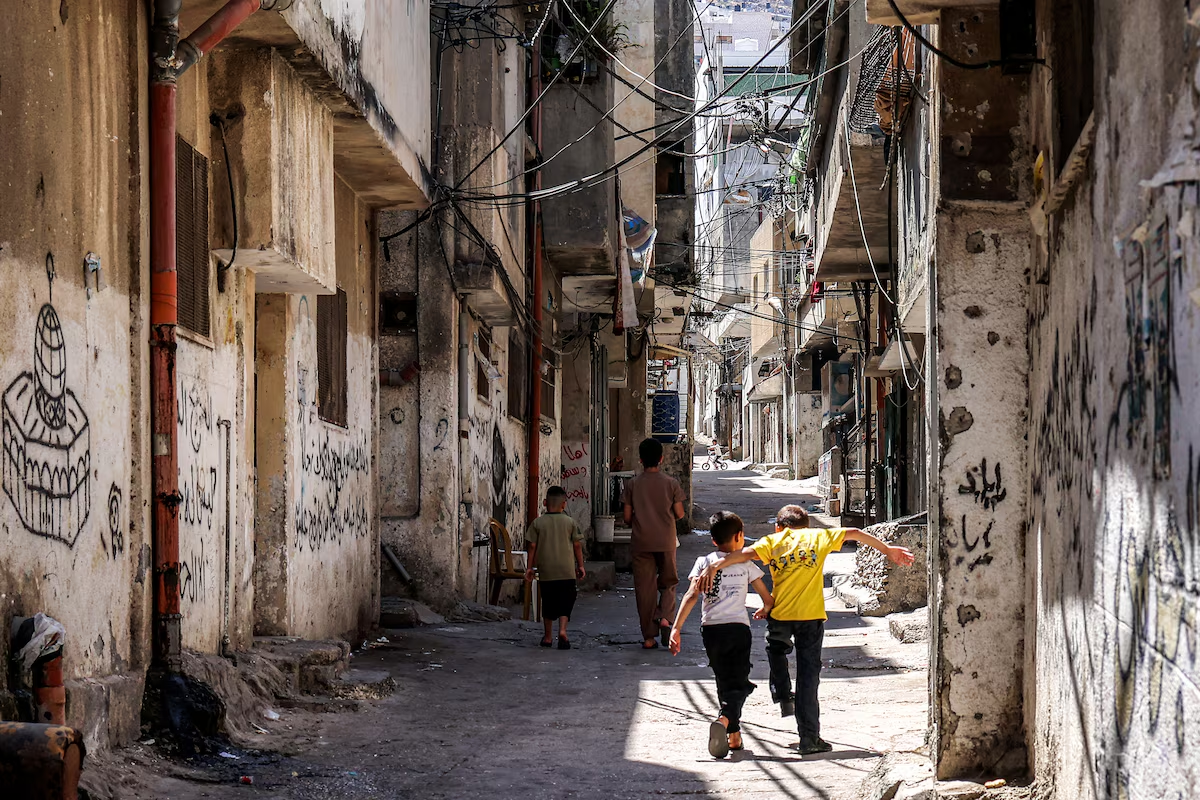
The humanitarian situation for the up to 2 million Gazans packed into the Hamas-controlled portion of the enclave "remains brutal," according to the World Food Program, with families lacking water, sanitation, and medicine. The Israeli military has cleared more than 60% of Gaza's territory of Palestinians, and Netanyahu said in May he had ordered forces to extend control to 70%.
Displaced Palestinians voiced skepticism. "You Trump, you should start it from your end. Ceasefire, stop the assassinations and complete the Israeli army's withdrawal from the Gaza Strip," said Samir Ayad, 60, from a tent encampment in Gaza City. "We are not seeing any agreement at all, nothing from what he is saying."
Open Questions on Forces, Politics, and Timing
Major implementation questions remain. The composition of the new Palestinian administration is not fully clear, nor which countries will contribute troops to the international force or when they would deploy. The stabilization force, announced in February and to be commanded by US Army Major General Jasper Jeffers, has seen previous troop commitments from Indonesia, Morocco, Kazakhstan, Kosovo, and Albania put on hold indefinitely. One official said the US now has "commitments for over 5,000 troops."
Israel's political calendar adds another complication: Netanyahu faces elections in October and is likely to face pressure from right-wing coalition partners not to take steps that appear to be concessions to Hamas. US officials said they do not expect Iran, historically Hamas's biggest backer, to spoil the deal, saying Tehran essentially "abandoned Hamas" some time ago as its own conflict with the US and Israel escalated.
UN Secretary-General Antonio Guterres urged all sides to follow the roadmap "without any questions, scepticism, or determination to undermine it." He told reporters: "Now is the time for both sides to implement what was agreed."
Author

We cover the world’s chaos so you don’t have to scroll twelve feeds to understand it.
Sign up for Atlas newsletters.
Stay up to date with curated collection of our top stories.