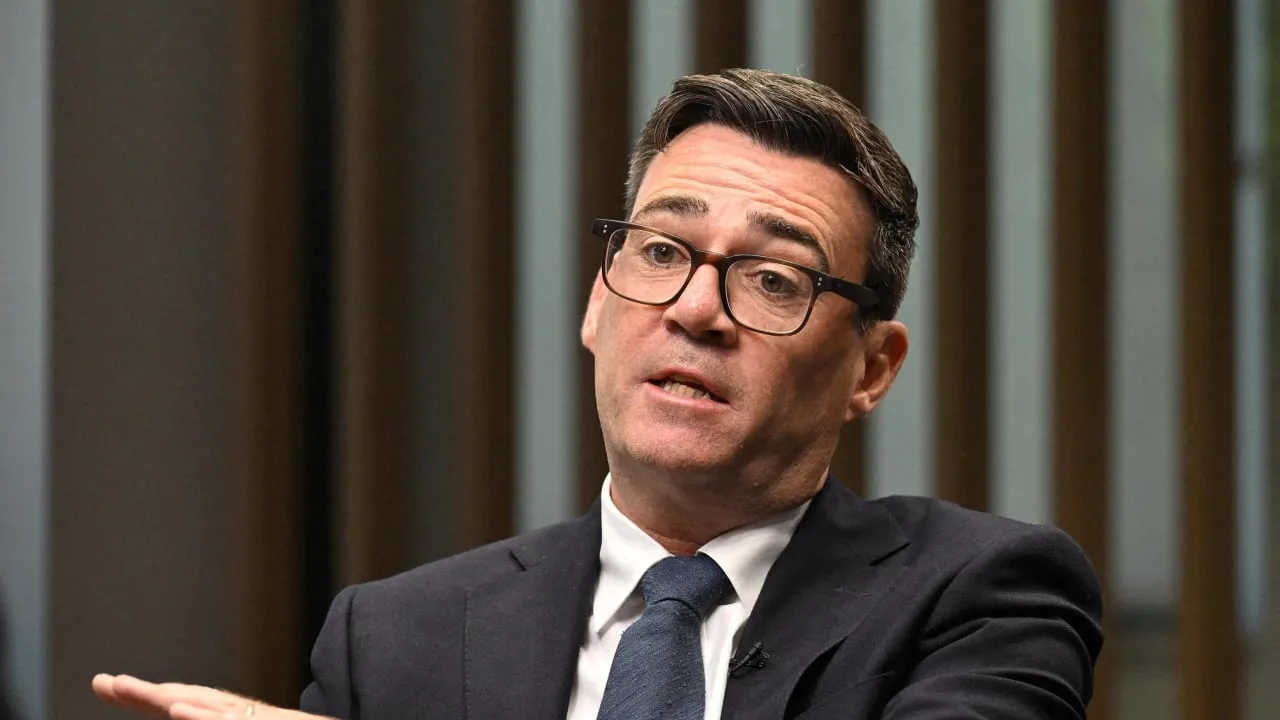
British Prime Minister Andy Burnham exchanged messages with an imposter posing as Susie Wiles, President Donald Trump's White House chief of staff, before growing suspicious and cutting off the contact — a security lapse involving the leader of America's closest ally less than a month into his premiership.
Politico first reported the incident Monday, citing four unnamed officials who said Burnham believed he was messaging with Wiles before concluding the contact was illegitimate. Only a "few messages" of "no significance" were exchanged, sources said, and the texts were "quickly reported to the appropriate authorities" once their suspicious nature became clear. The communication was limited to written messages; no call took place.
Downing Street declined to discuss the episode. "We do not comment on national security matters," a government spokesperson said. Officials did not say when the messages were sent, how many there were, or what platform carried them, though one report indicated the exchanges occurred in the days surrounding Burnham's arrival at 10 Downing Street on July 20.
The British Embassy in Washington raised the incident with the White House out of concern that Wiles' phone had been hacked a second time. A White House official said the episode "had nothing to do with the chief of staff's devices being hacked."
A Familiar Playbook Aimed at a New Target
The imposter's approach follows a pattern US authorities have been tracking for more than a year. In May 2025, the FBI opened an investigation after Wiles' personal cellphone was compromised, with an impersonator using her contacts file to message senators, governors, and top business executives. Wiles, a key Trump ally, had separately been targeted in 2024 by a cyber espionage unit associated with Iran's Revolutionary Guard.
Soon after the Wiles hack, the State Department warned American diplomats of attempts to impersonate Secretary of State Marco Rubio and possibly other officials using artificial intelligence, after an imposter posing as Rubio reached out to at least three foreign ministers, a US senator, and a governor. The FBI has warned broadly of "malicious actors" misusing AI to mimic senior US government officials.
Whether the Burnham imposter used AI tools, and who was behind the approach, has not been disclosed. The choice of target carried obvious logic: Burnham, who succeeded Keir Starmer last month after winning the Labour leadership election unopposed, has been working to establish contacts in Washington and build a strong relationship with a White House that initially warmed to his predecessor before souring on him. A new prime minister actively collecting American phone numbers presents a plausible opening for anyone posing as a senior administration figure.
Ministers' Numbers Surface Online
The disclosure landed alongside a second embarrassment for British information security. The personal mobile numbers of at least three cabinet ministers — Defence Secretary Wes Streeting, Justice Secretary Alex Norris, and Northern Ireland Secretary Chris Bryant — were found published on websites, and the government is working to have them removed.
Streeting's number has already been taken down, according to a source, who added that the defense secretary conducts all government business on his official phone. A government spokesperson said there are "robust procedures in place to ensure the security of sensitive information." Downing Street declined to say whether new measures had been introduced to prevent a repeat.
Britain's History With Hoax Diplomacy
The episode is not the first time impostors have reached senior British officials. In 2024, the Foreign Office confirmed that then-Foreign Secretary David Cameron fell victim to a hoax video call from someone pretending to be former Ukrainian President Petro Poroshenko, with whom he had dealt extensively as prime minister; Cameron also exchanged text messages with the impersonator. The department took the unusual step of publicizing the deception over fears the material could be "manipulated."
Two years earlier, an imposter posing as Ukrainian Prime Minister Denys Shmyhal targeted two ministers via Microsoft Teams calls. Then-Defence Secretary Ben Wallace blamed Russian "dirty tricks," and then-Home Secretary Priti Patel confirmed she had received a similar call. A Ministry of Defence source at the time described the video call as "fairly sophisticated," noting it had been routed through another government department, which lent it credibility.
The recurring incidents underscore a vulnerability that security services on both sides of the Atlantic have struggled to close: senior officials' informal communication habits — personal phones, messaging apps, and rapid-fire texts — sit largely outside the hardened channels built for classified traffic, and impersonation attempts need only one plausible opening to succeed.
Limited Damage, Unanswered Questions
By the available accounts, the Burnham incident ended without harm: a handful of inconsequential messages, suspicion, a report to the authorities. But the unanswered questions — who ran the operation, what they sought, whether AI voice or text tools were involved, and how the imposter obtained a channel to the prime minister at all — are the ones that matter for the next attempt.
The White House's assurance that Wiles' devices were not compromised this time leaves open how the impersonator made the approach credible enough for a head of government to engage, however briefly. For a prime minister one month into the job, navigating a war in the Middle East, a strained trans-Atlantic agenda, and now his own government's leaked phone numbers, the lesson of the episode is the one Britain's security establishment has been repeating since the Cameron hoax: the message that looks routine is precisely the one to verify.
Author

We cover the world’s chaos so you don’t have to scroll twelve feeds to understand it.
Sign up for Atlas newsletters.
Stay up to date with curated collection of our top stories.



