American forces hit Iran for a ninth consecutive night into Monday, striking targets from the Persian Gulf coast to the northwestern city of Tabriz, hours after the military announced that a third U.S. service member had been killed in recent days. Brent crude climbed above $90 a barrel as the two countries edged closer to open war and traffic through the Strait of Hormuz all but stopped.
The interim deal signed a month ago is finished by both sides' reckoning. Iran said last week it would no longer abide by it. President Trump, asked about that, said he "couldn't care less."
The Ninth Night
Central Command announced the new wave at 7 p.m. Eastern Sunday, saying the strikes would "continue degrading Iranian military capabilities used to attack commercial vessels and civilian mariners transiting the Strait of Hormuz." It later said forces had hit Iranian military command centers, air defense and coastal surveillance sites, maritime capabilities, missile and drone launch sites, and communications networks.
Iranian state media reported explosions in Tabriz, a departure from earlier rounds that had concentrated on the southern coast. Blasts were also reported in Bushehr and across Hormozgan province, including the strategically placed cities of Jask and Sirik, which overlook the strait and have absorbed the heaviest bombardment of recent nights. Strikes extended to Konarak and the port of Chabahar in the southeast, and to the Khuzestan port cities of Mahshahr and Bandar Imam.
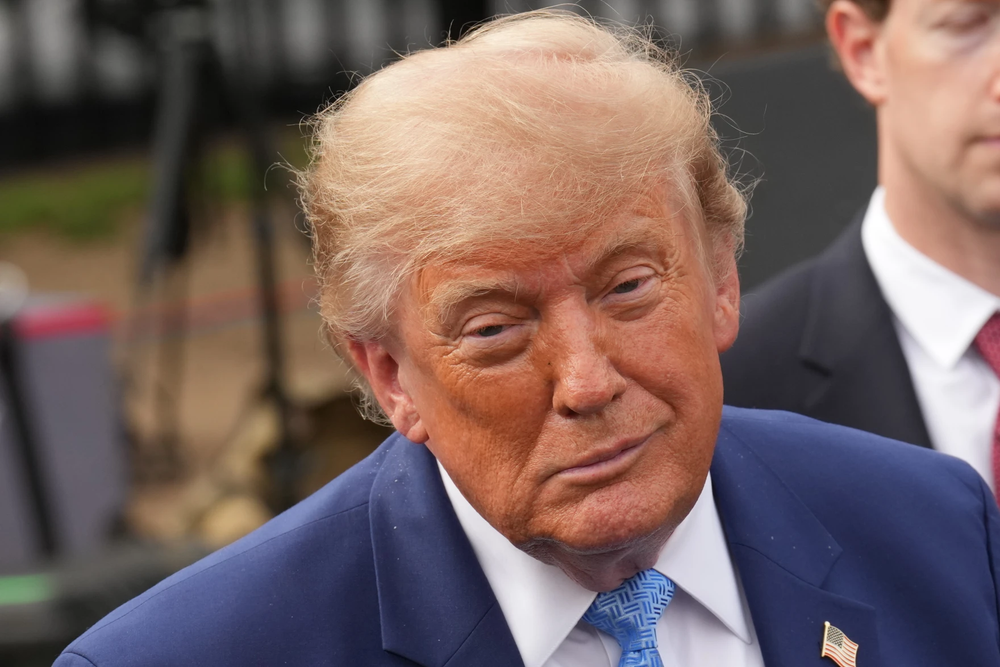
Trump spoke to reporters at Joint Base Andrews after returning from the World Cup final. "We hit them very hard again tonight," he said, adding that the strikes were carried out "in honor" of the fallen troops. "Those great people, those great patriots, were out there fighting so that Iran could not have a nuclear weapon." He said Iran had "lost everything almost militarily" and claimed the United States controlled the strait. Tehran disputes that, arguing the June memorandum gave it sole responsibility for administering the waterway.
American Losses
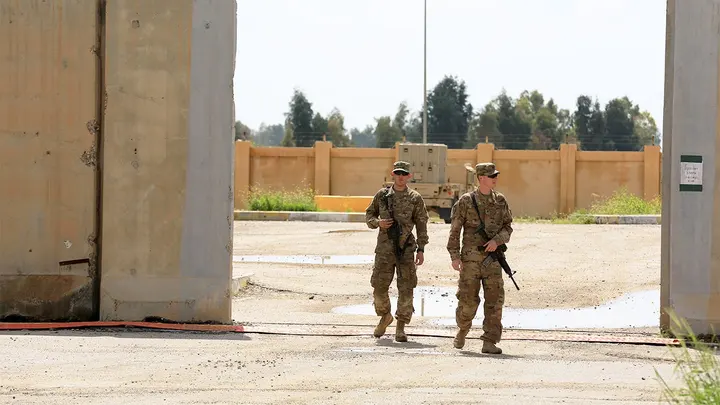
The military said a service member was killed in northern Iraq on Saturday during a controlled detonation of unexploded ordnance from a downed Iranian one-way attack drone. A second was wounded and treated for a minor injury.
That death followed Friday's Iranian missile and drone attack on a base in Jordan, widely reported to be Muwaffaq Salti Air Base, which killed two Americans, wounded four others, and left one missing. Central Command said Sunday that "unidentified remains" had been found at the site and were undergoing examination. None of the dead have been publicly identified pending family notification.
Seventeen U.S. service members have been killed since the war began February 28, with more than 420 wounded.
The scale of the campaign is straining resources. One U.S. official, speaking anonymously, said the Pentagon was increasing aircraft in the region but that expansion would be limited by dwindling stockpiles of air defense and long-range munitions. "We do not have enough to safely sustain operations, and I don't think the White House is aware of that," the official said. Seth Jones of the Center for Strategic and International Studies said committing ground forces to the strait's islands or the Iranian shore would be a mistake, arguing U.S. troops are not prepared for Iranian standoff strikes.
Iran Hits Back Across the Gulf
Tehran has aimed its retaliation at U.S.-allied Arab states rather than Israel. The Revolutionary Guard said it targeted American facilities at Kuwait's Ali Al Salem air base, claiming a drone strike destroyed an early-warning radar and that other strikes hit an equipment warehouse and a hangar holding MQ-9 drones. Kuwait's military said it responded to hostile ballistic missiles and drones, and its electricity ministry reported that a power and water desalination plant was struck for a second straight day, causing fires. Roughly 90 percent of Kuwait's drinking water comes from desalination; officials said the grid remained stable.
Bahrain activated air defenses and sounded sirens, and the U.S. Embassy in Manama warned that Iran might target unspecified locations in the capital, home to the Navy's Fifth Fleet. Jordan said it intercepted three of four incoming missiles, with one falling in an open area and no casualties reported. Israel's military warned that missiles aimed at the Jordanian port of Aqaba could spill across the border into Eilat, where two interceptors were launched to prevent falling debris.
Iran's atomic energy agency said U.S. strikes hit the construction site of the planned Darkhovin nuclear power plant in the southwest, calling an attack on a safeguarded facility a clear violation of international law. The International Atomic Energy Agency said it was investigating, noting the site is in the very early stages of construction and contained no nuclear material at its last visit. Satellite imagery from July 9 showed earth clearing and little else.
Iranian authorities said at least 50 people have been killed and 517 wounded in the latest rounds of American strikes. Both sides have now struck civilian infrastructure, including bridges and power plants. International humanitarian law generally protects such sites, though they can lose that protection if used militarily, in which case attacks must still be proportionate.
The Strait and the Diplomacy
The waterway remains the core of the fight. The United States reimposed a naval blockade on Iranian ports last week and said Saturday it had redirected six ships and disabled one since then. The Revolutionary Guard said four vessels tried to cross using an "unsafe route" with American backing after ignoring warnings; two turned back and two were involved in what it called an accident, without elaborating. Early Monday, British maritime authorities reported a vessel on fire eight nautical miles northwest of Kumzar, Oman, along the southern corridor Washington has encouraged ships to use. The cause was not verified.
Secretary of State Marco Rubio said the United States remains open to talks but that any negotiation "has to be real." He said Washington would keep responding, and that a shift toward diplomacy would be a positive development, "not where we are tonight, unfortunately." He also called on other governments to contribute equipment or funding to help protect shipping through the strait.
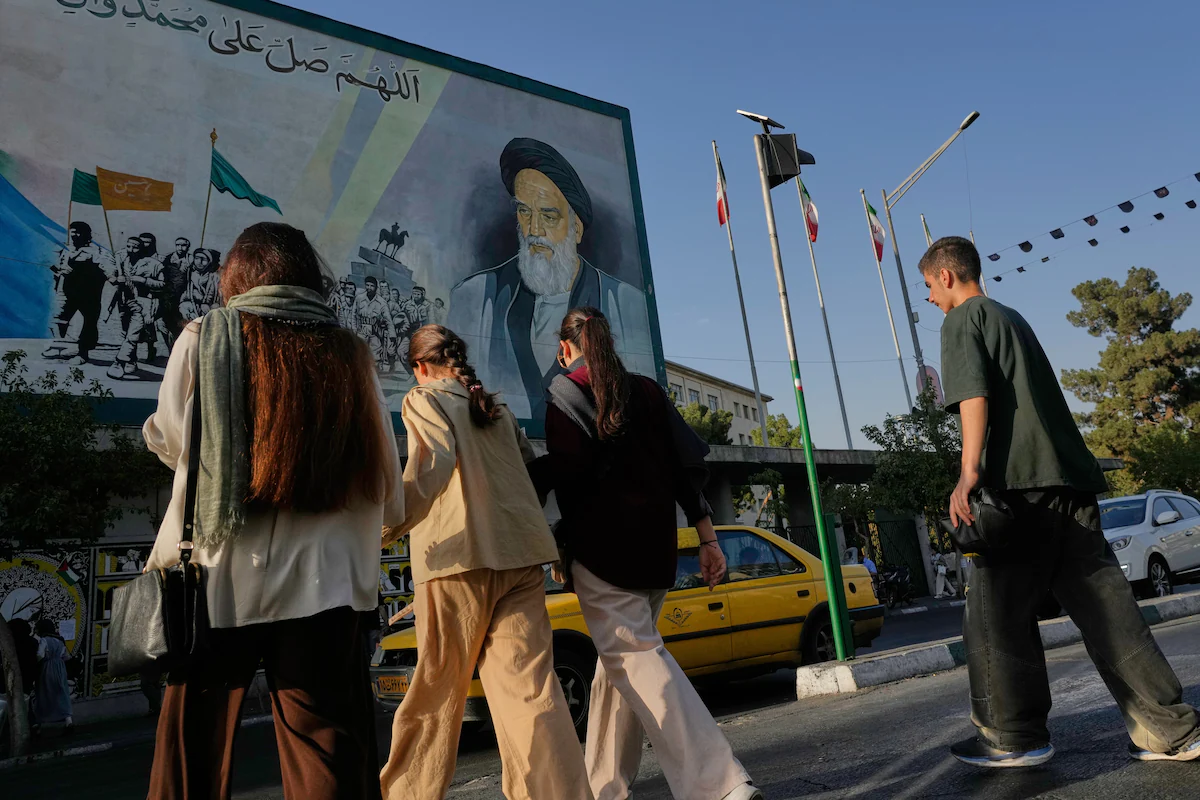
Iran's foreign minister, Abbas Araghchi, described a different calculus, saying the war would end either through military victory or negotiation, and that the right moment to negotiate arrives only after achieving a reliable position on the battlefield. Supreme Leader Mojtaba Khamenei, who has not appeared in public since his father was killed on the war's first day, said in a written statement that Trump's signature was "utterly worthless" and warned of heavier costs ahead. The 60-day window the interim deal set aside for a permanent settlement is now past its halfway point.
Author

We cover the world’s chaos so you don’t have to scroll twelve feeds to understand it.
Sign up for Atlas newsletters.
Stay up to date with curated collection of our top stories.