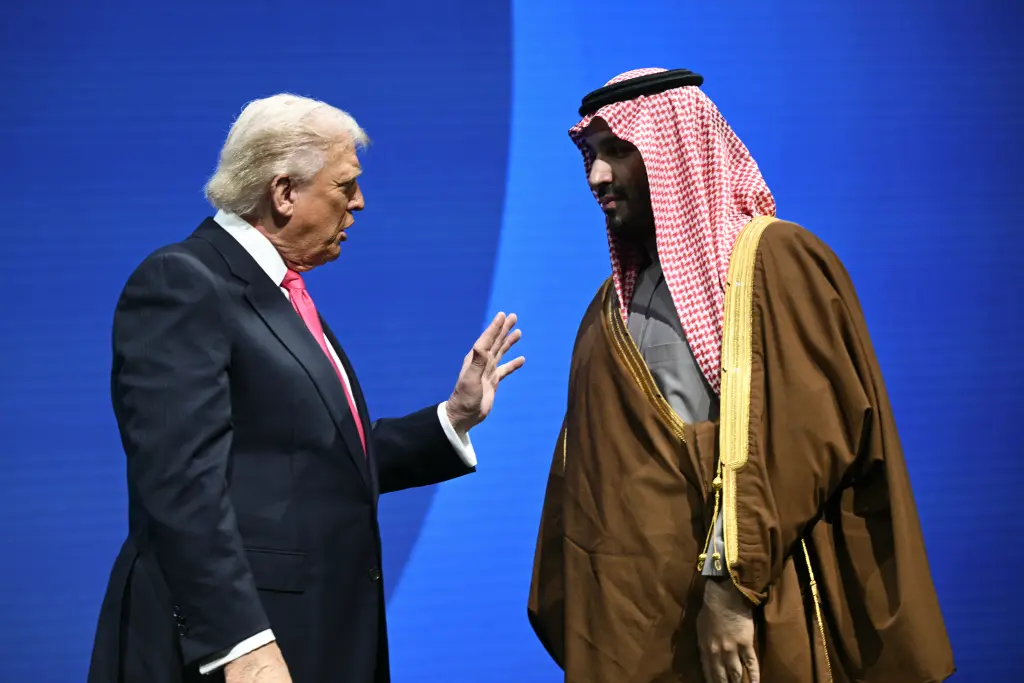
The United States and Saudi Arabia signed an agreement Wednesday to build the kingdom's first commercial nuclear reactors using American technology. A day later, President Trump added a condition that could unravel it: Saudi Arabia, he said, must normalize relations with Israel by joining the Abraham Accords, or the deal is off.
The reversal was characteristic of a White House that has repeatedly announced positions and revised them within days. It landed on an already contested agreement, one that opened a possible path to uranium enrichment on Saudi soil, drew opposition in Israel and on Capitol Hill, and raised alarms among nuclear nonproliferation experts.
The Deal That Was Signed
Energy Secretary Chris Wright and Saudi Energy Minister Prince Abdulaziz bin Salman signed the pact Wednesday, a so-called 123 agreement named for the section of the U.S. Atomic Energy Act that governs civilian nuclear cooperation. The Energy Department called it the legal foundation for "a decades-long, multibillion-dollar partnership," expected to run 30 years and give U.S. firms priority access to supply reactors and fuel. The reactor designer Westinghouse, co-owned by Canada's Cameco and Brookfield Asset Management, is seen as a chief beneficiary.
Neither the Energy Department nor the Saudi government mentioned Israel when the deal was announced. Saudi Arabia's Energy Ministry framed it as an effort to diversify the kingdom's energy sources and expand investment, and cited the "highest international standards" of nuclear safety and nonproliferation.
The agreement's details remain largely private, but people familiar with it described terms Saudi Arabia had once been denied. It does not require Riyadh to forgo enrichment, and it stipulates that the question of enrichment on Saudi soil will be settled only after a two-year joint study of its commercial viability against importing fuel. The deal also does not require the kingdom to adopt the International Atomic Energy Agency's Additional Protocol, which grants expanded inspection and monitoring authority. Instead, sensitive inspections would be carried out by American teams, and Trump signed a national security waiver to allow the deal to proceed without conventional international oversight.
The Condition Trump Added
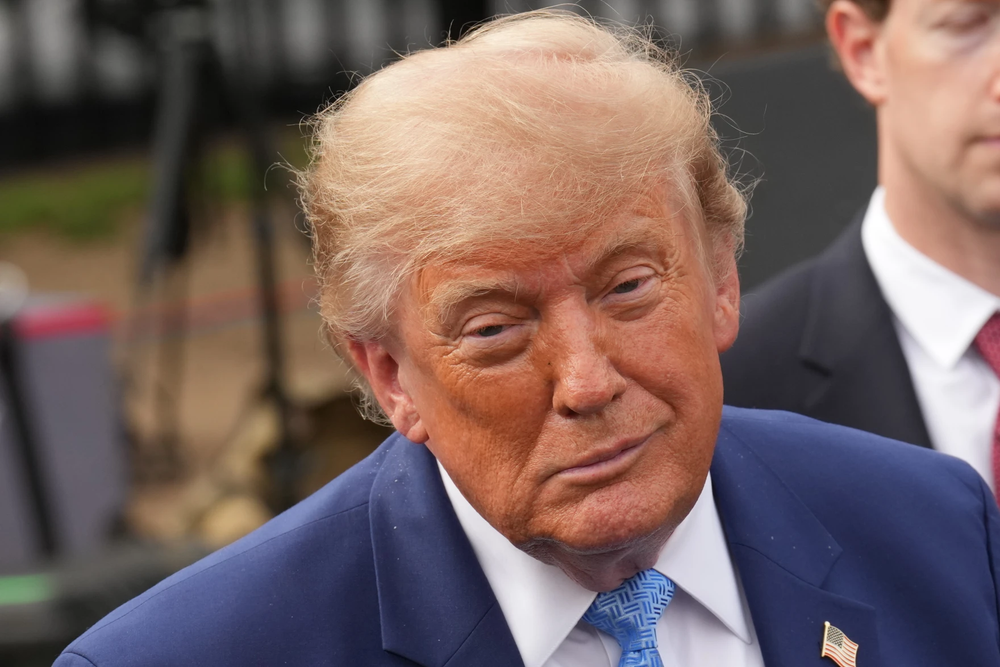
Trump introduced the Israel requirement on Truth Social on Thursday. "The Civil Nuclear Deal (There will be no enrichment of material!)," he wrote, "will be approved, but is totally subject to Saudi Arabia joining the very respected and successful Abraham Accords." He added that the United States "is not opposed to Civil (Non-Enriched) Nuclear Facilities."
Both of those claims, that normalization and a no-enrichment pledge were part of the signed deal, were not elements of the actual agreement, according to people familiar with it. Press secretary Karoline Leavitt said that if the Saudis "don't join the Abraham Accords, the deal is off," and that Trump "is always the final dealmaker." She said he had not spoken with the Saudi crown prince or Israeli Prime Minister Benjamin Netanyahu before posting.
Trump reiterated the position Friday in the Oval Office, rejecting the suggestion that his energy secretary had gotten ahead of him. "No, nobody got out ahead," he said. "In order to do it, they have to be a member of the Abraham Accords, which have been very successful. But it's time now that they do it." He said he had not discussed the accords with Wright before the signing, "but it was always understood, and Chris knew, and Saudi Arabia knew." He predicted the kingdom would eventually join.
The whiplash drew notice. "Does a social post supersede a signed diplomatic agreement?" asked Steven Cook of the Council on Foreign Relations. "No one in Washington really knows how it's going to work."
The Normalization Impasse
Getting Saudi Arabia into the Abraham Accords, the 2020 agreements that normalized Israel's relations with the United Arab Emirates, Bahrain, and Morocco, and later Sudan and Kazakhstan, would be a major diplomatic achievement. It is also, for now, a distant one.
Saudi leaders came close to normalization under the Biden administration, before the Hamas attack of October 7, 2023, and Israel's subsequent campaign in Gaza halted the talks. Since then, Riyadh has insisted it will not recognize Israel without a clear, irreversible path to a Palestinian state. Netanyahu's government rejects Palestinian statehood as a threat to Israeli security, a standoff that has left any nuclear deal tied to normalization looking remote. The Saudi Embassy in Washington declined to comment on Trump's condition, and Riyadh did not publicly respond.
Netanyahu welcomed the added condition without mentioning the nuclear component. "Saudi Arabia's joining of the Abraham Accords would be an historic leap forward for peace in the Middle East," his office said.
Proliferation Fears and Israeli Alarm
The initial announcement drew sharp reaction across Israel's political spectrum and among arms-control experts. Israel, widely believed to hold nuclear weapons under a policy of nondisclosure, fears a Saudi enrichment program could touch off a regional arms race, prompting Turkey, and potentially the UAE, to seek the same. Former defense minister Avigdor Lieberman warned the program "will end in nuclear weapons," while opposition figures faulted Netanyahu for a deal that, as one put it, both lost normalization and enabled Saudi nuclear capability without Israel at the table. Crown Prince Mohammed bin Salman has said the kingdom does not seek a weapon but would pursue one if Iran obtained it.
Nonproliferation specialists focused on what the deal omits. The UAE's 2009 nuclear agreement with the United States, long held up as the "gold standard," required Abu Dhabi to forgo enrichment and accept robust IAEA inspections. The Saudi pact does neither. Kenneth Brill, a former U.S. ambassador to the IAEA, called Riyadh's resistance to the Additional Protocol "a red flag." Secretary of State Marco Rubio, who as a senator co-sponsored legislation to attach strict conditions to any Saudi deal, insisted the agreement contained safeguards. "We're not the only show in town, but we're the best show in town," he said, arguing that American involvement was itself the strongest guarantee against weaponization, given that China, Russia, France, and South Korea were alternative partners.
The agreement now goes to Congress, which has 90 days to review it. Lawmakers of both parties have questioned it, and some Democrats, including Senator Ed Markey, accused the administration of hypocrisy for enabling Saudi nuclear technology while warring with Iran over its program. Blocking the deal would require a two-thirds majority in both chambers to override a likely presidential veto, a threshold opponents are unlikely to reach. Some administration officials framed the two-year enrichment study, set to conclude near the end of Trump's term, as a window in which to broker the very normalization he has now made a condition. Whether that sequence can be made to work, one former official noted, only adds complexity to an already difficult deal.
Author

We cover the world’s chaos so you don’t have to scroll twelve feeds to understand it.
Sign up for Atlas newsletters.
Stay up to date with curated collection of our top stories.