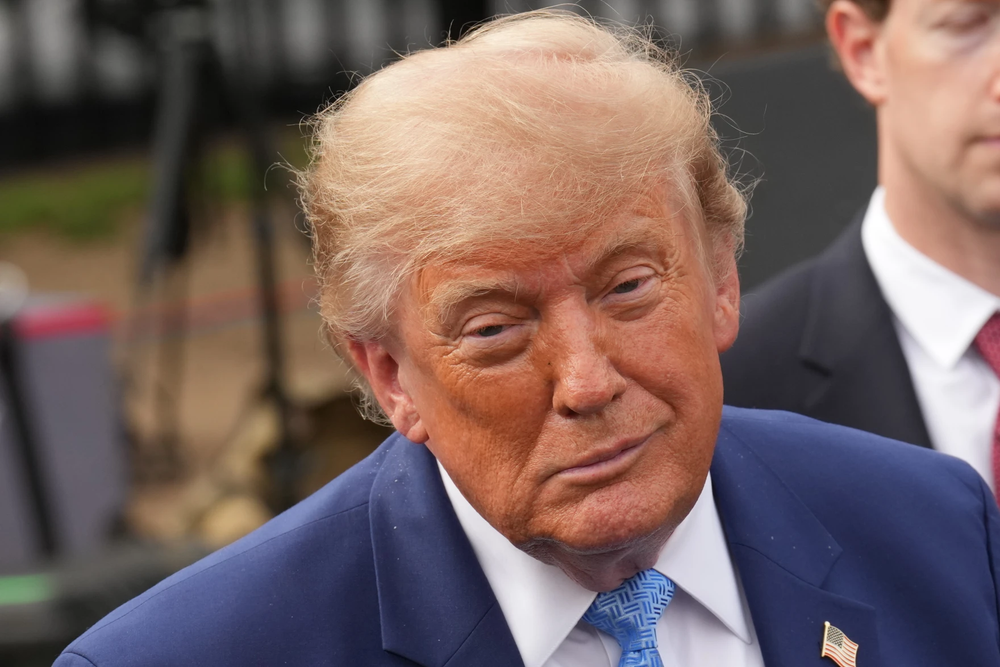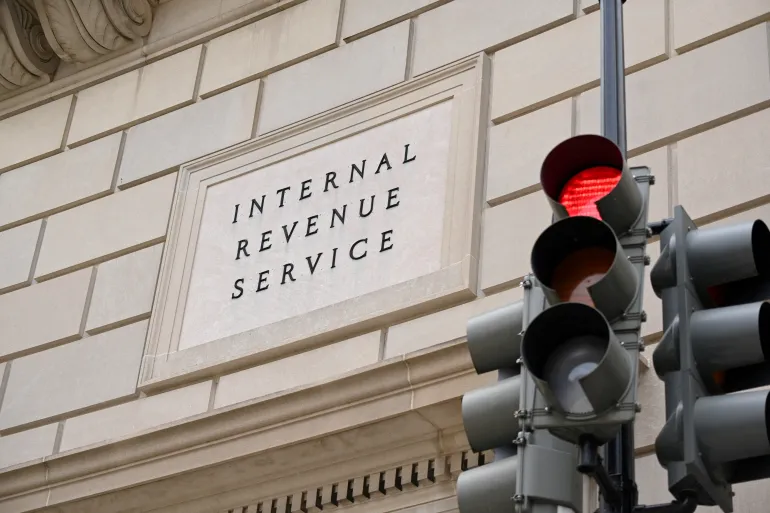
President Donald Trump has dropped his $10 billion lawsuit against the Internal Revenue Service as part of an agreement that establishes a $1.776 billion federal fund for people who claim they were targeted by political “weaponization” or “lawfare.” The Justice Department announced the arrangement Monday, tying the new fund directly to the resolution of Trump’s lawsuit over the leak of his tax returns.
The fund, formally called the Anti-Weaponization Fund, will be financed with taxpayer money and overseen through the Justice Department. Acting Attorney General Todd Blanche said the fund is intended to create a process for people who believe they were wrongly investigated, prosecuted, or otherwise targeted by the government for political, ideological, or personal reasons.
Trump, his two eldest sons, and the Trump Organization sued the IRS and Treasury Department earlier this year, arguing that the government failed to prevent the leak of confidential tax records. The suit sought $10 billion in damages. The case stemmed from former IRS contractor Charles Littlejohn, who pleaded guilty to leaking tax information belonging to Trump and thousands of wealthy Americans and was later sentenced to five years in prison.
Trump will not receive a direct monetary payment under the settlement. The Justice Department said he will receive a formal apology, while the money will instead go into a broader claims process for other people who say they were harmed by improper government action.
How the fund will work
The Justice Department said the Treasury will transfer $1.776 billion into an account reserved for the Anti-Weaponization Fund. The amount appears deliberately set to echo 1776, the year of the Declaration of Independence.
The fund will be overseen by a five-member commission appointed through the attorney general. The commission will be able to review claims, issue monetary relief, and provide formal apologies. One member is expected to be selected in consultation with congressional leadership, while the attorney general will appoint the others.
The Justice Department said there will be no partisan requirement to file a claim. In practice, however, the language used to describe the fund closely tracks the terms Trump and his allies have used for years to describe prosecutions and investigations involving the former president, his supporters, and figures in his political orbit.
The fund is expected to stop processing claims on Dec. 15, 2028, just over a month before the end of Trump’s second term. Any money left over would revert to the federal government. The Justice Department has also said the federal government will not be liable if funds are misused by claimants after payment.
What remains unclear is the standard the commission will use. The Justice Department has not publicly specified what evidence claimants must provide, how much compensation different categories of claims could receive, or whether the process will resemble a court proceeding, an administrative claims system, or a discretionary relief program.
Who could seek compensation
No public list of eligible claimants has been released. The Justice Department has said the fund is open to people who can show they were targeted for improper or unlawful political, personal, or ideological reasons.
That broad framing immediately raised questions about whether pardoned Jan. 6 defendants could apply. Trump issued mass pardons and commutations for people charged or convicted in connection with the Capitol attack shortly after returning to office. Several reports have noted that those individuals could potentially seek payouts under the new fund, though the administration has not publicly confirmed which categories of claimants will qualify.
The fund could also draw claims from Trump allies who faced federal investigations during or after the Biden administration. The Justice Department has already settled several claims brought by figures connected to Trump-aligned causes, including former national security adviser Michael Flynn and anti-abortion activist Mark Houck. Former White House chief of staff Mark Meadows has also sought reimbursement for legal fees connected to investigations following the 2020 election.
Trump said Monday that the fund was intended for people who were “horribly treated,” while saying he was not involved in creating it. Asked whether people who committed violence against Capitol Police officers should be eligible, he said the question would be handled by the committee overseeing the process.
That answer left the central eligibility question unresolved. The fund could be limited to people who were investigated but not convicted, or it could extend to people convicted of crimes but later pardoned. Until guidelines are published, that distinction remains one of the most important unanswered questions.
Why the lawsuit raised unusual legal questions
Trump’s IRS suit was unusual from the start because he filed it as president against agencies within the executive branch he controls. Outside legal experts had warned the court that the case raised concerns over whether there was a genuine legal dispute between opposing parties. Under Article III of the Constitution, federal courts are supposed to hear actual cases or controversies, not managed disputes within the same side of government.
U.S. District Judge Kathleen Williams had ordered the administration to address whether a real case or controversy existed. The settlement and dismissal came ahead of that deadline. After Trump moved to dismiss the case, the judge closed it and canceled remaining deadlines.
The legal concern was not only that Trump was suing his own government. It was also that any settlement could be negotiated by people ultimately answerable to him. That raised the possibility that the case could be resolved in a way that benefited Trump’s political interests while bypassing normal adversarial litigation.
The Justice Department has defended the agreement as lawful and pointed to prior federal compensation programs, including one created during the Obama administration to address claims by Native American farmers who alleged discrimination by the Agriculture Department. Critics argue that comparison is limited because the new fund was created to resolve a sitting president’s personal lawsuit and may benefit his own political allies.
The fight now moves to oversight
Democrats and watchdog groups responded quickly, calling the arrangement a taxpayer-funded political payout system. House Democrats described it as a “slush fund” and moved to challenge the settlement, while ethics groups raised questions about self-dealing, transparency, and congressional control over federal spending.
The core criticism is that the fund could allow the executive branch to distribute nearly $1.8 billion with limited outside review. Legal experts also noted that funds of this size are usually created by Congress or administered under close court supervision. Here, the fund will be controlled through the Justice Department, with review conducted by a commission appointed through the attorney general.
Supporters of the move frame it differently. The administration says the fund creates a formal way to compensate people who suffered from politically motivated government action. Blanche said the government should never be weaponized against Americans and that the department intends to correct past wrongs while preventing future abuses.
For now, the settlement has ended Trump’s $10 billion IRS lawsuit without direct financial payment to him. But it has opened a larger fight over whether the executive branch can use a lawsuit brought by the president against his own government to create a multibillion-dollar claims fund for people aligned, in many cases, with his political cause. The answer will depend on the commission’s rules, any congressional action, and whether courts allow the fund to operate as announced.
Author

We cover the world’s chaos so you don’t have to scroll twelve feeds to understand it.
Sign up for Atlas newsletters.
Stay up to date with curated collection of our top stories.