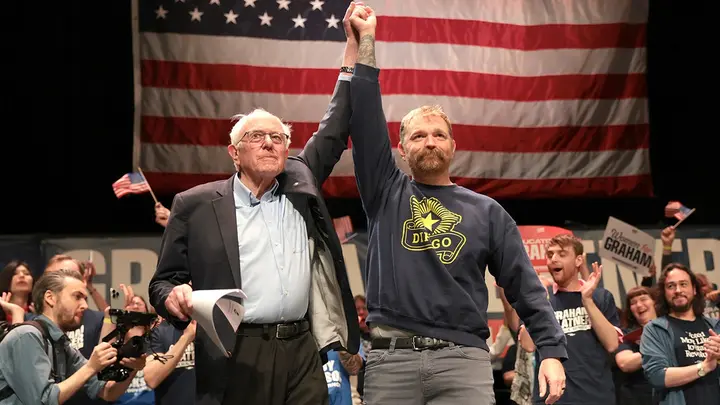
Graham Platner filed the paperwork Friday afternoon to formally withdraw from Maine's U.S. Senate race, closing out an insurgent campaign that collapsed under a rape allegation he denies. His exit hands Maine Democrats a scramble to name a replacement capable of unseating Republican Senator Susan Collins, in a contest that could decide control of the chamber.
The Maine secretary of state's office confirmed it had received his written notice, and the state Democratic Party announced it would hold a nominating convention on July 25 to pick a successor. Because Platner withdrew before the July 13 deadline, his name will not appear on the November 3 ballot and the party may replace him, with the new nominee due by July 27.
The Withdrawal
Platner posted the withdrawal letter on social media after submitting it to the state's Division of Elections. "I write to formally withdraw my candidacy for United States Senate," it began. He touted the 156,084 Mainers who backed him in the June 9 primary, writing that they had voted for "a new kind of politics" that is "representative of people down here in the real world, not billionaires, oligarchs, or the political establishment."
He framed the exit as an act meant to preserve the movement rather than an admission of anything. "My name may have been on the ballot, but that ballot line belongs to the people of Maine," he wrote, adding that he sought "to further the movement we have built together and the future we believe in." The letter closed with an expletive aimed at Immigration and Customs Enforcement, a call for "Free Palestine," and "Up the Hearts," a nod to Portland's professional soccer club.
The formal filing came two days after Platner announced he was suspending campaign operations, and three days before the deadline that would have locked his name onto the ballot and blocked any replacement. His initial decision to wait until Monday had irritated Maine Democrats, some of whom saw it as an attempt to influence who would succeed him. A spokesperson did not say why he moved earlier.
How the Campaign Unraveled
Platner, a 41-year-old Marine combat veteran and oyster farmer, built an outsider campaign that drew large crowds and strong fundraising, powered in part by an early endorsement from Vermont Senator Bernie Sanders. He steamrolled Governor Janet Mills, the establishment favorite, who suspended her own bid in April after trailing him badly, and he won the June primary with more than 70 percent of the vote.
The collapse came this week. Politico reported that Jenny Racicot, a 41-year-old Maine resident who said she dated Platner on and off for more than two years, alleged he entered her home uninvited and intoxicated in 2021 and forced her to have sex over her repeated objections. She told CNN that "by dictionary definition" he had raped her, and said she had not filed a police report. Platner called the allegation "categorically" false and suggested it was politically motivated and timed to the ballot deadline.
A second allegation followed. In a report by The Washington Post, a former girlfriend, Lyndsey Fifield, accused Platner of removing condoms during sex without her consent. Fifield had earlier told The New York Times of physical mistreatment during their relationship. Platner's campaign called her account "categorically false and politically motivated," pointing to her prior work for the conservative Heritage Foundation.
The allegations were the latest in a run of controversies that had trailed Platner through the primary, including inflammatory posts on a since-deleted Reddit account, sexually explicit messages sent to women while he was married, and a chest tattoo resembling a Nazi SS symbol that he said he got while drinking with fellow Marines in Croatia in 2007 and later covered up. He repeatedly denied the accusations of violence and, in his primary victory speech, cast himself as a changed man.
The Democratic Exodus
What ended the campaign was not the reporting alone but the speed with which his own coalition abandoned him. After the rape allegation surfaced, Senate Minority Leader Chuck Schumer and Senator Kirsten Gillibrand, who chairs the Democratic Senatorial Campaign Committee, called the claims "incredibly disturbing" and said the committee would not spend in Maine if Platner stayed on the ballot. Senate Majority PAC said it would redirect resources away from the race.
The progressives who had lifted him followed. Sanders said he had spoken with Platner and recommended he step aside. Senator Elizabeth Warren, Senator Ruben Gallego, and Representative Ro Khanna, all of whom had campaigned with or endorsed him, rescinded their support. In his announcement video, Platner argued that the establishment was using the allegations "as an excuse to take away all the things that we need to run a campaign," warning he would lose access to fundraising and voter data. "For the movement to continue, it can't be me," he said.
What Comes Next
Maine Democrats now face a compressed timeline to field a candidate against Collins, who was first elected in 1996 and is seeking a sixth term. Party Chairman Charlie Dingman said delegates representing all 16 counties, 601 in total, would choose someone with "the energy, ideas and popular support" to win. Candidates must gather at least 500 signatures and submit a statement of their vision.
A crowded field has already formed. It includes three Democrats who lost last month's gubernatorial primary, former Maine Center for Disease Control director Nirav Shah, Secretary of State Shenna Bellows, and former state Senate President Troy Jackson, along with Maine Beer Company co-founder Dan Kleban, former congressional candidate Jordan Wood, and social worker Paige Loud. State Representative Valli Geiger has expressed interest without formally announcing.
The stakes reach well beyond Maine. Republicans hold the Senate 53-47, and with Vice President JD Vance's tie-breaking vote, Democrats need a net gain of four seats to take the majority. Maine, where Collins is viewed as among the most vulnerable Republican incumbents, sits near the center of that math. Collins has outperformed her polling before, defeating Democrat Sara Gideon by nine points in 2020 after surveys suggested she was headed for defeat. Whoever the party selects on July 25 will inherit both an energized base and a race upended just months before Election Day.
Author

We cover the world’s chaos so you don’t have to scroll twelve feeds to understand it.
Sign up for Atlas newsletters.
Stay up to date with curated collection of our top stories.