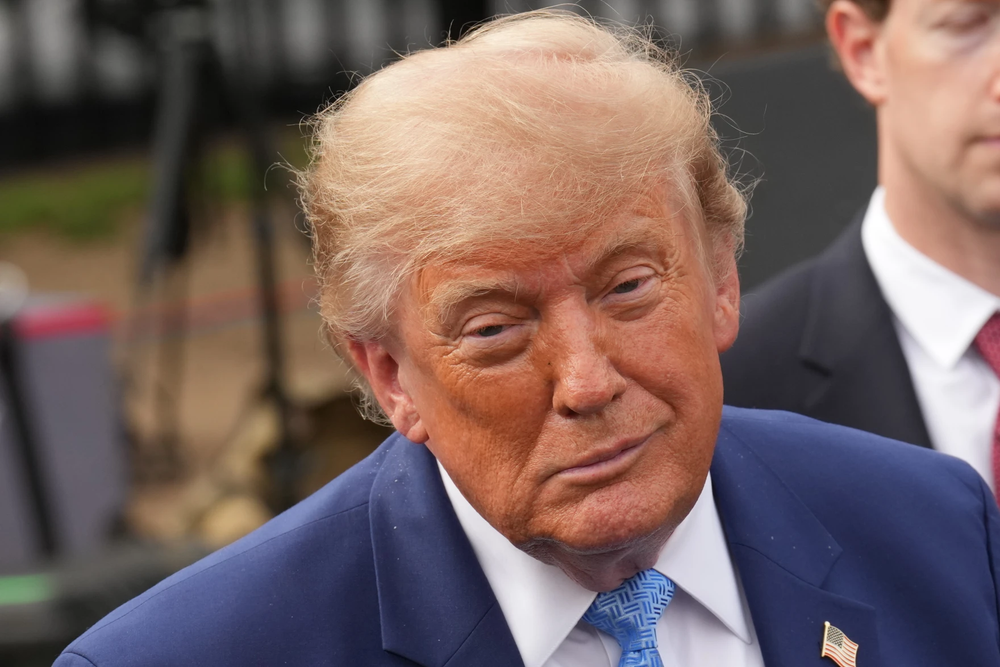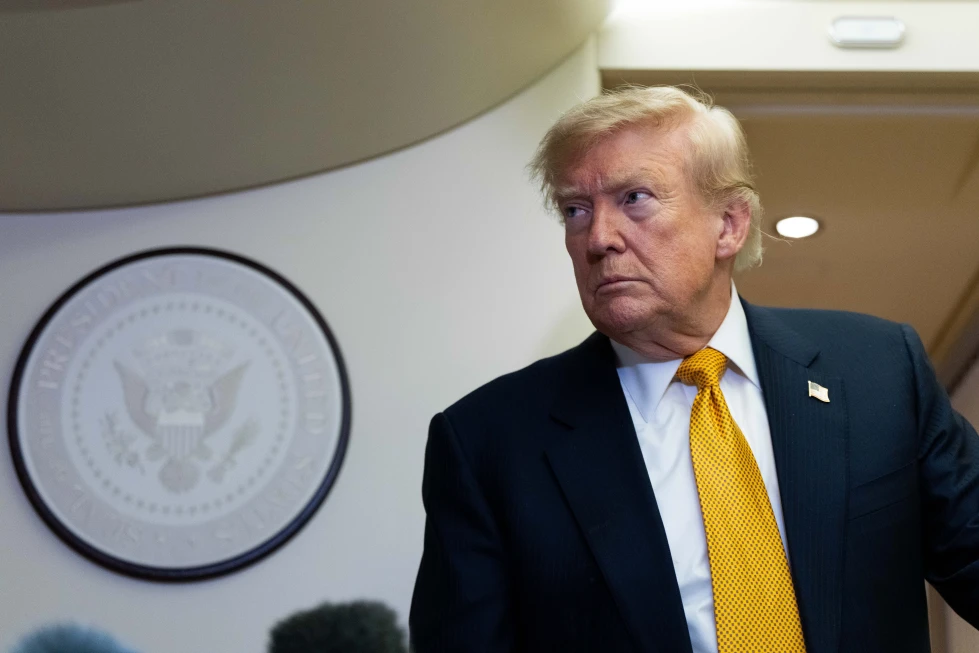
President Trump announced Friday that he would not sign the bipartisan housing bill sitting on his desk, a symbolic snub aimed not at the legislation itself but at the Senate's failure to pass a strict voter identification measure he has been demanding for months. He stopped short of a veto, which means the bill becomes law anyway, at 12:01 a.m. Saturday.
The gesture cost Republicans a signing ceremony and a clean victory lap on an issue voters rank near the top of their concerns heading into November's midterms. It also handed Democrats a ready-made line of attack, and left some in Trump's own party puzzled that he would decline to put his name on a measure his administration had once touted as a priority.
What Trump Said
Trump laid out his reasoning in a Truth Social post. "I will not sign the Housing Bill, which has been fully approved by Congress and sent to the White House, in PROTEST over the fact that the United States Senate is not capable of passing THE SAVE AMERICA ACT, which is polling at 97% with the Republican Party, and very high with the non-politician Dumocrats," he wrote.
He did not use the word veto, and the White House, asked repeatedly to clarify, simply pointed reporters back to the post. Under the Constitution, a president has 10 days to sign or veto a bill once it reaches his desk; if he does neither while Congress is in session, it becomes law automatically. Speaker Mike Johnson delivered the housing bill to the White House on June 29, starting that clock, which expires at 11:59 p.m. Saturday.
Trump used the moment to renew his push to end the Senate filibuster. He warned that Democrats would scrap the 60-vote threshold "in hour one" if they took the majority, and urged Republicans to do it first to pass the SAVE America Act "and every other Bill that true Republicans have ever dreamt of."
The Housing Bill
The 21st Century ROAD to Housing Act is the broadest federal housing legislation in decades, and it passed with rare bipartisan margins, 85-5 in the Senate and 358-32 in the House, enough in both chambers to override a veto had Trump attempted one.
The bill aims to lower costs chiefly by encouraging construction. It waives or speeds environmental reviews for some projects, loosens permitting rules, and creates grant programs for communities that build more, including "pattern books" of preapproved designs. It removes a requirement that manufactured homes sit on a permanent steel chassis, a change housing experts say could cut thousands of dollars per home. It also caps how many single-family homes large investors can own, barring corporate landlords with at least 350 houses from buying more, an idea Trump himself had promoted.
Analysts note the measure will not resolve the country's housing shortage on its own. It does not touch local zoning, mortgage rates, construction labor shortages, or insurance costs, and any new supply would take years to reach buyers. White House economists earlier this year estimated a national shortfall of roughly 10 million homes. The timing sharpened the political stakes: the National Association of Realtors reported that the median price of an existing home hit an all-time high of $440,600 in June, up 1.8 percent from a year earlier.
The SAVE Act Standoff
The bill Trump is holding out for has nowhere to go. The SAVE America Act would require proof of citizenship to register to vote in federal elections and photo identification at the polls, and would build a national voter database from state records. The House has passed versions of it, but it has stalled in the Senate, where Republicans hold 53 seats and need 60 to overcome a Democratic filibuster. Even with every Republican in favor, at least seven Democrats would have to join, and several Republicans, including Mitch McConnell, have voted no.
Trump has pressed Majority Leader John Thune to abolish the filibuster to force the bill through, but Thune has said repeatedly the votes are not there, and there is little appetite in the party to do it. Trump first tied the housing bill to the voting measure on June 24, when he abruptly canceled a planned Capitol signing ceremony, calling the SAVE Act a "National Emergency" and dismissing the housing package as "a big yawn" and "so unimportant" by comparison.
Johnson has consistently said Trump would not block the housing bill outright. "He won't veto the bill. We already know that," the speaker said after meeting with the president, adding that he hoped Trump would sign it and "take partial ownership" but that "if he doesn't, it's still law. We'll still celebrate it." Johnson said he understood Trump was trying to underscore that the elections bill is his top priority, and "he's making it very effectively."
The Political Fallout
The decision drew immediate criticism from Democrats, who have worked to make affordability their central midterm message. "Millions of Americans are being crushed by housing costs," Senate Minority Leader Chuck Schumer wrote. "Donald Trump called their crisis 'a big yawn,' then refused to sign the most significant bipartisan housing bill in decades. His priorities couldn't be clearer: higher costs for families and more power for himself." House Minority Leader Hakeem Jeffries put it more bluntly: "Republicans would rather make it harder to vote than easier to afford a home."
The move complicated life for Republicans, too. Lawmakers had hoped to campaign on the housing bill as proof they were addressing the cost of living, an issue on which Democrats have hammered them over tariffs, gas prices tied to the war with Iran, and the expiration of health care subsidies. Trump's refusal to sign muddied that message, even as the underlying law took effect.
For all the friction, the practical outcome is narrow. The bill becomes law regardless, the SAVE Act remains stalled, and the filibuster stands. What Trump gained was a protest, staged at the cost of a signing ceremony, that keeps his voting legislation at the center of the conversation as the midterms approach. Whether that pressure moves any Senate votes remains, for now, an open question.
Author

We cover the world’s chaos so you don’t have to scroll twelve feeds to understand it.
Sign up for Atlas newsletters.
Stay up to date with curated collection of our top stories.