France logged roughly 1,000 more deaths than expected during a record-shattering heat wave that has baked much of Europe for more than a week, the country's public health agency said Sunday, cautioning that the toll is preliminary and likely to climb.
The agency, Public Health France, said the excess deaths were measured from June 24 against mortality in prior months, and that 85 percent of them involved people aged 65 and older. Areas placed under the highest heat alert were hit hardest, with the sharpest rise among people dying at home, particularly in the Île-de-France region surrounding Paris.
The Toll in France
The agency's daily figures trace the arc of the crisis. France recorded more than 1,200 deaths on Wednesday, the country's hottest day, rising to more than 1,400 on each of the two days that followed. Before the heat wave, the daily death rate in April and May had run between about 900 and 1,000.
Officials stressed that the count remains incomplete. The estimate draws on electronic death certificates, which capture only part of nationwide mortality, and the health effects of extreme heat often surface days after the temperatures themselves peak. Health Minister Stéphanie Rist said the impact could linger for as long as ten days after the weather eased.
For context, the toll so far sits below earlier catastrophes. The 2003 European heat wave was blamed for some 15,000 heat-related deaths in France, many of them older people, and last year more than 5,700 deaths were attributed to heat. The director of the Paris public hospital authority said he did not expect this episode to reach the 2003 level, in part because treatment for overheating has improved since then, while warning that the death count would still be significant.
A Wider European Picture
The French figures form part of a broader continental toll. World Health Organization Director-General Tedros Adhanom Ghebreyesus said more than 1,300 excess deaths had been recorded across Europe since June 21 in connection with high temperatures, calling heat stress a silent killer and noting that European homes, workplaces, and schools were not built for such conditions.
In Spain, the country's mortality monitoring system pointed to more than 400 deaths potentially linked to temperature between Wednesday and Saturday. Tedros said roughly 150 million people were living under extreme heat as the event unfolded, with grids buckling and schools closed, and described Europe as the fastest-warming continent, heating at twice the global average.
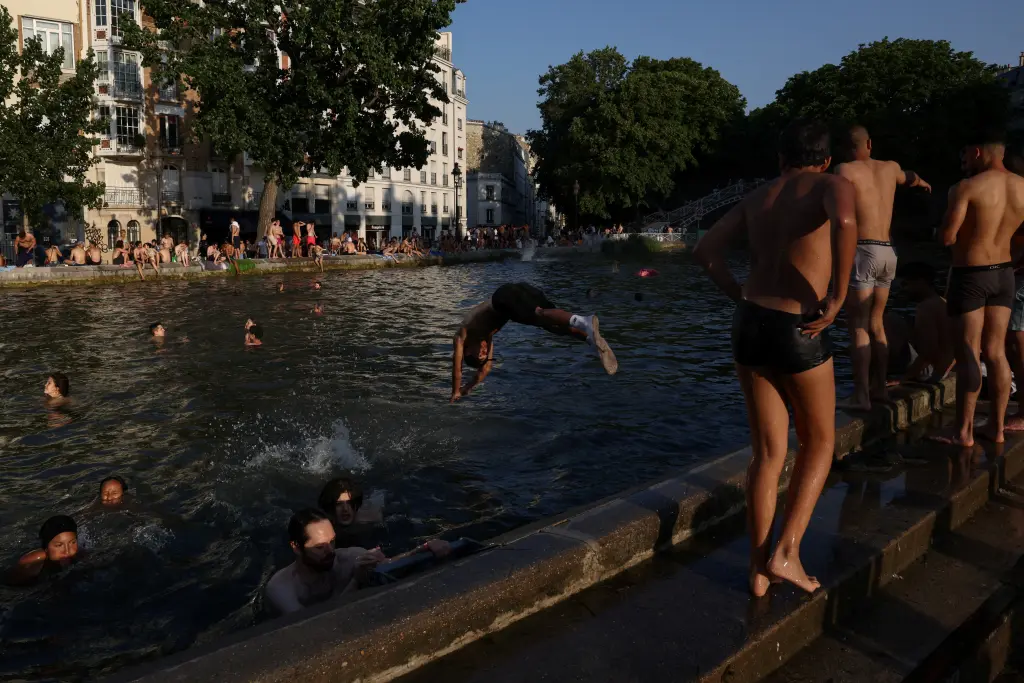
A separate strand of the death toll came not from heat illness but from people trying to escape the heat. French Interior Minister Laurent Nuñez said at least 74 people had drowned since the heat wave began on June 18, most in unsupervised rivers, lakes, and ponds. Among the dead was a 21-year-old Ligue 2 footballer, Kenzo Kies, who reportedly drowned in the Rhône. Two young children also died after being left in cars in France, and Germany reported more than 20 deaths in swimming-related accidents.
Records Fall and Infrastructure Strains
The heat broke national records as it pushed eastward over the weekend. Germany registered its hottest-ever day for a third straight day Sunday, with a reading of 41.7 degrees Celsius near the Polish border. The Czech Republic recorded 41.1 degrees at Doksany, north of Prague, and Poland set an all-time high of 40.5 degrees at Słubice. France had recorded its hottest day ever earlier in the week, with 43.8 degrees in Palluau.
Scientists tied the severity directly to a warming climate. A rapid analysis by World Weather Attribution, a network of researchers, found the record heat and humidity would have been virtually impossible five decades ago and was now far more likely than it would have been two decades earlier. The pattern was driven by a so-called heat dome, in which sinking air compresses, warms, and dries, clearing clouds and letting the sun bake the ground further.
The strain showed across systems built for milder summers. In Germany, the concrete surface of the A2 motorway buckled, trams were suspended in Leipzig because of heat damage to tracks, and more than 600 passengers had to be evacuated from an overheated train in Brandenburg after a tree fell on a power line. Hungary's Paks nuclear plant cut output because the Danube, used as a coolant, had grown too warm. In Italy, the shrinking flow of the Po River allowed seawater to push miles inland, raising concern for agriculture in the delta.
Public Measures and What Comes Next
Authorities across the continent moved to ease pressure on emergency services and protect the vulnerable. The Paris public hospital authority activated its emergency plan across all 38 of its hospitals, reporting nearly 3,000 emergency patients in a 24-hour span, more than a third above normal, with calls to its dispatch centers up nearly 80 percent compared with the same period a year earlier.
Paris banned drinking takeaway alcohol in public over the weekend and postponed its Pride march, while the Eiffel Tower and the Louvre closed early. Officials warned repeatedly about the dangers of swimming in unsupervised waters after multiple drownings. In Germany, Berlin police turned water cannons normally used for crowd control toward sweltering residents and tourists near the Brandenburg Gate.
The heat also fed disasters beyond illness. In eastern Germany, fires broke out in forests still contaminated with World War II-era ammunition, forcing firefighters to halt work amid explosions, and about 650 people near the village of Traisen had to leave their homes as a blaze spread.
By Sunday, the extreme heat had eased across most of France, though parts of the northeast remained under advisory, and forecasters expected cooler, stormier weather to move into Western Europe as the heat pressed into central and eastern parts of the continent. Public Health France, in releasing its count, urged renewed attention to isolated and elderly people, noting that the figures were preliminary and almost certainly an undercount.
Author

We cover the world’s chaos so you don’t have to scroll twelve feeds to understand it.
Sign up for Atlas newsletters.
Stay up to date with curated collection of our top stories.