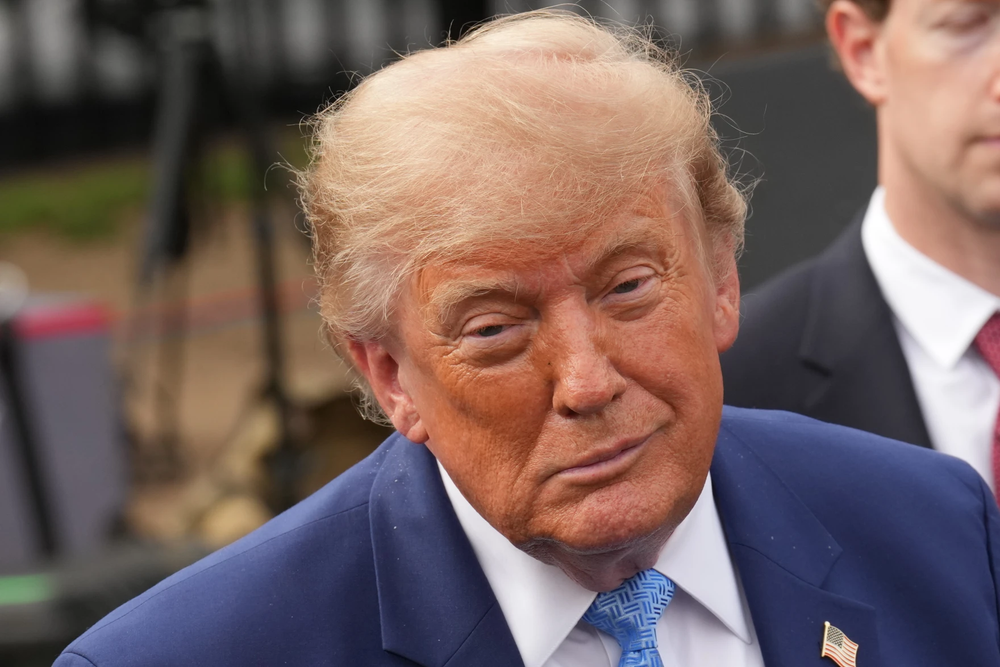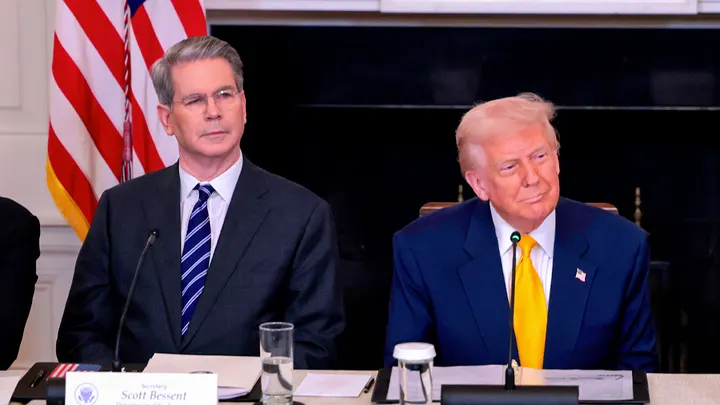
U.S. Treasury Secretary Scott Bessent said Friday that the United States has now seized approximately $1 billion in cryptocurrency tied to the Iranian government, roughly doubling the figure he had given a month earlier.
Speaking at the 2026 Reagan National Economic Forum in Simi Valley, California, Bessent made the announcement during an interview with Fox Business host Larry Kudlow. "I believe that we have seized about a billion dollars of their crypto," he said. "Just outright grabbed the wallets. Some of them may be typing in right now and might not realize that their wallet had been grabbed."
The new total represents a sharp acceleration in U.S. asset-forfeiture operations against Iran-linked digital wallets over the past month. Bessent told reporters on April 29 that the running figure stood at "nearly $500 million." Treasury officials say the assets are being held "on behalf of the Iranian people," and Bessent argued at the forum that the funds were originally stolen by the regime from its own population.
How the Seizures Work
The largest single Iranian crypto action publicly disclosed to date came in late April, when stablecoin issuer Tether confirmed it had frozen roughly $344 million in USDT across two addresses on the Tron blockchain that had been linked to the Islamic Revolutionary Guard Corps. Blockchain analytics firm Chainalysis flagged on-chain patterns consistent with known IRGC wallets, allowing U.S. authorities to identify the addresses. One of the two held roughly $213 million; the other held $131 million.
The mechanics of the seizures rely on the centralized control points within parts of the crypto ecosystem. Stablecoin issuers such as Tether retain the ability to freeze tokens on specific addresses on request from law enforcement, and once frozen, the tokens cannot be moved by the holder. For non-stablecoin assets, Treasury officials work through exchanges and custodial services that retain access to private keys for users.
Bessent's framing of the operation suggests further actions are likely. The Office of Foreign Assets Control has sanctioned more than 1,000 Iran-linked entities since the start of the campaign, frozen bank accounts associated with IRGC-controlled businesses, and worked with European partners to identify physical real estate held in third countries. "We are working with our allies all over Europe to grab villas and houses and properties," Bessent said.
Operation Economic Fury and Iran's Domestic Picture
The crypto seizures are the digital component of a broader Treasury campaign that the administration calls Operation Economic Fury, launched in early 2025 and intensified after the United States and Israel opened the military phase of the war on February 28. Bessent argued Friday that the combined military and financial pressure had pushed the Iranian government to the brink. "Between five and a half-six weeks of an incredibly successful military campaign and then Operation Economic Fury, where we have really cut them off, they are at the end of their tether now financially," he said.
Bessent's characterization of conditions inside Iran tracks with broader reporting on the country's deteriorating economy. He told the forum that "40 or 50 percent" of Iranian troops were not being paid, that "police aren't reporting to the station," and that domestic inflation was "probably over 200 percent." He added that the regime had begun distributing food vouchers and had cut domestic internet access in some areas to suppress unrest. Iran's currency, the rial, has lost roughly 90 percent of its value against the dollar since 2018.
He also described the operational logic of the financial campaign in personal terms. The Iranian regime, he said, had been "siphoning $400 to $500 million every month" through sanctions-evasion channels before the Treasury Department intervened, with the proceeds divided among senior officials. He framed the campaign as a deliberate effort to recover funds for the Iranian population rather than a punitive measure.
The IRGC and Iran's Embrace of Crypto
The crypto seizures are also a function of how deeply digital assets have been integrated into Iran's sanctions-evasion infrastructure. Blockchain analysis firms estimate that IRGC-linked wallet addresses received more than $3 billion in crypto in 2025, up from over $2 billion in 2024. The IRGC's share of total identified Iranian crypto inflows passed 50 percent by the end of last year. Those figures represent conservative floors based on identified and sanctioned wallets.
Iran's reliance on crypto extends to the war itself. The Financial Times reported in April that Iran planned to require oil tankers transiting the Strait of Hormuz to pay transit fees in Bitcoin during the ceasefire window, on the grounds that the payments would be harder to trace and could not be seized by Western governments. Iranian state media has also promoted a Bitcoin-settled maritime insurance product called Hormuz Safe, which the IRGC has used to underwrite vessels operating in the region. Israeli authorities alleged last year that the IRGC had received roughly $1.5 billion in USDT.
Crypto also serves a parallel function for ordinary Iranians. By some estimates, roughly one in six Iranians uses cryptocurrency to hedge against rial depreciation, send remittances abroad, or move funds during periodic internet shutdowns. Bessent did not address the distinction between state-linked and civilian wallets at the forum, but his framing of the seized funds as having been "stolen" from the Iranian population implied that the actions targeted state-controlled holdings.
The Bitcoin Reserve and Strategic Picture
Bessent's announcement comes against the backdrop of the administration's separate effort to build out a U.S. Strategic Bitcoin Reserve. Under guidance issued earlier this year, the Treasury Department has paused sales of bitcoin seized in domestic forfeiture proceedings and has signaled that additional forfeitures will be added to the reserve once damages claims are settled. The federal government currently holds approximately 328,372 BTC, according to data tracked by analytics firm Arkham, worth roughly $24 billion at current prices. That makes the U.S. the largest known state holder of bitcoin in the world.
"The policy of this government is to add seized bitcoin to our digital asset reserve after the damages are done," Bessent said in earlier remarks this year. "First you have to stop selling, which we have done, and then we can add the assets and asset forfeitures."
The announcement also lands in the middle of an unresolved diplomatic negotiation. President Donald Trump held a Situation Room meeting on Friday afternoon to weigh a tentative framework that would extend the existing ceasefire by 60 days and reopen the Strait of Hormuz. Bessent argued at the forum that the financial pressure had brought Iran to the table. "We did not have regime change," he said, "but we changed the regime."
Author

We cover the world’s chaos so you don’t have to scroll twelve feeds to understand it.
Sign up for Atlas newsletters.
Stay up to date with curated collection of our top stories.