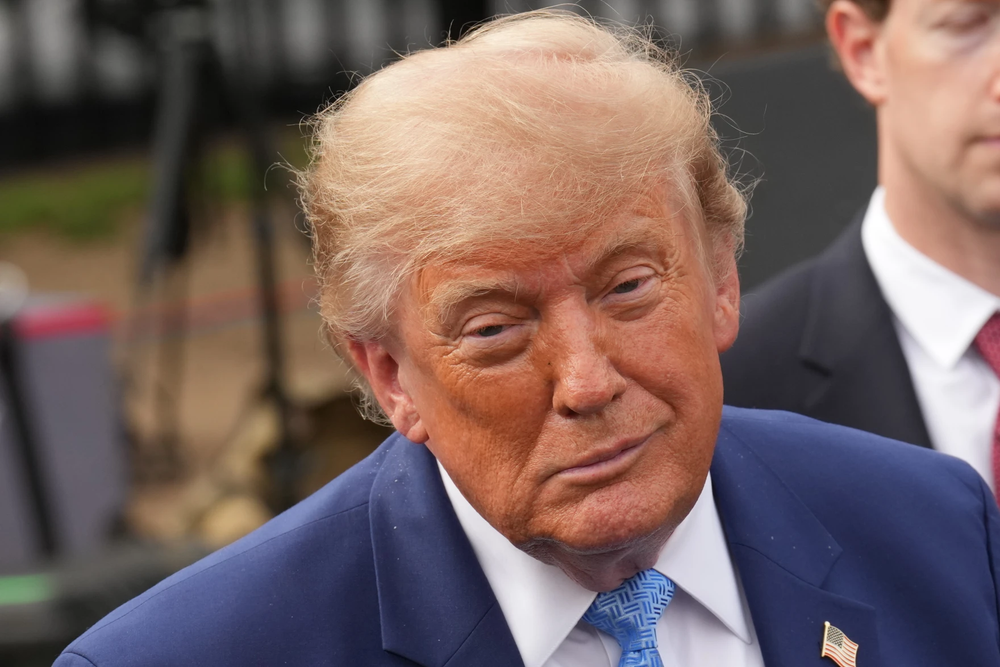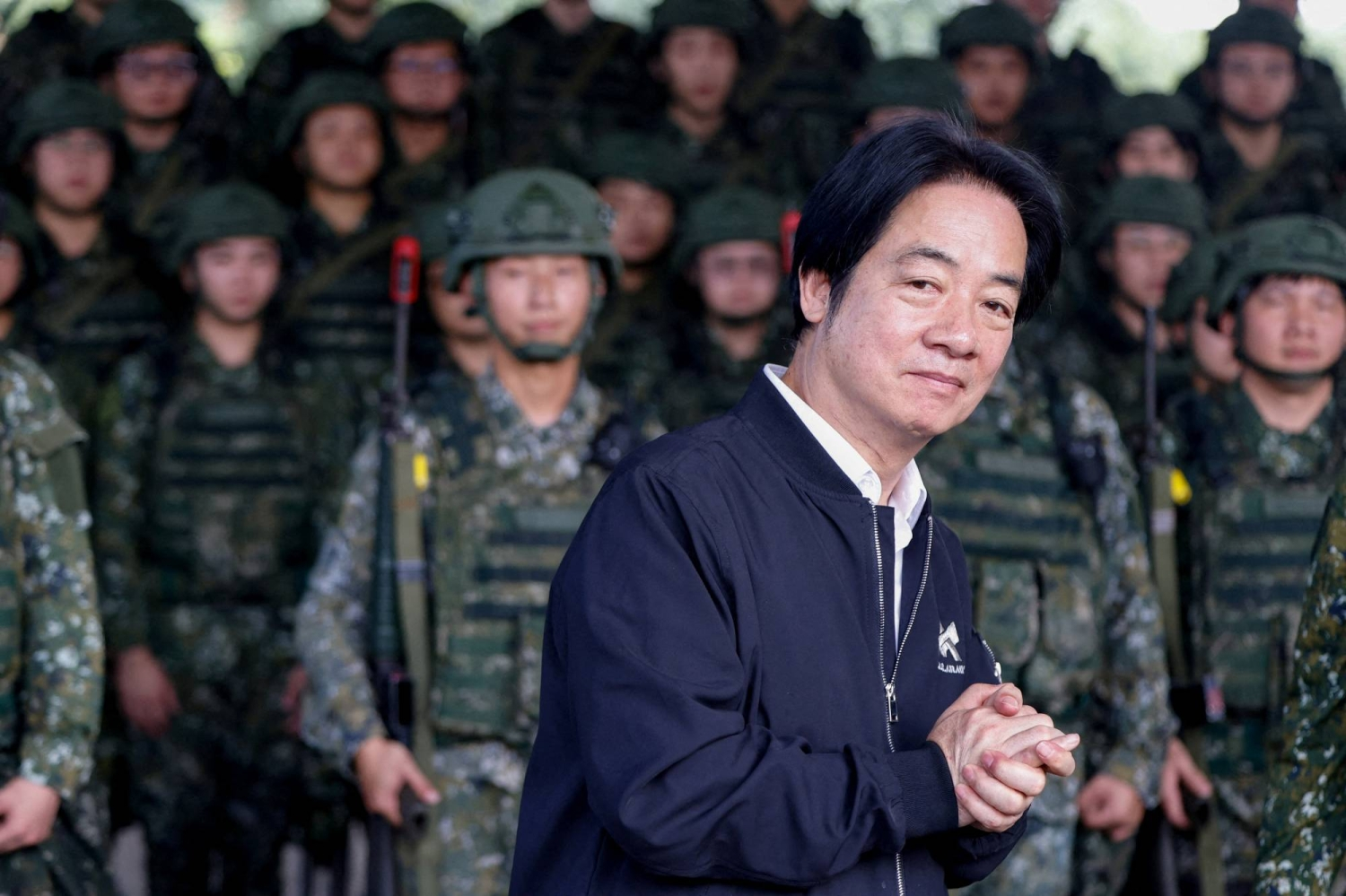
Taiwan's president called off a state visit to Eswatini one day before he was set to leave, after three African island nations pulled overflight permits for his aircraft in what Taipei says was a direct response to Chinese pressure.
Lai Ching-te had been scheduled to depart Wednesday for a five-day trip to Eswatini, the only country in Africa that still recognizes Taipei. He was going for the 40th anniversary of King Mswati III's accession to the throne and the monarch's 58th birthday. Instead, his office held an emergency press conference Tuesday evening to announce the trip was off.
Secretary-General to the President Pan Men-an told reporters that the Seychelles, Mauritius, and Madagascar each revoked overflight clearances for the presidential charter without warning. The cancellations came in rapid succession over the past several days after the permits had already been approved through standard diplomatic channels.
"The actual reason was intense pressure exerted by Chinese authorities, including economic coercion," Pan said.
A senior Taiwanese security official who spoke on condition of anonymity said Beijing threatened the three governments with the revocation of existing debt relief, a freeze on new financing, and further economic sanctions if they allowed the flight through.
A first-time setback
Taiwanese presidents fly over countries that do not recognize Taipei all the time. It is routine. That is what makes this different. No sitting Taiwanese president has ever had to scrap a foreign trip because of Chinese pressure on the flight path, and officials in Taipei said as much.
Pan called the campaign "virtually unprecedented in the international community" and said it violated international aviation norms. Lai, writing on Facebook, said the episode showed the threat authoritarian states pose to the international order. He added a line that has become a familiar refrain from his office: "No threats or repression can change Taiwan's determination to engage with the world."
Lai has not traveled abroad since November 2024, when he visited Taiwan's three Pacific allies and stopped in Hawaii and Guam. A planned trip to Latin America and the Caribbean last year fell apart after the Trump administration reportedly declined to approve a U.S. transit, with Washington weighing ongoing trade talks with China. Taipei denied at the time that Lai had been blocked.
What the three countries said
Two of the three governments publicly confirmed the denials and made clear the decisions were rooted in their "one China" posture, not framed as a response to Chinese pressure.
Seychelles' foreign affairs ministry told Reuters by email that the aircraft had not been cleared for overflight or landing, "in line with the government's longstanding policy of not recognising Taiwan's sovereignty." Senior protocol officer Aline Morel said the decision was taken "independently and in accordance with established procedures."
A Madagascar foreign ministry official said the same. "Malagasy diplomacy recognises only one China. The decision was made in full respect of Madagascar's sovereignty over its airspace."
Mauritius did not respond to press inquiries. China's Foreign Ministry also declined to comment. Xi Jinping spent Tuesday in Beijing meeting with Mozambique's President Daniel Chapo, and the official state media readout made no mention of Lai's scrapped trip.
How the flight plan came apart
The route mattered. Lai's team had deliberately chosen to fly directly to Eswatini to avoid the Middle East, where the U.S.-Iran war has complicated airspace around the Gulf. That routing took the plane across the Indian Ocean, directly through the flight information regions of the Seychelles, Mauritius, and Madagascar — zones those countries manage under international aviation rules.
National Security Council chief Joseph Wu told reporters the permits had all been secured in advance through the proper channels. Then, one by one, they were pulled. Even if Lai's plane could have skirted the three countries' sovereign airspace, it would have had a much harder time avoiding their FIRs without flying a route officials deemed unsafe.
"After careful assessment by the national security team, and considering the safety of the head of state, the visiting group, and flight safety," Pan said, the president agreed to postpone. A special envoy will go in his place. Taipei has not said who that will be, or when Lai might attempt the trip again.
Eswatini stands by Taipei
The government in Mbabane, for its part, did not waver publicly. Acting government spokeswoman Thabile Mdluli said Eswatini "regrets" that Lai could not come but that the cancellation "does not change the status of our longstanding bilateral relations with the Republic of China (Taiwan)."
King Mswati III, who took the throne in 1986, has traveled to Taiwan 18 times. He attended Lai's inauguration in 2024. The last Taiwanese presidential visit to Eswatini was Tsai Ing-wen's trip in 2023. Eswatini has been the lone African holdout in Taipei's diplomatic column since Burkina Faso switched recognition to Beijing in 2018.
The broader trend is not in Taiwan's favor. Beijing has spent years pulling Taipei's partners one by one — Nicaragua in 2021, Honduras in 2023, Nauru in January 2024 — often alongside Chinese investment packages in the countries making the switch. Taiwan's remaining 12 allies are clustered in the Caribbean, Central and South America, and the Pacific.
What it signals going forward
Tuesday's cancellation opens a new front. Stripping Taipei of diplomatic allies is one thing. Pressuring countries along a flight path to close their airspace to Taiwan's head of state — countries that aren't even the destination — is something else. And it sets a precedent that will hang over every future presidential trip.
The implications are sharpest for Taiwan's allies in Latin America and the Caribbean. A Taiwanese aircraft trying to reach most of them would normally transit U.S. airspace or cross the FIRs of Latin American countries that recognize Beijing. Guatemala is an exception — it has direct Pacific access and still recognizes Taipei — but even a route there touches shared airspace arrangements. The reliability of a U.S. transit, meanwhile, is harder to count on given Washington's sensitivity to Beijing's reaction.
The opposition Kuomintang urged China to ease up. Yin Nai-ching, the party's director of culture and communications, called on Beijing to "exercise restraint, reduce pressure, and provide the ROC government with sufficient diplomatic space." Yin also said the cancellation had nothing to do with the recent meeting between KMT Chair Cheng Li-wun and Xi Jinping.
Author

We cover the world’s chaos so you don’t have to scroll twelve feeds to understand it.
Sign up for Atlas newsletters.
Stay up to date with curated collection of our top stories.