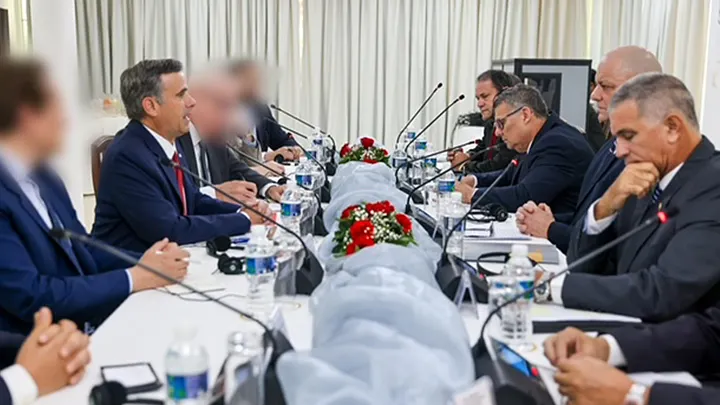
CIA Director John Ratcliffe traveled to Havana on Thursday for face-to-face talks with senior Cuban officials, the highest-profile U.S. visit to the island in years and the latest move in a months-long pressure campaign that has left Cuba's economy in freefall.
Ratcliffe met with Cuba's Interior Minister Lázaro Álvarez Casas, the head of Cuban intelligence, and Raúl Guillermo Rodríguez Castro — the grandson and former bodyguard of former president Raúl Castro. Both sides said the discussion covered intelligence cooperation, economic stability, and regional security.
The trip is the first U.S. government flight to land in Cuba outside the Guantánamo Bay naval base since 2016. The Cuban government said the visit "took place against a backdrop of complex bilateral relations."
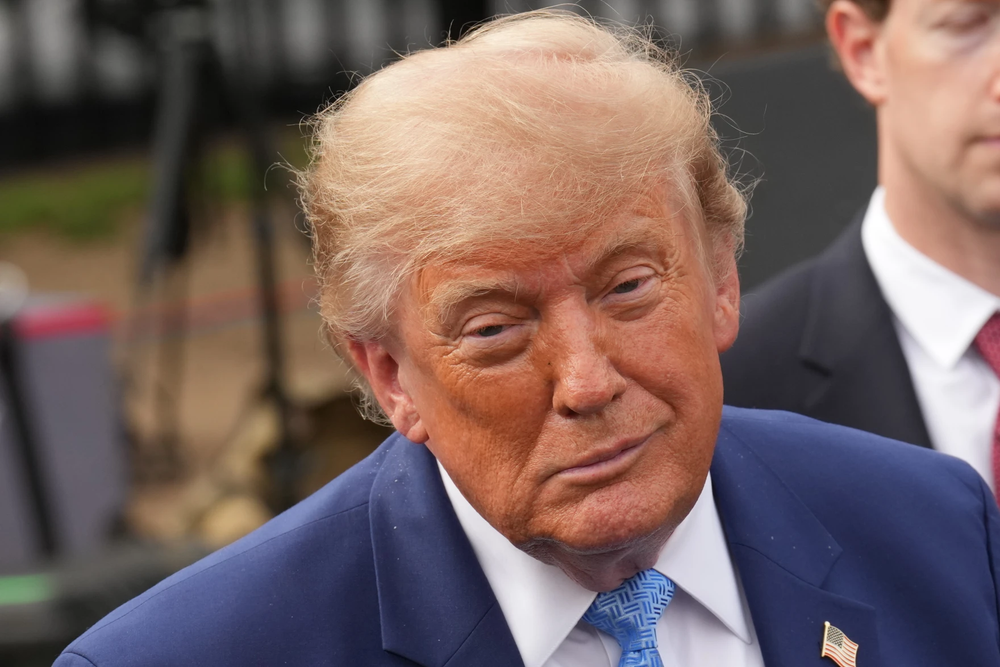
A CIA official said Ratcliffe was there "to personally deliver President Donald Trump's message that the United States is prepared to seriously engage on economic and security issues, but only if Cuba makes fundamental changes." The same official added that "the Cubans should have no illusions that the president will not enforce redlines."
A $100 Million Offer With Strings Attached
The State Department on Wednesday publicly restated an offer to provide Cuba with $100 million in direct humanitarian aid, along with support for satellite internet access. The aid is contingent on what Washington calls "meaningful reforms."
"The decision rests with the Cuban regime to accept our offer of assistance or deny critical life-saving aid and ultimately be accountable to the Cuban people for standing in the way of critical assistance," the department said.
A senior CIA official framed the offer as a closing window. The conversation, the official said, is "a rare chance to stabilize its failing economy and deliver for its people — but the window of opportunity will not stay open indefinitely." The official invoked the Venezuela precedent: "As evidenced by Venezuela — President Trump must be taken seriously."
Reporting suggests the Trump administration has privately pressed Cuban President Miguel Díaz-Canel to step aside, though no public timetable has been set.
Díaz-Canel Says Lift the Embargo
Díaz-Canel responded Thursday in a social media post, signaling Havana would accept aid delivered "in full accordance with universally recognized humanitarian practices" — but he framed the U.S. offer as a paradox.
"If the U.S. government is truly willing to provide aid in the amounts it has announced and in full accordance with universally recognized humanitarian practices, it will not encounter obstacles or ingratitude from Cuba," he wrote. He added that the easier route would be to lift the embargo.
"The harm could be alleviated in a much easier and more expeditious manner through the lifting or easing of the blockade, given that the humanitarian situation is known to be coldly calculated and deliberately induced," Díaz-Canel said.
He laid out what Havana actually needs in the near term. "The priorities are more than evident: fuel, food, and medicines."
The Cuban delegation also pushed back on Washington's terrorism-related designation, telling Ratcliffe the island poses no threat to U.S. national security and arguing there are no "legitimate grounds" for keeping it on the State Department's state sponsors of terrorism list.
Trump's Indictment of the Castro-Era Regime
Trump has made the case against the Cuban government in unusually direct terms. He has accused Havana of persecuting and torturing political opponents, providing safe haven to Hezbollah and Hamas, and supporting U.S. adversaries — calling it an "extraordinary threat to U.S. national security and foreign policy."
The pressure has been operational as well as rhetorical. In late January, Trump signed an executive order threatening tariffs on any country that sells or supplies oil to Cuba, creating a de facto fuel blockade. The State Department has rolled out additional sanctions, including measures targeting the military-controlled conglomerate that controls much of the island's economy.
"No Republican has ever spoken to me about Cuba, which is a failed country and only heading in one direction — down!" Trump wrote on Truth Social on Tuesday. "Cuba is asking for help, and we are going to talk!!! In the meantime, I'm off to China!"
Trump has publicly pointed to Venezuela as the template. On January 3, U.S. forces removed Venezuelan President Nicolás Maduro in a military operation, and his deputy Delcy Rodríguez was sworn in as interim president. Rodríguez has since conceded to U.S. demands on fuel exports and foreign investment access. Sources have said direct U.S. military action against Cuba is not imminent, but the comparison is the point.
A Collapsing Grid and a Castro on the Inside
The talks come as Cuba's energy crisis has reached an inflection point. On May 13, Energy and Mines Minister Vicente de la O Levy said the country had completely run out of both diesel and heavy fuel oil. "We have absolutely no fuel," he said, according to state-run media. "We have no reserves." Daily blackouts now stretch as long as 22 hours in some provinces, hospitals are running on backup power, and food spoilage has become widespread as refrigeration fails.
The presence of Raúl Rodríguez Castro at the table is itself a signal. He has never held a government or party post, but he served as his grandfather's bodyguard and later led Cuba's protective service. He met Secretary of State Marco Rubio in February on the sidelines of a Caribbean Community summit in St. Kitts and has emerged as a back-channel figure between the two governments.
If Díaz-Canel were to step aside, it is not clear who would take over; the Communist Party's senior cadre would remain in place either way. For now, both sides have agreed to keep talking. Washington's framing is that the window is short. Havana's framing is that the United States is the one with leverage to end the crisis without any further meetings.
Author

We cover the world’s chaos so you don’t have to scroll twelve feeds to understand it.
Sign up for Atlas newsletters.
Stay up to date with curated collection of our top stories.