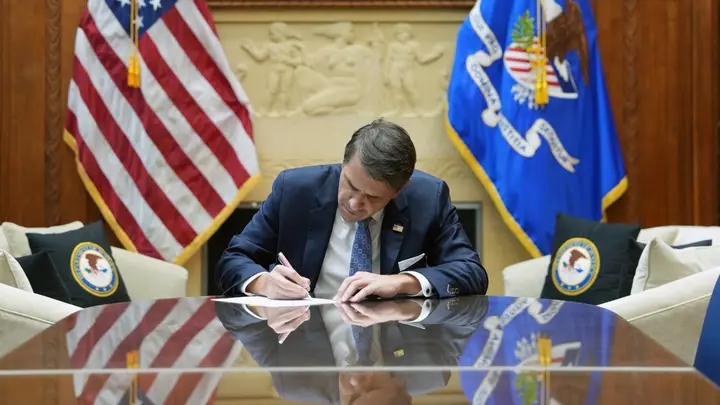
Acting Attorney General Todd Blanche signed an order Thursday moving state-licensed medical marijuana and FDA-approved marijuana products from Schedule I to Schedule III of the Controlled Substances Act, the most substantial shift in federal cannabis policy in decades. The order is effective immediately.
The action does not legalize marijuana under federal law. What it does is reclassify the drug from the category reserved for heroin and LSD — substances deemed to have no accepted medical use and a high potential for abuse — and put it in the same tier as ketamine, testosterone, anabolic steroids, and Tylenol with codeine. Marijuana-derived products not sold through state medical programs remain in Schedule I.
Blanche used his authority under the Single Convention on Narcotic Drugs, a provision that lets the attorney general reschedule a drug when required to satisfy U.S. treaty obligations. That route bypasses the standard rulemaking process the DEA had been working through since 2024.
"The Department of Justice is delivering on President Trump's promise to expand Americans' access to medical treatment options," Blanche said in a statement. "This rescheduling action allows for research on the safety and efficacy of this substance, ultimately providing patients with better care and doctors with more reliable information."
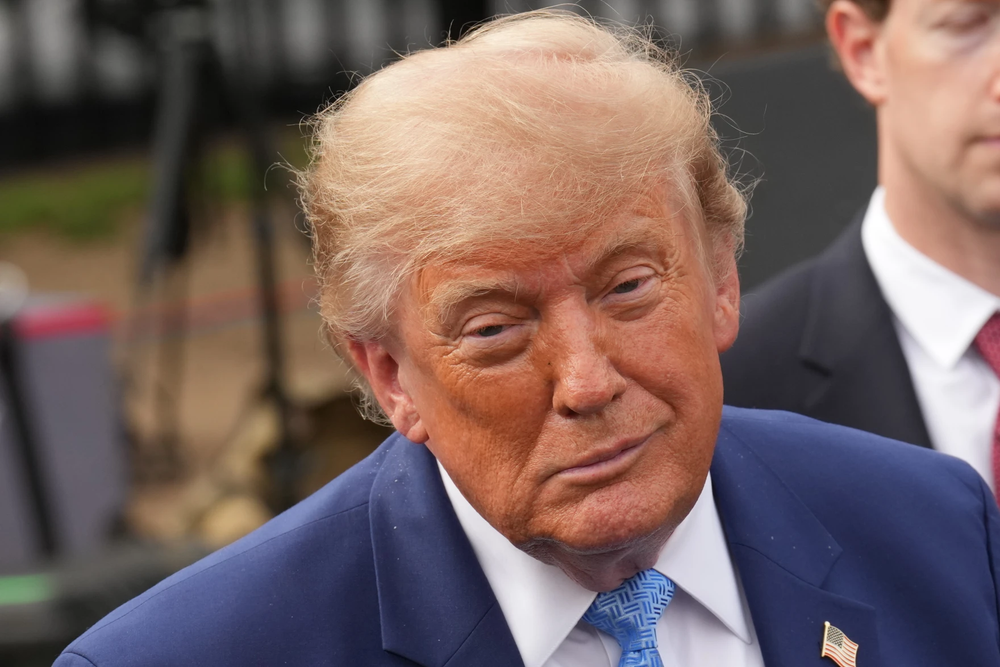
The order flows directly from the executive order Trump signed on December 18, 2025, directing federal agencies to expedite rescheduling. On Saturday, during an unrelated Oval Office signing ceremony for a psychedelics research order, Trump complained aloud that his administration was "slow-walking" him on the cannabis change. Five days later, Blanche signed.
What actually changes
The immediate practical impact is felt in three places: research, taxes, and DEA registration.
Cannabis researchers can now obtain state-licensed marijuana and marijuana-derived products without facing federal penalties — a long-standing bottleneck that until 2021 left the University of Mississippi as the sole federally authorized supplier of research-grade cannabis. That number has since grown to seven.
State-licensed medical marijuana operators will also, for the first time, be able to deduct ordinary business expenses on their federal tax returns. Under Section 280E of the tax code, businesses that "traffic" in Schedule I or II substances have been barred from taking those deductions. A Wall Street Journal analysis of the change estimated it could save the industry billions of dollars annually.
The order creates an expedited pathway for state-licensed operators to register with the DEA, bringing them formally into the federal controlled-substances regulatory framework rather than leaving them in the limbo they have occupied since California first legalized medical cannabis in 1996.
Separately, the DEA withdrew the notice of hearing it had issued August 29, 2024 under the Biden administration and scrapped those proceedings. A new administrative hearing on the broader rescheduling of all marijuana — not just the medical carve-out — will begin June 29. DEA Administrator Terry Cole said the agency is "expeditiously moving forward with the administrative hearing process."
Where the country already stood
Forty states and the District of Columbia have full medical marijuana programs. Another eight states allow low-THC cannabis or CBD for medical use. Twenty-four states plus D.C. permit adult recreational use. Only Idaho and Kansas ban cannabis outright.
Since 2015, Congress has used appropriations riders to bar the Justice Department from spending money to shut down state-licensed medical marijuana systems. Thursday's order effectively formalizes at the federal level what has been the de facto federal posture for a decade.
Blanche acknowledged as much in the text of the order. "Today the vast majority of States maintain comprehensive licensing frameworks governing cultivation, processing, distribution, and dispensing of marijuana for medical purposes," he wrote. "Taken as a whole, they demonstrate a sustained capacity to achieve the public-interest objectives ... including protecting public health and safety and preventing the diversion of controlled substances into illicit channels."
Legal cannabis sales are projected to top $47 billion in 2026, according to market researcher BDSA.
Markets and the industry response
Cannabis equities rallied sharply in premarket trading Thursday. Canopy Growth rose about 7 percent, Tilray Brands climbed 8 percent, Aurora Cannabis was up 5.5 percent, and Cronos Group gained 7 percent. The Amplify Alternative Harvest ETF, which tracks the sector, was up roughly 6 percent before the opening bell. Several names gave back part of the gains as the session wore on once investors digested the narrower-than-hoped scope of the immediate order.
"Today marks a pivotal moment for the United States," Tilray Brands Chief Executive Irwin Simon said in a statement. "Federal policy is finally aligning with science, medicine, and most importantly, patient needs."
Michael Bronstein, president of the American Trade Association for Cannabis and Hemp, called the action "the most significant federal advancement in cannabis policy in over 50 years." Paul Armentano, deputy director of the National Organization for the Reform of Marijuana Laws, described it as a "historic shift" and said the federal government had executed "a 180-degree turn" on the question of cannabis's therapeutic use.
Opposition and the legal fight ahead
The reaction from opponents was sharp and immediate. Kevin Sabet, the president of Smart Approaches to Marijuana and the country's most prominent anti-legalization voice, said the group would sue, calling the move "illegal" and accusing the administration of bypassing the Food and Drug Administration. "The only thing today's decision advances are the interests of an addiction-for-profit industry," Sabet said.
Republican opposition in Congress has been vocal but limited in force. Twenty-two GOP senators signed a letter in December urging Trump to abandon the rescheduling push. Senator Tom Cotton of Arkansas called the action "a step in the wrong direction," citing research on increased potency and links to psychosis and traffic fatalities. "Arkansans don't want more dangerous drugs obtained more easily," Cotton said.
Trump told reporters Thursday afternoon his decision was driven in part by the lobbying of Howard Kessler, a leukemia survivor who told the president that cannabis had been effective for pain management during cancer treatment. Kessler attended the December signing ceremony. "Hopefully you don't need it, but if you do need it, I hear it's the best of all the alternatives," Trump said.
What comes next
The June 29 hearing is the next flashpoint. If the DEA moves forward with a complete redesignation of marijuana — not just the medical subset — it would mark the most sweeping rewrite of federal cannabis law since the Controlled Substances Act of 1970.
The order does not remove the requirement for an FDA-approved prescription for Schedule III substances, which means consumers will see no immediate change at the point of sale. Raw cannabis has not been approved as medicine by the FDA, and that limitation is unaffected by Thursday's action.
Trump on Thursday also urged Congress to update federal law on hemp-derived CBD products to ensure broader access to what he called the "full-spectrum" of those products while preserving existing safety restrictions. That push, like the broader rescheduling effort, will now run on parallel tracks — one through administrative process, the other through a Congress that has consistently declined to act on federal marijuana reform.
Blanche, who became acting attorney general on April 2 after Trump fired Pam Bondi, is among the candidates being considered for the permanent role.
Author

We cover the world’s chaos so you don’t have to scroll twelve feeds to understand it.
Sign up for Atlas newsletters.
Stay up to date with curated collection of our top stories.