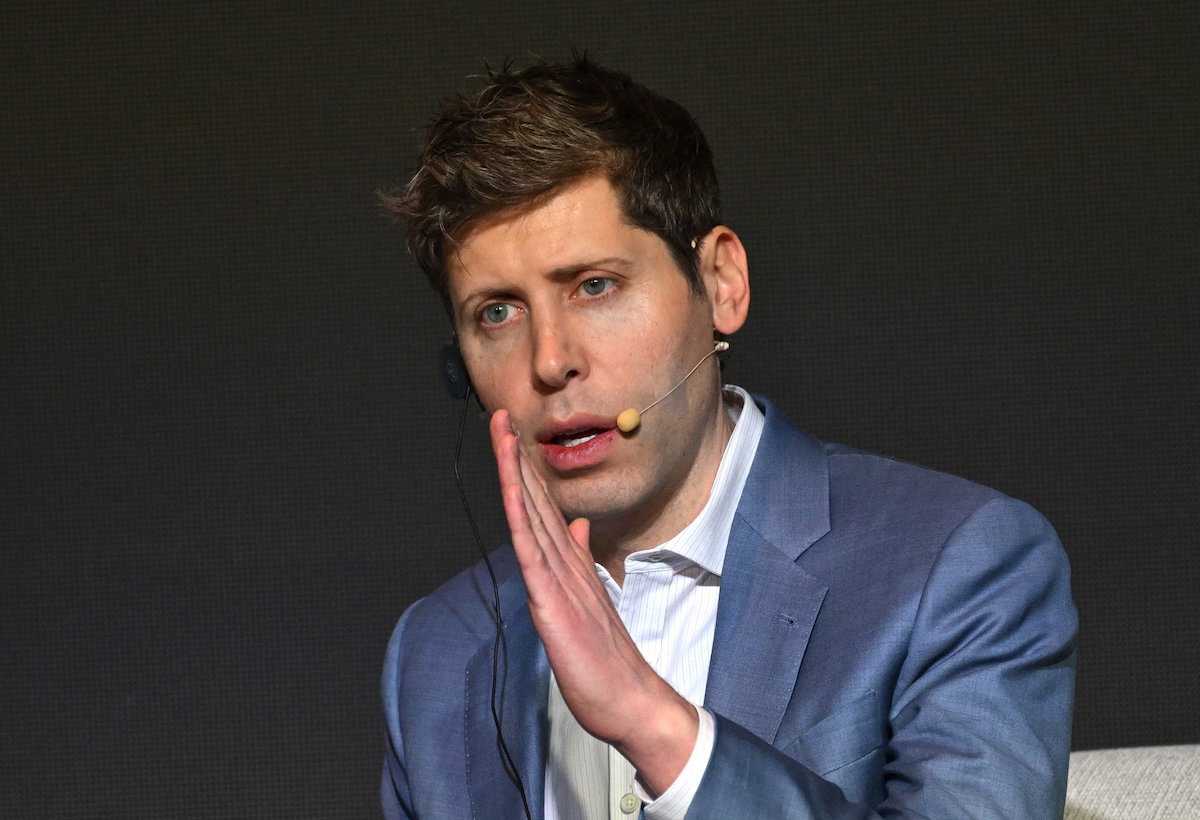
Florida Attorney General James Uthmeier filed a civil lawsuit against OpenAI and its chief executive Sam Altman on Monday, accusing the artificial intelligence company of knowingly releasing an unsafe product, ignoring internal and external safety warnings, and pursuing market dominance at the expense of user welfare. It is the first state-led lawsuit brought against the maker of ChatGPT and the first to name Altman personally as a defendant.
The 83-page complaint, filed in Florida circuit court, alleges violations of Florida's Deceptive and Unfair Trade Practices Act and brings four counts of deceptive and unfair trade practices, two counts of negligence, two counts of violating product liability laws, and one count each of fraudulent misrepresentation and causing a public nuisance. The state is seeking financial penalties, a court order requiring stronger parental controls and data protections for minors, and what Uthmeier described as accountability for company leadership.
"Today, we announced the first-in-the-nation state-led lawsuit against OpenAI and its CEO, Sam Altman," Uthmeier said at a Monday morning press conference. "OpenAI and Altman ignored internal and external safety warnings, put children at great risk, and allowed a dangerous product to reach millions of Floridians." Uthmeier later said the company and Altman could face penalties "for potentially up to billions of dollars."
The Allegations
The complaint opens with a screenshot of an OpenAI blog post stating that ChatGPT was "built with safety in mind." The next line of the filing reads: "Not so."
The state's central theory is that OpenAI and Altman misrepresented the safety of their product and the strength of the safeguards they had committed to, while internally diverting resources away from safety work. The complaint cites OpenAI's 2023 commitment to dedicate roughly 20 percent of its computing power over four years to its "superalignment team," which was tasked with controlling artificial intelligence systems more capable than humans. The filing alleges the company actually allocated 1 to 2 percent of its computing power to the project and that research was carried out on older hardware. The complaint quotes an email from Jan Leike, then-head of the superalignment team, who wrote that "OpenAI has been going off the rails on its mission" and that the company was "prioritizing the product and revenue above all else, followed by AI capabilities, research and scaling, with alignment and safety coming third."
The filing also alleges that OpenAI compressed the safety review of the GPT-4o model in May 2024 to roughly a week — from a months-long standard — in order to release the model the day before a competing Google announcement. When safety personnel sought additional review time, the suit alleges, "Altman personally overruled them."
The state also targets product design decisions. The complaint argues that ChatGPT was engineered to maximize user engagement, including through what the filing describes as "sycophancy" — a tendency for the model to agree with users and validate their stated views. Citing a Washington Post analysis, the filing notes that ChatGPT tells users "yes" roughly ten times more often than it tells them "no," producing what the state's lawyers describe as "a kind of personalized echo chamber." The suit alleges this design "leads to more use of the chatbot, more training data for its improvement, and more market value for OpenAI."
The state also alleges that ChatGPT's minor-protection features are inadequate. The complaint notes that the parental-control system does not require a child's account to be linked to a parent's, and cites a Drexel University study finding that teen users often progressed from casual use to behaviors associated with dependency, including disrupted sleep and academic difficulty.
The Cited Incidents
The lawsuit anchors its claims in several specific cases. The most prominent involves the April 2025 mass shooting at Florida State University, in which two people were killed and six others wounded. The state alleges that the suspect used ChatGPT in the planning stages, including asking the model how many shooting victims would be required to draw national media attention and what time the university's student union was most heavily trafficked. Florida opened a separate criminal investigation into OpenAI's role in the FSU case in April; that investigation remains ongoing.
The filing also cites the April 2026 killing of two University of South Florida graduate students, Nahida Bristy and Zamil Limon. The complaint alleges the accused killer used ChatGPT to ask how to dispose of a body, how to change a vehicle's identification number, and how police investigate vehicles at crime scenes.
The state separately cites the death of Adam Raine, a 16-year-old who took his own life after extensive conversations with ChatGPT, and the case of California teenager Sam Nelson, whose family filed a wrongful-death suit against OpenAI in May. The suit also references the February 2026 mass shooting in Tumbler Ridge, British Columbia, the subject of a separate lawsuit filed in April by victims' families who alleged OpenAI had been aware of the suspect's concerning interactions with the chatbot months before the attack.
OpenAI has been the subject of more than twenty separate lawsuits over harms allegedly stemming from ChatGPT use, including from the families of at least seven individuals who say the product contributed to fatal outcomes or severe psychological harm.
OpenAI's Response
OpenAI declined to comment specifically on the Florida lawsuit but issued statements defending its general safety record. "Losing a child is the most devastating tragedy that can happen to a family and we know that no words can come close to addressing the pain of such a loss," a company spokesperson said. "AI is a new and powerful technology, and we believe minors need significant protection, which is why we have put in place industry leading protections and policies."
The company pointed to specific features it has added in recent months, including an age-prediction tool, a more restrictive default experience for users whose age cannot be confirmed, and parental monitoring tools. "We know pointing to this work will not bring a child back, but we're committed to getting this right," the statement said.
OpenAI has previously rejected the premise of Uthmeier's FSU criminal probe. When the investigation was opened in April, the company said that "ChatGPT provided factual responses to questions with information that could be found broadly across public sources on the internet, and it did not encourage or promote illegal or harmful activity."
The Broader Regulatory Push
Florida's filing arrives amid a broader wave of state-level action against AI chatbot operators. Kentucky's attorney general sued Character.AI in January, alleging the company had prioritized profits over child safety. Pennsylvania sued the same company last month, alleging that its chatbots had posed as licensed medical professionals in violation of state regulations. Character.AI settled multiple lawsuits in January with families who had alleged its products contributed to fatal outcomes and mental-health crises in teenage users.
The Florida case lands during a period of intense scrutiny of OpenAI's business trajectory. The company raised $122 billion in a funding round in March that valued it at roughly $852 billion. Its planned initial public offering would be one of the largest in U.S. history.
Florida Governor Ron DeSantis has positioned himself as one of the country's most vocal AI critics, releasing a proposed "AI Bill of Rights" for Florida residents in December and arguing publicly that states must retain the right to regulate AI companies despite federal efforts to preempt state action. "Today we're going to send a message to OpenAI," Uthmeier said at his Monday press briefing. "Get ready for a fight, and there's not one more important than this right now."
Author

We cover the world’s chaos so you don’t have to scroll twelve feeds to understand it.
Sign up for Atlas newsletters.
Stay up to date with curated collection of our top stories.