The Supreme Court on June 15 declined to hear a challenge to the tariffs President Trump imposed on Chinese imports during his first term, leaving the duties intact and bringing a six-year legal fight to a close.
The justices turned away the petition without comment in HMTX Industries v. United States, refusing to disturb a federal appeals court ruling that had upheld the tariffs. The denial exhausts the importers' remaining options. The duties will stand, no refunds will be issued, and the thousands of related cases pending before the Court of International Trade are now expected to be dismissed.
At issue were tariffs first levied in 2018 under Section 301 of the Trade Act of 1974, a statute that lets the United States act against another country's unfair trade practices. The administration had targeted what it described as China's coercive policies on technology transfer, intellectual property, and innovation. Those duties were kept in place through the Biden administration and remain in effect eight years later.
How the case reached the court
The dispute traced back to the opening rounds of the U.S.-China trade war. The first Trump administration began with tariffs on roughly $50 billion in Chinese goods. After Beijing retaliated, Washington expanded the measures, relying on a provision of the trade law, Section 307, that allows the U.S. trade representative to modify an existing action. The escalation swept in the so-called List 3 and List 4A goods and ultimately covered about $370 billion in imports by 2019.
HMTX Industries, a flooring company, and a group of affiliated flooring and electronics firms sued in 2020, seeking to end the tariffs and recover what they had paid. That case drew in thousands of other importers making similar claims. The Court of International Trade sent the matter back to the trade representative's office for a fuller explanation but did not order the tariffs lifted, and in 2023 it ruled that the agency had acted within its authority.
The plaintiffs appealed, and in September 2025 the U.S. Court of Appeals for the Federal Circuit affirmed. The court found that the statute authorized the trade representative to take escalating actions, that the term "modify" was "indifferent to degrees of change and contains no inherent limitations," and that the expansion was a reviewable agency action that had complied with the required notice-and-comment procedures. It also rejected the argument that the case implicated the major questions doctrine, concluding that Congress had clearly delegated the authority. HMTX then asked the Supreme Court to step in.
Two readings of the trade law
The importers framed the case as a question of limits. They argued that the trade representative had stretched a narrow modification power into something far larger, telling the justices that "Congress nowhere gave [the trade representative] the vast power to engage in an open-ended trade war under that modest modification provision." Section 307, they said, permitted only minor or modest adjustments, not radical transformations, and the administration had used it to sidestep the more demanding procedures that govern new Section 301 actions. They warned that without the court's intervention it was "all but inevitable" the government would use the same approach again, and they asked the justices at minimum to order reconsideration in light of a February ruling that had struck down a separate set of Trump tariffs.
The administration urged the court to stay out. It maintained that the law permits the trade representative to modify tariffs so long as the changes are not "radically transformative," and that the escalations here addressed the same underlying problem as it evolved after China retaliated. "It is hard to imagine an action more clearly authorized by a statute," Solicitor General D. John Sauer wrote, adding that if the administration used the trade act again, the court would have ample opportunity to weigh in then.
What it means for importers
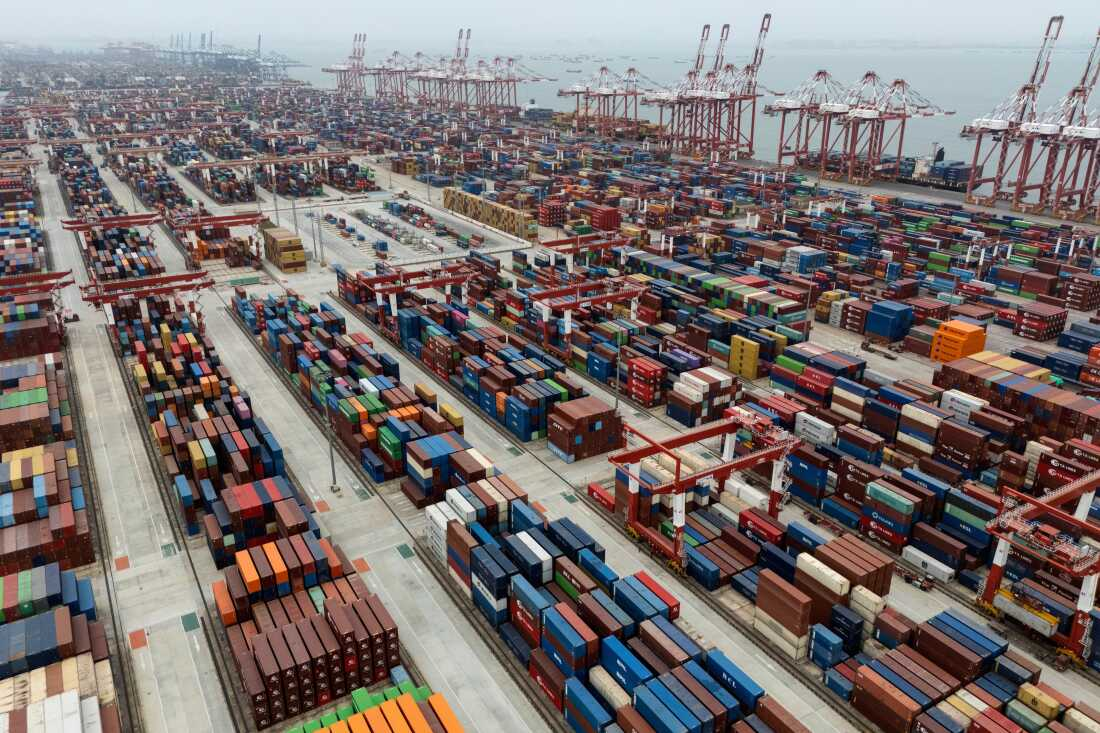
For the companies that paid the duties, the practical consequences are immediate. The denial forecloses refunds on years of collected tariffs and clears the way for the dismissal of the backlog of cases that had been waiting on the outcome. Customs data show importers continue to pay more than $35 billion a year under the expanded measures, while businesses opposed to the tariffs have put the cost to American consumers at closer to $75 billion a year. Many imported components still carry Section 301 duties of 7.5 or 25 percent, layered on top of other trade measures.
The decision does not lower any rates or offer relief. It removes the legal uncertainty that had hung over the duties, but only by settling it in the government's favor.
A boost to the broader tariff push
The ruling lands as the administration searches for firmer legal ground for its trade agenda. In February, the Supreme Court struck down the global tariffs Trump had imposed after returning to office, when he invoked the International Emergency Economic Powers Act and cited an "unusual and extraordinary threat." The justices held that the emergency law does not clearly authorize a president to impose tariffs, and Customs and Border Protection has since begun a refund process that the administration has worked to slow.
With that avenue narrowed, officials have turned back toward Section 301. The trade representative, Jamieson Greer, announced in February that his office would open new investigations covering most major trading partners, examining issues from industrial overcapacity and forced labor to digital services taxes and the treatment of U.S. technology firms. In June, the office floated tariffs of up to 12.5 percent on imports from some 60 countries it accuses of failing to address forced labor. By one nonpartisan estimate, those measures, combined with recent changes to steel and aluminum duties, could recover roughly half the revenue the government stood to lose from the February ruling.
By leaving the first-term tariffs untouched, the court may also have strengthened the administration's confidence that it can raise and adjust such duties largely at will. Trade lawyers tracking the litigation noted that the same logic upholding the China tariffs could apply to the new actions, and suggested the outcome may set the stage for more tariff volatility in the months ahead rather than less.
Author

We cover the world’s chaos so you don’t have to scroll twelve feeds to understand it.
Sign up for Atlas newsletters.
Stay up to date with curated collection of our top stories.