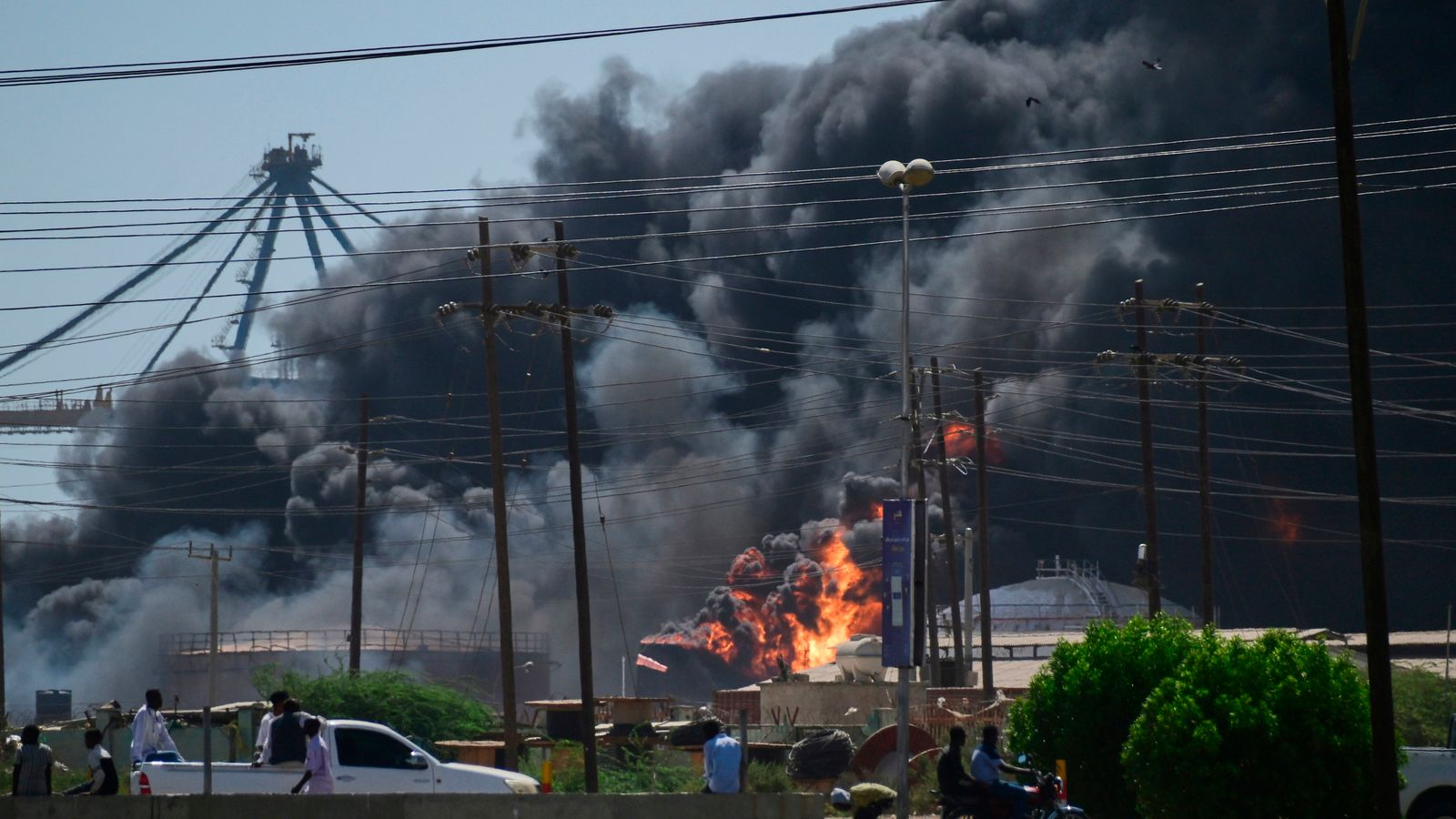
Drone strikes killed more than 1,000 civilians in Sudan during the first five months of this year, the United Nations said Monday, warning that the country's civil war is entering a deadlier phase as both sides turn increasingly to unmanned aircraft against populated areas.
The figure, covering January through May, was presented to the U.N. Human Rights Council in Geneva by the high commissioner for human rights, Volker Türk. "In Sudan, the horrific conflict has expanded and escalated, marked by a sharp increase in the use of drone warfare," he said, adding that rape and sexual violence were rampant. By the human rights office's count, the strikes accounted for roughly 80 percent of all conflict-related civilian deaths recorded this year.
A deputy rights chief, Awa Dabo, told the council the conflict had "deepened and expanded" and pressed for urgent international action to protect Sudanese civilians and head off a wider crisis.
A war fought increasingly from the sky
Both sides in the war, the Sudanese Armed Forces and the paramilitary Rapid Support Forces, have leaned on drones, striking civilian infrastructure and reaching areas that earlier in the conflict had been spared. The rights office documented at least 16 drone strikes on health facilities and 33 on markets in the first five months of the year, patterns it said raised serious concerns under international humanitarian law.
The shift has been building. The Armed Conflict Location and Event Data Project, a war-tracking group, recorded at least 2,670 drone-related deaths in 2025, a sixfold rise over the prior year, alongside an 81 percent jump in the number of drone attacks. This month the group described the war as having transformed over the past year into a drone-dominated conflict, with the two sides locked in what it called a relentless race to adapt, in some cases to the point of drone-on-drone combat.
The trend has fed wider concern about automation in warfare and the absence of firm international rules for autonomous weapons. "Autonomous weapons cannot become a license for atrocity crimes," Türk said.
Where the strikes are landing
The attacks have been concentrated in the Darfur and Kordofan regions but are spreading into Blue Nile, White Nile, and Khartoum states. Dabo said hostilities were intensifying in border areas, including North Darfur and Blue Nile, leaving civilians living in fear.
One of the deadliest recent assaults hit el-Obeid, the capital of North Kordofan, where a strike killed as many as 23 people last week, according to a rights group and residents. "The roofs of houses collapsed on their occupants," a resident of one neighborhood said. The city has been partially encircled for months and sits on a key route linking RSF-held areas in Darfur to army-controlled territory to the east.
The fighting has sharpened in Kordofan and in Blue Nile state near the Ethiopian border, particularly after the RSF captured el-Fasher in October, the army's last major stronghold in western Darfur. Kordofan, with its oil deposits, farmland, and the RSF's strongest local allies, remains fiercely contested.
A humanitarian catastrophe in its fourth year
The war broke out in April 2023, when a power struggle between the army chief, Abdel Fattah al-Burhan, and the RSF commander, Mohamed Hamdan Dagalo, exploded into open fighting in Khartoum and spread across the country. Now in its fourth year, it has killed tens of thousands, at least 56,000 by one tracking group's count, with other estimates running far higher, up to 150,000 or more, and the true figure is widely believed to be higher still given the difficulty of reporting from a war zone.
The United Nations describes Sudan as the world's largest displacement and hunger crisis, with about 34 million people, nearly two-thirds of the population, in need of assistance. The World Health Organization estimates that roughly 13.6 million have been driven from their homes, more than 20 million need health care, and 21 million need food.
The conflict has also been marked by atrocities. The U.N. and international rights groups have documented mass rape and ethnically motivated killings that they say amount to war crimes and crimes against humanity, and the International Criminal Court has warned that accounts emerging from el-Fasher may rise to that level. The U.N. Fact-Finding Mission on Sudan reported widespread arbitrary detention, torture, and enforced disappearances by both sides. "Civilians continue to bear the overwhelming burden of this conflict," its chair, Mohamed Chande Othman, said, warning that the patterns, unless reversed, would deepen what he called Sudan's human rights catastrophe.
The response in Geneva
The findings drew statements from several governments. Britain's representative in Geneva, Kumar Iyer, said the expanding use of drones was intensifying humanitarian need, citing more than 880 civilians killed by such strikes this year by London's count, and condemned the targeting of schools, markets, and hospitals. The United Kingdom's minister for Africa, Jenny Chapman, said the warring parties had increased their brutality from the skies using drones supplied by their backers, and stressed the importance of documenting abuses to break what she called the cycle of impunity.
The United Arab Emirates told the council there was no military solution, blaming the war on a power struggle between rival generals and calling for an inclusive, civilian-led transition in which neither side would dictate Sudan's future. Russia urged an end to the fighting while criticizing RSF efforts to set up parallel governing structures, and said it backed Sudan's unity and territorial integrity.
A coalition of human rights organizations pressed the council to extend the mandate of the Fact-Finding Mission by at least two years, describing it as the only internationally recognized independent body investigating abuses since the war began. The mission, the groups argued, needs to examine the conflict's root causes, not only its toll, if the facts are to be established and the cycle of violence eventually broken.
The closing note from the rights office was a plea for the world not to look away from a war that, by the U.N.'s own description, has become its most neglected, even as the weapons driving it grow more sophisticated and the dangers to civilians more acute.
Author

We cover the world’s chaos so you don’t have to scroll twelve feeds to understand it.
Sign up for Atlas newsletters.
Stay up to date with curated collection of our top stories.