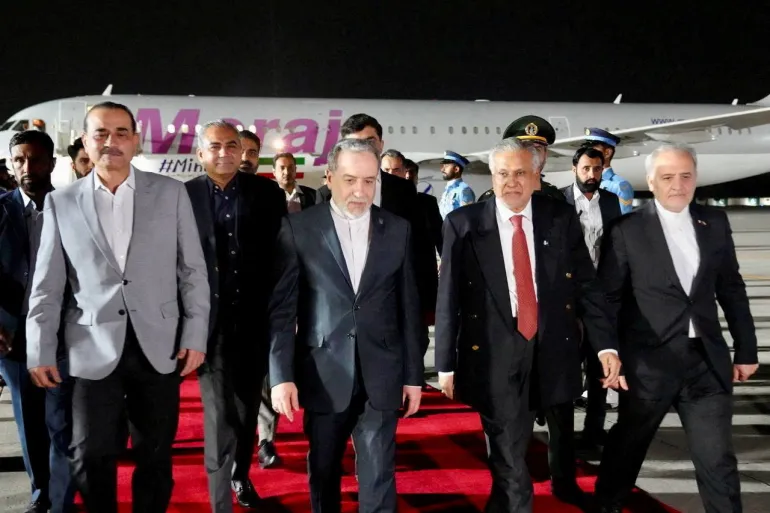
Iranian Foreign Minister Abbas Araghchi made a brief return to Pakistan on Sunday, less than 24 hours after leaving the country, in a stop-and-start round of shuttle diplomacy that produced no breakthrough and ended with President Donald Trump telling Tehran the United States would conduct any further talks by phone.
Araghchi's two-stop weekend in Islamabad was bookended by a trip to Muscat and capped by a flight to Moscow on Sunday night, where he is set to meet Russian President Vladimir Putin on Monday. The choreography reflected the Iranian government's preferred mode of engagement at this stage of the war: indirect, multi-capital, and run through mediators rather than face-to-face with American envoys.
The Pakistan-led process suffered a sharp setback Saturday when Trump pulled the plug on a planned trip by special envoy Steve Witkoff and senior adviser Jared Kushner, who had been scheduled to fly to Islamabad for what the White House had described as an "in-person conversation." Trump told Fox News he stopped the delegation just as they were preparing to depart.
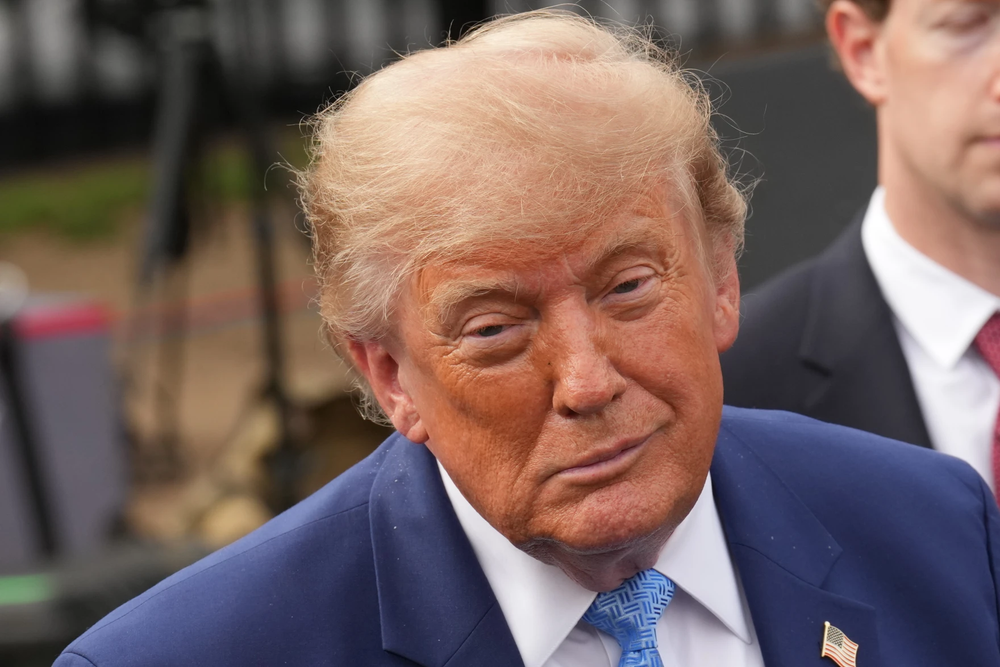
"I've told my people a little while ago they were getting ready to leave, and I said, 'Nope, you're not making an 18 hour flight to go there,'" Trump said. "We have all the cards. They can call us anytime they want, but you're not going to be making any more 18 hour flights to sit around talking about nothing."
A weekend of shuttle moves
Araghchi's first stop in Islamabad ran Friday into Saturday. He met with Pakistan's army chief, Field Marshal Asim Munir, who has been the central mediator on the Pakistani side, along with Prime Minister Shehbaz Sharif and Foreign Minister Ishaq Dar. He then flew to Muscat, where he met Sunday with Sultan Haitham bin Tariq and Omani Foreign Minister Badr al-Busaidi. Oman has played a recurring role in U.S.–Iran back-channel diplomacy and sits across the Strait of Hormuz from Iran.
Iranian state media described the second Islamabad stop, which lasted only hours, as a chance to share "Iran's positions and views on the framework of any understanding to completely end the war." Tehran transmitted "written messages" through Pakistani mediators that touched on what state media called "some of the red lines of the Islamic Republic of Iran, including nuclear issues and the Strait of Hormuz." Iranian outlets emphasized the messages were not part of any negotiation track.
Araghchi himself struck a measured tone. He called the Pakistan visit "very fruitful" but added that he had "yet to see if the U.S. is truly serious about diplomacy."
While in Pakistan and Oman, Araghchi also held phone consultations with his counterparts in Qatar and Saudi Arabia, two Gulf states that have been pressing for a quick end to a war that has driven oil and shipping costs sharply higher.
A regional official involved in mediation, who spoke on condition of anonymity, said Iran was pushing Oman to back a mechanism that would allow Tehran to collect tolls from vessels transiting the Strait of Hormuz. Oman's response was not immediately known.
Trump's reversal and what came next
Trump's decision to scrap the Witkoff–Kushner trip marked the most consequential break in the Pakistan-led track since talks resumed earlier in the month. On Truth Social, the president said the cancellation was driven by "tremendous infighting and confusion" within Iran's leadership and that "if they want to talk, all they have to do is call."
By Sunday, his position had hardened further. "I said, we're not doing this anymore," Trump told Fox News. "We have all the cards. If they want to talk, they can come to us, or they can call us. You know, there is a telephone. We have nice secure lines."
Asked whether the cancellation signaled a return to active hostilities, Trump said it did not. He said the only condition that mattered was that Iran "will not have a nuclear weapon" and added that within ten minutes of his announcement that he was scrapping the trip, Iran sent a "much better" proposal through the Pakistani channel. He did not provide details.
Tehran has 440 kilograms of uranium enriched to 60 percent purity, the U.N. nuclear watchdog has reported — a short technical step from weapons-grade. The disposition of that stockpile has been the central sticking point in every round of talks, including the marathon 21-hour session led by Vice President JD Vance in Pakistan on April 11.
Two Pakistani officials, speaking on condition of anonymity because they were not authorized to discuss the matter publicly, said indirect contacts between the two sides remained ongoing despite the cancellation.
The Strait of Hormuz remains the immediate flashpoint
The diplomatic stop-and-start has unfolded against a hardening standoff in the Strait of Hormuz, the chokepoint through which roughly a fifth of the world's seaborne oil normally moves. Iran has effectively closed the waterway, and the U.S. Navy has imposed a blockade on Iranian ports in response.
Iran's Khatam al-Anbiya military headquarters issued a fresh warning Saturday, saying that "if the U.S. continues its aggressive military actions, including naval blockades, banditry, and piracy," it would face a "strong response." The Islamic Revolutionary Guard Corps separately posted on Telegram that "controlling the Strait of Hormuz and maintaining the shadow of its deterrent effects over America and the White House's supporters in the region is the definitive strategy of Islamic Iran."
Trump last week ordered the U.S. Navy to "shoot and kill" small boats suspected of laying mines in the strait. U.S. forces have boarded multiple Iranian-linked tankers since the blockade went into effect on April 13.
Markets reflected the impasse. West Texas Intermediate opened the new week at $96.50 a barrel, up roughly 2 percent from Friday's close and 44 percent above pre-war levels. Brent crude traded at $107.75, up about 3 percent on the day and 48 percent since the war began on February 28. Tankers full of Iranian crude remain stranded in the Gulf, unable to safely transit the strait.
Moscow, the broader picture, and the clock in Washington
Araghchi's flight to Moscow late Sunday added another dimension to the diplomatic picture. Russia's Foreign Ministry confirmed the visit but did not initially confirm whether Putin would receive him personally. Iranian state media said Araghchi was set to meet "senior officials" — and Iranian sources later confirmed the Putin meeting on Monday's agenda.
Russia has been Iran's most consistent diplomatic backer during the war and has used the conflict to deepen energy and military ties with Tehran. Moscow's role in any eventual settlement remains unclear, but the timing of the visit — coming directly off the failed Pakistan stop and just before Putin–Araghchi talks — signals that Tehran is hedging the Pakistan-led track with parallel coordination.
Inside Iran, the political backdrop is further complicated by the death of Supreme Leader Ayatollah Ali Khamenei in the opening hours of the war and his succession by his son, Ayatollah Mojtaba Khamenei, whose public profile remains thin. Trump on Saturday cited "fractured" Iranian leadership in justifying his cancellation of the Witkoff–Kushner trip, an assessment that lines up with reporting that hard-line elements of the Islamic Revolutionary Guard Corps, particularly Commander Ahmad Vahidi, have eclipsed Foreign Minister Araghchi and parliament speaker Mohammad Bagher Ghalibaf in setting Iran's negotiating posture.
The 60-day clock under the 1973 War Powers Resolution expires on May 1. Trump's notification to Congress at the start of the war cited his inherent constitutional authority to "conduct United States foreign relations." The White House has signaled it views the law as unconstitutional. Several House and Senate war-powers resolutions have failed in floor votes so far, but the issue is expected to return as the legal threshold passes and oil prices remain elevated heading into the midterm cycle.
For now, the only direct contact between Tehran and Washington runs through Pakistani officials carrying paper between hotel suites in Islamabad. Araghchi will spend Monday in Moscow. Trump's envoys will spend it in Washington. And the Strait of Hormuz will remain closed.
Author

We cover the world’s chaos so you don’t have to scroll twelve feeds to understand it.
Sign up for Atlas newsletters.
Stay up to date with curated collection of our top stories.