Japan and the Philippines agreed Tuesday to begin formal negotiations on the transfer of used Japanese warships to the Philippine navy, marking the first concrete export deal under Tokyo's newly liberalized arms policy and a significant deepening of military cooperation between two of Washington's closest treaty allies in the Pacific.
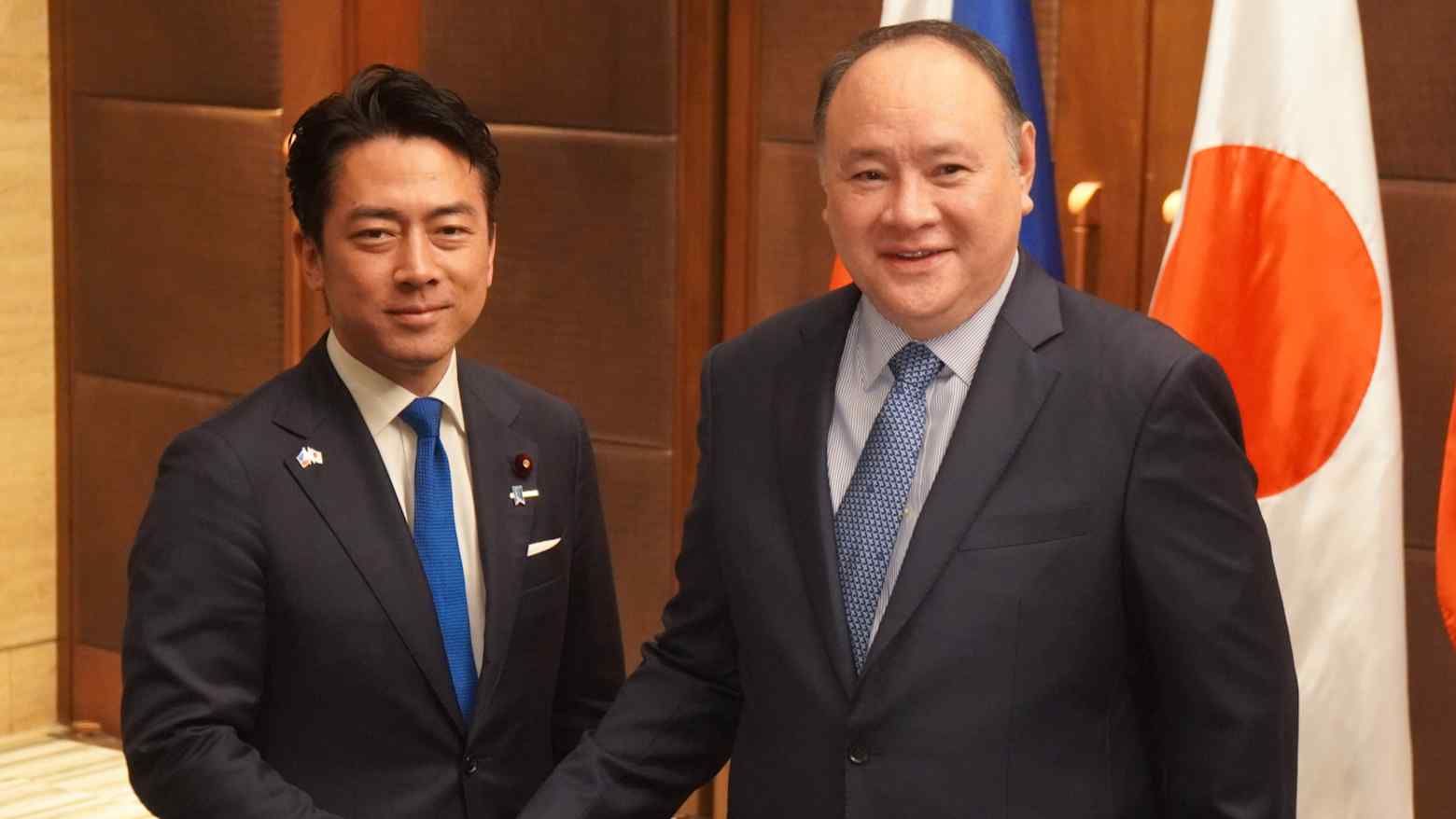
Japanese Defense Minister Shinjiro Koizumi and Philippine Defense Secretary Gilberto Teodoro Jr. signed a Statement on the Further Promotion of Defense Equipment and Technology Cooperation in Makati City, establishing a bilateral working group that will handle the policy, operational, and technical details of the transfer. The talks will focus initially on Abukuma-class destroyer escorts and TC-90 trainer aircraft, both of which are being phased out of Japanese service.
"As the regional and international security environment becomes increasingly severe, Japan and the Philippines have been working in close coordination," Koizumi said at a joint news conference. He described the discussions as "productive and substantive" and said the two countries had agreed to move toward "comprehensive equipment cooperation" covering education, training, maintenance, sustainment, operational coordination, information sharing, and the proper management of transferred equipment.
Teodoro framed the agreement as a direct outgrowth of Tokyo's April 21 decision to scrap its long-standing ban on lethal weapons exports. "We thank Japan once again for its review of the three principles on the transfer of defense equipment and technology and its implementing guidelines," he said. "We were very happy to work with Japan in creating demonstrable results as soon as possible."
The vessels and the gap they fill
The Abukuma class is a small surface combatant first commissioned between 1989 and 1993. The Maritime Self-Defense Force operates six of them. They displace roughly 2,500 tons fully loaded, are armed with Harpoon anti-ship missiles, ASROC anti-submarine rockets, and 76-millimeter guns, and carry torpedoes for sub-surface engagements. By Japanese standards they are aging vessels. By Philippine standards they would represent a substantial upgrade.
The Philippine Navy has long been one of the weakest blue-water forces in Southeast Asia. More than 90 percent of its fleet consists of offshore patrol vessels rather than combat ships, according to data from U.S. analytics firm Global Firepower. Manila has acquired a handful of newer South Korean-built frigates and corvettes in recent years, but its ability to project naval power remains limited compared with the China Coast Guard and People's Liberation Army Navy ships it routinely encounters at contested reefs.
Philippine Marine Corps Col. Dennis Hernandez said up to six Abukuma-class destroyers could be transferred under the framework now being negotiated. The TC-90 trainer aircraft, a twin-engine turboprop, would supplement the navy's maritime patrol fleet. Sources cited by Kyodo News indicated the equipment could be transferred free of charge once the necessary legal arrangements are completed, though the financial terms have not been finalized publicly.
For Tokyo, the deal serves a second strategic function beyond bolstering an ally. If the Philippines operates the Abukumas, the Maritime Self-Defense Force gains an additional southern maintenance node — useful for sustaining operations across the South China Sea and the wider Indo-Pacific. Maintenance bases for Japanese warships outside the home islands are limited, and the diversification of those facilities has been an explicit objective of recent Japanese defense planning.
A shift in posture, and what drove it
Japan's April policy revision overturned a self-imposed restriction dating to 1967 that had limited overseas defense exports to five categories of nonlethal hardware: rescue, transport, warning, surveillance, and minesweeping. Under the new framework, Japanese companies can sell advanced military equipment to 17 countries with which Tokyo has formal defense agreements.
Prime Minister Sanae Takaichi has cast the decision as a contribution to allied deterrence rather than a remilitarization. "There are growing expectations for Japan's defense equipment," she told reporters. "Equipment transfers that meet the needs of like-minded nations will contribute to enhancing their defense capabilities."
Analysts have been more direct about the underlying motivations. Masayuki Masuda, director of Chinese studies at the National Institute of Defense Studies in Tokyo, said the policy change is rooted in Japan's deteriorating regional environment. "Given the severe security environment surrounding Japan — primarily the challenges posed by China and North Korea — Japan needs to help to guarantee the balance of power in this part of the world," he said. "One way of doing that is through providing the best weapons systems available to our partners, such as the Philippines and Australia."
Margarita Estevez-Abe, a Japan specialist at Syracuse University's Maxwell School, points to additional factors: industrial policy and pressure from Washington to spend more on defense. "Japan cannot build a viable defense industry without export markets," she said. She also linked the policy shift to Takaichi's broader political project, which includes a longstanding interest in revising Article 9 of the Japanese constitution.
The Philippines is the first concrete beneficiary of the new policy. Australia is next, having signed a $6.5 billion agreement to acquire 11 enhanced Mogami-class frigates, with three to be built in Japan and the remainder in Australian shipyards. Indonesia, where Koizumi signed a separate Defense Cooperation Arrangement with Defense Secretary Sjafrie Sjamsoeddin on Monday, is reportedly interested in acquiring used Oyashio-class submarines. New Zealand has expressed interest in the Mogami frigates.
The South China Sea as the operating theater
The agreement comes against the backdrop of repeated maritime confrontations in the South China Sea, where Beijing claims roughly 90 percent of the waters within the so-called nine-dash line — a claim rejected by a 2016 international arbitration ruling that China refused to recognize. Philippine and Chinese coast guard vessels have collided multiple times over the past two years, and Chinese ships have used water cannons against Philippine resupply missions to the Second Thomas Shoal and other contested features.
In their joint statement, Koizumi and Teodoro "reaffirmed their strong opposition to any unilateral attempts to change the status quo by force or coercion in the East China Sea and the South China Sea" and "expressed serious concern" over what they described as China's intensifying coercive activities in both areas. Japan has its own dispute with China over the Senkaku Islands, known as the Diaoyu in Beijing, in the East China Sea.
China's Foreign Ministry has rejected the framing. Spokesperson Guo Jiakun said last month that the international community would "resolutely resist Japan's reckless moves toward a new type of militarism," echoing language Beijing has used against successive hawkish Japanese governments. Chinese officials have not yet directly responded to Tuesday's announcement.
The defense ministers' meeting coincided with the 26th iteration of Balikatan, the annual U.S.-Philippine combat exercise. This year's drill is the largest in its history, drawing roughly 17,000 troops from seven countries, with personnel and observers from at least 17 nations involved in some capacity. Japan's footprint expanded sharply, from about 140 personnel last year to roughly 1,400 this year, under the Reciprocal Access Agreement that entered into force in September.
On Wednesday, Koizumi and Teodoro will travel to Paoay in northwestern Luzon to observe a maritime strike exercise in which Philippine, U.S., Japanese, and Canadian forces will sink a decommissioned World War II-era Philippine Navy vessel approximately 25 miles off the coast. Japanese forces will fire two volleys of Type 88 surface-to-ship missiles in what will be the first live-fire deployment of the system on Philippine soil. President Ferdinand Marcos Jr., who met Koizumi earlier in the day to discuss his planned visit to Japan later this month, will watch the exercise via video link from Manila.
The wider web
The Japan-Philippines deal is one strand in a wider tightening of bilateral defense relationships across the Indo-Pacific that is occurring largely outside the U.S. hub-and-spoke alliance system, even as it is informally coordinated with Washington. The Reciprocal Access Agreement allows reciprocal stationing and joint training. The Acquisition and Cross-Servicing Agreement signed in January allows the two militaries to share fuel, ammunition, and other supplies in joint operations. The new equipment cooperation framework adds the materiel layer.
Koizumi said the next phase will involve expanding multilateral cooperation among Japan, the United States, the Philippines, and Australia, including through formats such as Maritime Cooperative Activities and the broader Association of Southeast Asian Nations engagement track. Tuesday's signing also coincided with the 70th anniversary of formal Japan-Philippines diplomatic relations, a fact both ministers noted.
Author

We cover the world’s chaos so you don’t have to scroll twelve feeds to understand it.
Sign up for Atlas newsletters.
Stay up to date with curated collection of our top stories.