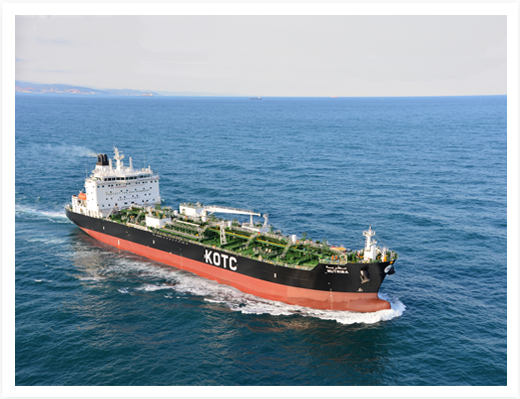
Kuwait Petroleum Corporation has declared force majeure on shipments of crude oil and refined products, telling customers it can no longer meet scheduled deliveries as the blockade of the Strait of Hormuz keeps tankers out of the Persian Gulf and storage tanks across the region close to full.
The state-owned company issued the notice to customers on Friday, according to a document seen by Bloomberg News. It is the second such declaration KPC has made since the start of the U.S.-Israeli war on Iran in late February, following an initial force majeure in early March. The latest filing goes further, warning that even once the strait reopens, Kuwait will not be in a position to immediately fulfill its contractual obligations.
Force majeure is a standard commercial clause that releases a supplier from contractual penalty when delivery becomes impossible because of events outside its control. The company has indicated that supplies will not stop entirely — some barrels are still being moved — but buyers should not expect full nominations for the duration of the disruption.
KPC did not publicly quantify the size of the shortfall. A person familiar with the matter told Bloomberg that full recovery in Kuwaiti output will take time after hostilities end, meaning the export shortfall is likely to outlast the shooting phase of the war.
The Hormuz chokehold
The Strait of Hormuz, the narrow waterway between Iran and Oman, carries roughly 20 percent of the world's seaborne oil and liquefied natural gas. Iran has cycled the strait between closure and partial opening since the war began on February 28, most recently shutting it again on Saturday after briefly reopening it on Friday in connection with a 10-day Israel-Lebanon ceasefire.
The U.S. Navy's blockade of Iranian ports, imposed April 13, has added a second layer of maritime pressure. Twenty-five commercial vessels have been turned back from Iranian waters since the blockade took effect, and the guided-missile destroyer USS Spruance fired on and seized an Iranian-flagged cargo ship, the Touska, in the Gulf of Oman on Sunday.
For Kuwait, the practical problem is the almost total absence of available tankers in the Arabian Gulf. In its March filing, KPC cited that shortage alongside "explicit threats by Iran against the safe passage of ships through the Strait of Hormuz" and "continuing attacks by Iran on Kuwait." The company's decision to reissue the force majeure on Friday reflects the degree to which those conditions have persisted, and in some cases worsened, over the past six weeks.
Kuwait is particularly exposed because, unlike Saudi Arabia and the United Arab Emirates, it has no pipeline infrastructure of meaningful scale that bypasses the strait. Every barrel moves by sea, through one waterway.
Production collapse on top of shipping paralysis
The supply picture has been further eroded by physical damage to Kuwait's oil infrastructure. Tehran has struck multiple energy sites in the country in response to the U.S. presence at bases on Kuwaiti territory, and KPC's output has now fallen to levels last recorded in the early 1990s, after Iraq's invasion — a benchmark that reflects how severely the country's production base has been hit.
Kuwait pumped roughly 2.6 million barrels a day in February, shortly before the war. The scale of the current reduction has not been disclosed, but industry estimates of regional shut-in capacity are substantial. The U.S. government estimated earlier this month that more than 9 million barrels per day of oil production across the Middle East would be shut in during April as a combined result of the Hormuz disruption and strikes on facilities.
KPC is a major exporter of naphtha to Asia — a critical petrochemical feedstock — and a leading supplier of jet fuel to northwest Europe. Both flows are now constrained. South Korea, one of KPC's biggest naphtha customers, was among the first Asian buyers to ask alternative suppliers, including India, for additional cargoes to make up the gap.
Kuwaiti officials have said privately that output could return to prewar levels within a few months of a ceasefire taking hold, but the path back depends on both infrastructure repair and a return of insurance and tanker capacity to regional waters.
A regional chain reaction
Kuwait is not acting alone. QatarEnergy declared force majeure on March 4, and Iraq's state oil marketer SOMO has also reduced nominations. Analysts tracking Gulf producers expect Saudi Arabia and the UAE to face similar pressures in the coming weeks as their storage capacity fills and shipping conditions remain untenable.
The Kuwaiti declaration effectively formalizes what traders have been pricing in since early March: that the Gulf's smaller producers cannot indefinitely absorb the dual hit of damaged facilities and blocked sea lanes. The International Energy Agency has described the combined impact of the war as the worst global energy supply disruption on record.
The market responded accordingly. Brent crude futures moved up roughly 7 percent in early Asian trading Sunday after the U.S. seizure of the Touska, reaching about $96.85 a barrel, before settling back slightly. Prices had briefly dipped below $90 on Friday after Iran's short-lived announcement that the strait was open.
Iran has tied any durable reopening of the waterway to the lifting of the U.S. naval blockade of its ports. First Vice President Mohammad Reza Aref framed the standoff bluntly in a social media post over the weekend: "One cannot restrict Iran's oil exports while expecting free security for others. The choice is clear: either a free oil market for all, or the risk of significant costs for everyone."
What happens next
The force majeure gives KPC legal cover to miss contractual deliveries, but it does not solve the underlying problem for customers, who now have to source alternative barrels at a time when Gulf supply is broadly constrained. Refiners in South Korea, Japan, and parts of southern Europe that rely on Kuwaiti grades and refined products will need to blend crude slates and draw down inventories more aggressively.
For Kuwait's economy, the implications are material. Energy revenue funds the bulk of public spending, and a sustained loss of export earnings — combined with damage to infrastructure that will require months to repair — is a scenario that officials in Kuwait City have been trying to model in real time.
KPC said the latest filing is part of its broader risk-management and business-continuity planning, and that it stands ready to restore full production once security conditions stabilize. In the meantime, the company is signaling to its customers that the squeeze in Kuwaiti supply is not a short-term inconvenience, but a condition that will outlast the war itself.
The two-week ceasefire between the U.S. and Iran is set to expire Wednesday. A second round of negotiations has been tentatively scheduled for Islamabad beginning Tuesday, though Iranian state media have indicated Tehran may not send a delegation. Unless the talks produce a framework that reopens the strait and draws down the U.S. blockade, the conditions that pushed KPC to declare force majeure are unlikely to change in the near term — and neighboring producers may soon find themselves in the same position.
Author

We cover the world’s chaos so you don’t have to scroll twelve feeds to understand it.
Sign up for Atlas newsletters.
Stay up to date with curated collection of our top stories.