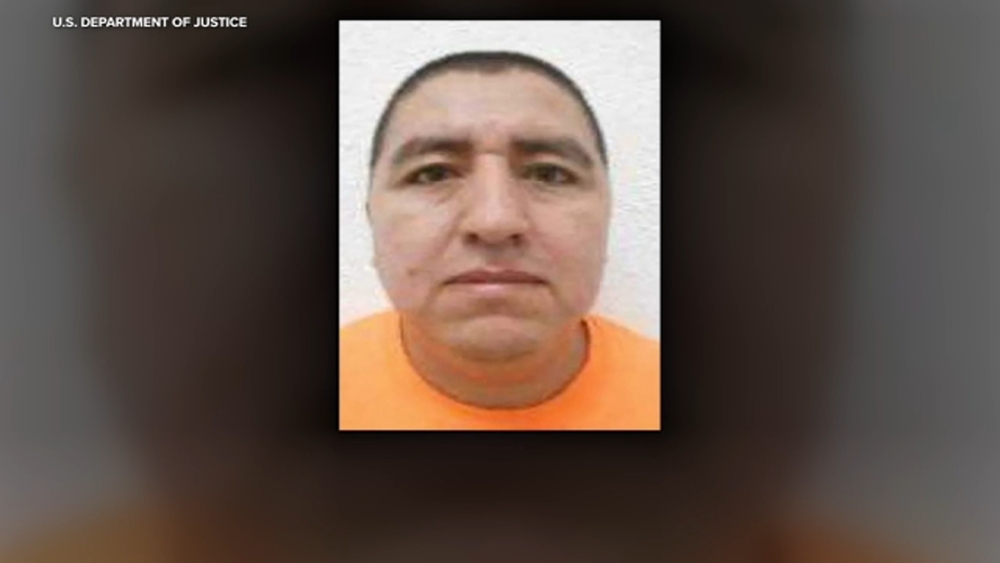
Mexican special forces on Monday captured Audias Flores Silva, known as "El Jardinero," one of the highest-ranking commanders of the Jalisco New Generation Cartel and a man widely viewed by U.S. and Mexican analysts as a likely successor to the cartel's slain founder, Nemesio Oseguera Cervantes. The arrest, which involved more than 500 troops, six helicopters and 19 months of prior surveillance, ended without a single shot fired and added to a steady run of senior cartel takedowns since President Claudia Sheinbaum took office.
Flores Silva was hiding in a roadside drainage ditch outside the community of El Mirador, in the western state of Nayarit, roughly 20 kilometers north of Puerto Vallarta, when Mexican Navy special forces took him into custody. Mexico's Secretary of Security and Citizen Protection, Omar García Harfuch, announced the capture on his X account Monday afternoon, calling it the result of "a planned, developed, and executed operation by the Secretariat of the Navy."
The operation was conducted with U.S. assistance, including aerial surveillance, a Mexican security official confirmed on condition of anonymity. Flores Silva was the subject of a $5 million reward from the U.S. State Department and is wanted for extradition on charges that include conspiracy to distribute cocaine and heroin.
The takedown
The Navy's account of the operation describes a heavily defended position that collapsed under coordinated pressure rather than a firefight. Special forces moved on a cabin in El Mirador where Flores Silva was reportedly being protected by a perimeter of roughly 30 pickup trucks and more than 60 armed men.
As the cordon tightened, his security detail scattered, apparently as a deliberate diversion. Flores Silva did not flee with them. He attempted to conceal himself in a drainage ditch a short distance from the cabin, where he was eventually located and arrested without resistance.
"The operation was carried out with surgical precision without a single shot being fired," the Navy said in its statement. Aerial footage released by García Harfuch on social media showed helicopters circling the area as the arrest unfolded.
Hours later, Mexican authorities announced a follow-up arrest in the central city of Zapopan: Cesar Alejandro N., known as "El Güero Conta," whom officials described as Flores Silva's chief financial operator. He is accused of laundering cartel proceeds through shell companies and frontmen, and of acquiring aircraft, vessels, ranches, and stakes in tequila production businesses.
Who Flores Silva is
Flores Silva, originally from Huetamo in the state of Michoacán, served as El Mencho's head of security before rising into a regional command role. The U.S. Treasury Department designated him a "significant foreign narcotics trafficker" in April 2021 and added him to a fresh package of sanctions in June 2025, citing his control of clandestine methamphetamine laboratories and his role in coordinating aircraft and clandestine airstrips along Mexico's Pacific coast.
His territorial portfolio at the time of arrest covered Nayarit, Jalisco, Zacatecas, Michoacán, Guerrero, and parts of Mexico State — a contiguous swath of the cartel's most productive operating ground. According to Mexican security officials, he ran the cartel's drug laboratory networks, smuggling routes, and U.S. distribution chains.
His criminal record stretches back more than a decade. He was arrested in the United States as a young man and served a five-year sentence for drug trafficking before returning to Mexico after his release. In 2016, Mexican authorities took him into custody for his alleged role in a 2015 ambush against police officers in Soyatlán, Jalisco. He was released three years later. Since 2021, the United States has sought his extradition on drug conspiracy and firearms charges.
Carlos Olivo, a former U.S. Drug Enforcement Administration assistant special agent in charge and a longtime CJNG specialist, said the arrest will reverberate further inside the cartel than the killing of its founder. "He's a significant figure," Olivo said. The capture, he added, "will have a bigger effect on CJNG operations than Mencho being taken out."
Aftermath in Nayarit
News of the arrest triggered immediate retaliatory violence in Nayarit. Local outlets reported burning vehicles, torched businesses, and improvised roadblocks across multiple municipalities, including Tecuala, Ahuacatlán, and Ixtlán del Río, with detonations and gunfire reported in several communities through the night.
The pattern echoes — though so far at smaller scale — the unrest that followed El Mencho's killing on February 22 in Tapalpa, Jalisco. That operation set off a wave of attacks across roughly 20 Mexican states, leaving more than 70 people dead, including 25 members of the National Guard.
Mexican security analyst David Saucedo described the latest arrest as a "significant blow" to a CJNG leadership structure still in the process of reorganizing after El Mencho's death. He cautioned, however, that history points to limits. Criminal groups "can quickly reinvent themselves despite the arrest of their leaders," Saucedo said, and even after major losses "they can continue" their core activities.
The political context
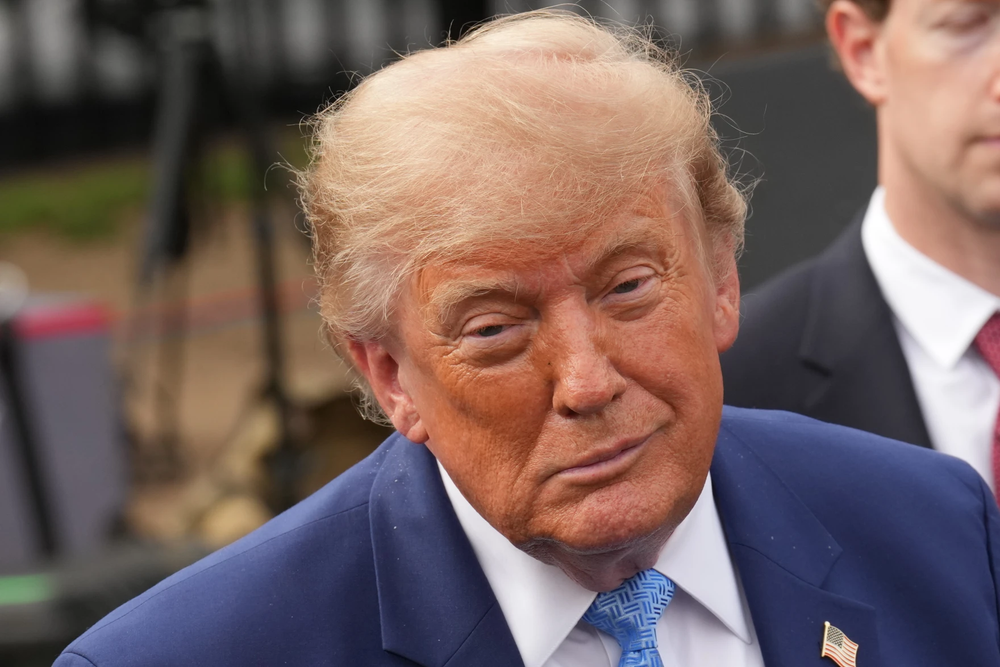
The capture of Flores Silva lands at a politically charged moment for Sheinbaum, who has been moving more aggressively against Mexico's largest cartels than her immediate predecessors. The shift comes under steady pressure from the Trump administration, which last year designated CJNG and five other Mexican cartels as foreign terrorist organizations and has repeatedly threatened unilateral U.S. military action if Mexico fails to act.
Trade leverage is also in play. The Trump administration in 2025 tied tariff threats to what it deemed insufficient Mexican action on fentanyl trafficking and migration, and the United States, Mexico, and Canada are now working through a renegotiation of their shared free trade agreement.
U.S. Ambassador to Mexico Ronald Johnson said in a post on X that the arrest marks "a significant step forward in the fight against those who profit from fentanyl and fuel violence in our communities." He added: "Actions like this strengthen security and help dismantle criminal networks that threaten our communities. Together, we achieve results that make our nations safer."
The cooperative framing notwithstanding, friction between the two governments has surfaced this month. Sheinbaum used her Monday morning press conference — held hours before the El Jardinero arrest was announced — to warn Washington against repeating the kind of unauthorized U.S. presence that ended in tragedy on April 19, when two CIA officers and two Mexican officials were killed in a vehicle accident in Chihuahua during an anti-narcotics operation. Mexico delivered a formal diplomatic note to the U.S. government over the matter. "Let us hope this is an exceptional case," Sheinbaum said, "and that a situation like this never happens again."
Mexico's Ministry of Security has said one of the deceased CIA officers had entered Mexico as a tourist, while the other had used a diplomatic passport. The agency reiterated it had not been informed of any foreign operatives working on Mexican soil. The CIA has declined to comment.
The cartel's reach
Even with Monday's twin arrests, the CJNG remains one of the most formidable transnational criminal organizations in the Western Hemisphere. The DEA acknowledges the cartel's presence in 21 of Mexico's 32 states — exceeding the Sinaloa Cartel's 19. Some Mexican analysts place CJNG's footprint as high as 25 states, with its operational stronghold in Jalisco. Its trafficking networks extend to roughly 100 countries, including the United States.
García Harfuch — whose pursuit of El Mencho carried personal weight after a 2020 assassination attempt that killed two of his bodyguards — has publicly framed the dual takedown as part of a methodical, surveillance-driven campaign rather than a single strike. The next test of that approach will be whether the cartel can again replace a senior figure quickly, or whether the loss of Flores Silva and the disruption of his financial machinery slows its reconstitution. Several other regional leaders had been positioned to compete for the top job. With El Jardinero now in federal custody and an extradition request pending, the field has narrowed once more.
Mexico's security posture is also under heightened scrutiny abroad. The country is preparing to co-host the FIFA World Cup this summer with the United States and Canada, an event that will draw an unprecedented level of international attention to Mexican law enforcement and border security in a year already shaped by cartel violence and U.S.-Mexico political strain.
Author

We cover the world’s chaos so you don’t have to scroll twelve feeds to understand it.
Sign up for Atlas newsletters.
Stay up to date with curated collection of our top stories.