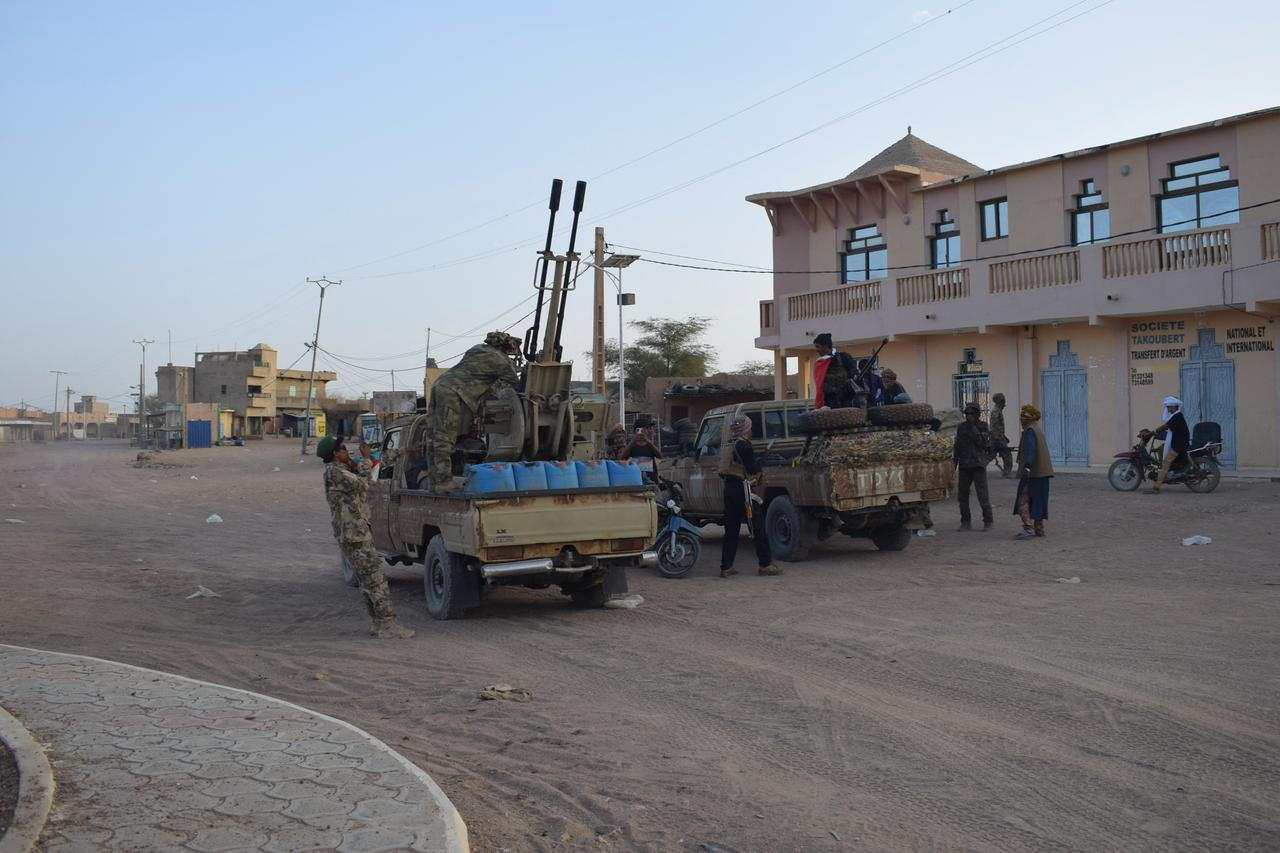
Malian Defense Minister Gen. Sadio Camara was killed Saturday after a suicide truck bomber detonated a vehicle-borne improvised explosive at his residence in the garrison town of Kati, the Malian government confirmed Sunday evening. His death capped a coordinated, nationwide assault that struck the capital Bamako, the airport, and at least four other cities, and ended with Russian-backed Malian forces pulling out of the strategic northern town of Kidal.
Government spokesman Gen. Issa Ousmane Coulibaly read the official confirmation on state television. The statement said Camara exchanged fire with the attackers and "succeeded in neutralizing some of them" before being wounded and evacuated to a hospital, where he died of his injuries. The blast also collapsed a section of the residence and destroyed an adjacent mosque, killing several worshippers and neighbors. Camara's second wife and two of his grandchildren are reported to be among the dead.
Two armed groups have claimed joint responsibility: the al-Qaeda-linked Jama'at Nusrat al-Islam wal-Muslimin (JNIM) and the Tuareg-led Azawad Liberation Front (FLA). The coordination between the two — long fighting Mali's army for separate ends — is the most significant operational development analysts have noted in the country's overlapping insurgencies in years.
A wave of attacks across the country
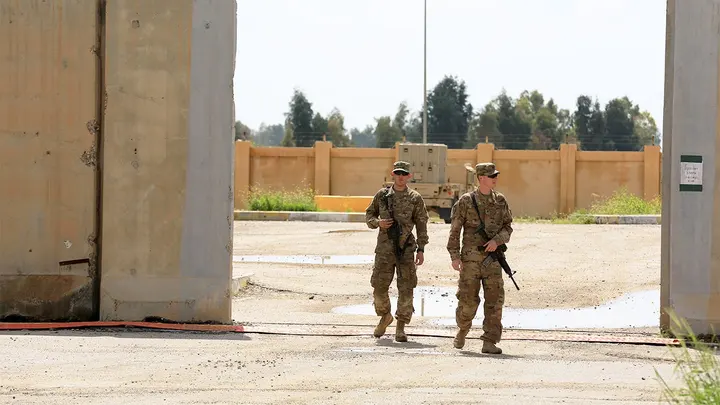
The Saturday assaults hit Bamako's international airport, the central cities of Sevare and Mopti, and the northern cities of Gao and Kidal. Army Chief of Staff Gen. Oumar Diarra said on state TV that more than 20 attacks were launched across the country and that Malian forces had "neutralized" more than 200 fighters and recovered a significant cache of military equipment. He acknowledged that some attackers had infiltrated by wearing Malian military uniforms.
Diarra confirmed that government forces had withdrawn from Kidal and were repositioning around Anefis, roughly 100 kilometers (62 miles) to the south. The FLA said it had reached an agreement with elements of Russia's Africa Corps to allow them to evacuate a besieged camp outside the city in exchange for a peaceful exit. "Kidal is now free," FLA spokesman Mohamed El Maouloud Ramadane said.
The town had been a stronghold of the Tuareg rebellion for more than a decade before Malian government forces and Russian mercenaries took it in late 2023 — a victory the junta had treated as the turning point of its security strategy. Its loss less than three years later carries a heavy symbolic weight.
The Malian armed forces, in a separate statement, said operations were continuing across multiple fronts and that the violence "will not go unanswered." A nationwide alert was issued, with reinforced checkpoints, expanded patrols, and a 9 p.m.-to-6 a.m. curfew imposed in Bamako through Monday.
Interim President Gen. Assimi Goita, whose own residence in Kati was reportedly targeted, was moved to a secure location. Russian state broadcaster Vesti reported Sunday that personnel from Russia's Africa Corps, alongside Mali's Presidential Guard, had repelled what it described as an attempt to seize the presidential palace, with several Russian fighters wounded.
Who Camara was
Camara, born in 1979, was a career officer who received part of his military training in Russia. He emerged as a central figure after the August 2020 coup that toppled President Ibrahim Boubacar Keita and was retained as defense minister through the 2021 reshuffle that consolidated the junta's grip on power.
More than any other figure in Goita's circle, Camara was the architect of Mali's strategic turn away from France, the United States, and the United Nations toward Russia. The withdrawal of French Operation Barkhane forces, the dismantling of MINUSMA, and the arrival of Wagner Group fighters — later folded into Russia's Africa Corps after Yevgeny Prigozhin's death in 2023 — all happened on his watch.
He was widely viewed inside the country as one of the few figures with enough institutional standing to potentially succeed Goita. "His death is a major blow to the country's armed forces," said Nicolas Haque, who has reported extensively from Mali, on Al Jazeera. Djenabou Cisse, an associate fellow at the Foundation for Strategic Research, described Camara as "a key figure within the junta and a central architect of the Mali–Russia rapprochement," adding that his removal would "underscore JNIM's capacity to strike at the core of state power."
A turning point for Russia's footprint in the Sahel
The damage to Russia's standing in Mali is harder to quantify but no less serious. The Africa Corps, the unit that absorbed Wagner's operations, was deployed precisely to do what Saturday's events showed it could not: anticipate and prevent a major coordinated assault on Malian command nodes.
"The attacks are a major blow to Russia as the mercenaries had no intelligence about the attacks and were unable to protect major cities," said Ulf Laessing, head of the Sahel program at the Konrad Adenauer Foundation. "They have unnecessarily worsened the conflict by not distinguishing between civilians and combatants."
The FLA, in a statement after the Kidal withdrawal, called on Moscow to "reconsider its support for the military junta in Bamako, whose actions have contributed to the suffering of the civilian population." It was the first time the rebel front has framed its appeal directly to Russia.
The Russian embassy in Bamako condemned the "cowardly" attacks. Russia's foreign ministry, in a separate statement, suggested without evidence that "Western security forces may have been involved in their training" — a familiar line from Moscow that has not been substantiated and that fits a pattern of Russian deflection in past Sahel reverses. Mali itself severed diplomatic ties with Ukraine in 2024 over similar accusations, which Kyiv denied.
Regional and international response
The African Union Commission, the Economic Community of West African States, the Organization of Islamic Cooperation, the United States Bureau of African Affairs, and the European Union all condemned the attacks. U.N. Secretary-General António Guterres said he was "deeply concerned" and called for a coordinated international response to violence across the Sahel.
Burkina Faso's military leader Ibrahim Traoré, who heads the Alliance of Sahel States that includes Mali and Niger, called the assaults "barbaric and inhumane" and said they were "backed by the enemies of the Sahel liberation struggle."
Wassim Nasr, a Sahel specialist at the Soufan Center, said the joint operation marked a clear shift in the conflict. "The coordination, conducting attacks all over the country at the same time, real coordination on the military level but also on the political level, because both groups acknowledged that they worked together — this is a first," he said.
The state of the war is now substantively different from what it was 72 hours ago. Kidal is back in rebel hands. The defense minister is dead. The Africa Corps is in retreat from a city it had held for two and a half years. JNIM and the FLA — for years on opposite sides of an internecine conflict — have publicly committed to operating together, and demonstrated that they can.
Whether Bamako falls under threat next is a separate question. Laessing and other analysts caution that JNIM is unlikely to take the capital in the near term given local opposition. Saturday's fuel-blockade tactics that have been squeezing Bamako for weeks, however, suggest the group's strategy is attritional rather than territorial — and that this past weekend may be the start of a new phase, not its peak.
Author

We cover the world’s chaos so you don’t have to scroll twelve feeds to understand it.
Sign up for Atlas newsletters.
Stay up to date with curated collection of our top stories.