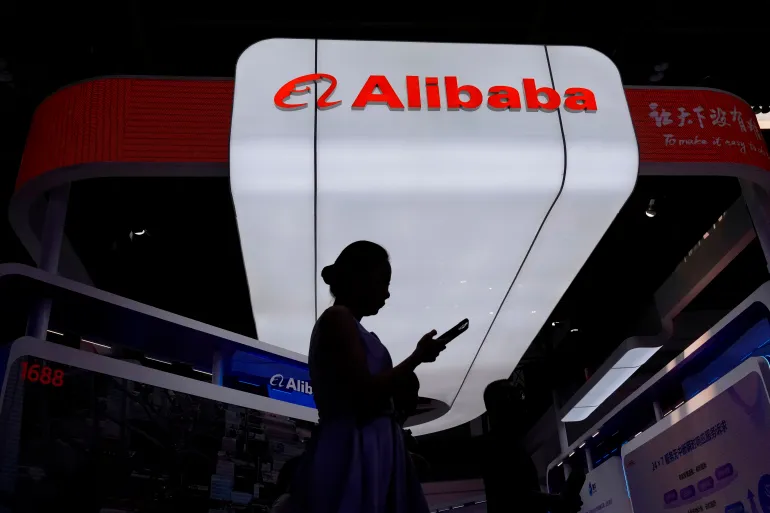
The Pentagon expanded its roster of Chinese firms it says support Beijing's military on Monday, adding some of China's best-known brands, including the e-commerce giant Alibaba, the search company Baidu, and the electric-car maker BYD.
The update brought the list to 188 companies, up from roughly 130 a year earlier, and pulled in names that few would think of as defense contractors. With Alibaba and Baidu now on it, the roster covers China's three largest publicly traded internet firms, a group worth somewhere near $850 billion combined. Tencent, the third, was added last year.
The designation runs under what is known as the 1260H list, named for the section of the 2021 defense authorization law that created it. The Defense Department is required to update it at least once a year.
What a listing actually does
Being named is not a sanction, and that distinction matters. The companies can keep operating in the United States, and no assets are frozen.
What the label does is cut them off from the Pentagon's business. Under the rules, the Defense Department will be barred from contracting directly with listed firms starting later this month, and from buying their products or services through outside vendors beginning in 2027. The filing describes the companies as "military-civil fusion" contributors to China's defense industrial base, tied to the Ministry of Industry and Information Technology.
The indirect reach is where the pressure lands. Analysts note that the third-party restriction could force American firms that supply the U.S. military to drop designated Chinese companies from their own supply chains rather than risk their government contracts.
The additions stretched well beyond the headline names. The Pentagon also listed the biotech firm WuXi AppTec, the EV maker Nio, battery producers CALB and EVE Energy, the solar companies JA Solar and Trina Solar, display makers BOE and Tianma, the networking-gear company TP-Link, and the lidar maker RoboSense. Two memory chipmakers, CXMT and YMTC, were put back on after being dropped from an earlier draft.
One newer name drew particular notice: Unitree Robotics, the Hangzhou humanoid-robot maker whose dancing machines recently appeared on "America's Got Talent." Just a week earlier, Nvidia had said it planned to work with Unitree on robots for researchers.
A reality check after the summit
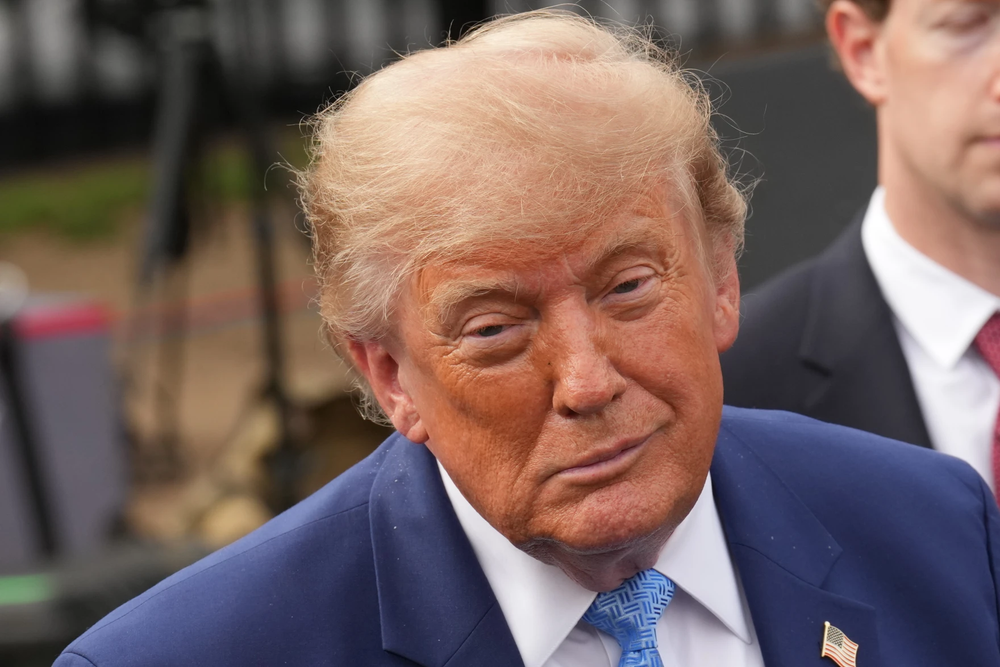
The timing was hard to miss. The list landed less than a month after President Donald Trump met Xi Jinping in Beijing, a summit that produced a trade truce and a joint investment board, and after Trump invited Xi to Washington for a reciprocal visit in September.
The February version of this same list had been posted and then yanked offline the same day, without explanation, while the Beijing trip was still being arranged. Monday's release largely matched that withdrawn draft, with the chipmakers added back.
To some China analysts, the sequence was deliberate. "It serves as a post-summit reality check," said Craig Singleton of the Foundation for Defense of Democracies, who argued the administration was using the window after the meeting to apply pressure while leaving room before any September visit to manage the fallout. Washington, he added, is "treating the entire technology stack as strategically contested" rather than going after individual firms.
Beijing and the companies push back
The reaction from China was quick and sharp. Its embassy in Washington called the move an abuse of national security powers and accused the United States of "overstretching" the concept to target Chinese firms, urging it to create what it called a fair and nondiscriminatory environment.
The companies themselves rejected the label and signaled they would fight it. Alibaba said there was no basis for its inclusion and that it would take all available legal action against what it called a misrepresentation. Baidu "categorically" rejected the designation as baseless and said it would use every option to get off the list. WuXi AppTec called its listing incorrect and pledged immediate action to challenge it. BYD did not respond to requests for comment.
Investors took some notice, though the reaction was muted. Baidu's U.S.-traded shares fell about 2 percent, while Alibaba and BYD each slipped under 1 percent.
In Washington, the response from China hawks was the opposite. Rep. John Moolenaar of Michigan, who chairs the House committee on competition with China, called the update a warning to American business and government alike and said any listed firms traded on U.S. exchanges should be delisted and stripped from supply chains.
Whether the label bites
For all the noise, there is real disagreement about how much the listing changes on the ground.
Companies have fought their way off before. The smartphone maker Xiaomi sued and won removal in 2021, and Tencent has said it intends to challenge its own designation. Firms can also drop off for mundane reasons, such as ceasing U.S. operations or changing their names.
Some experts question whether a list this broad accomplishes much. Dennis Wilder, who worked on China at the CIA and the National Security Council, called the approach a "broad-brush" effort and doubted it would change behavior without real penalties attached. Many American firms already have deep ties to the named companies, he said, and "sanctions that range this widely are sanctions that don't work."
Others see the listing as a marker of intent rather than an endpoint. One China researcher noted the move stops short of an investment or export blacklist and is largely symbolic for now, while adding that he did not expect the Treasury or Commerce departments to impose tougher formal restrictions on prominent Chinese firms this year, with both governments still trying to keep relations steady.
Author
We cover the world’s chaos so you don’t have to scroll twelve feeds to understand it.
Sign up for Atlas newsletters.
Stay up to date with curated collection of our top stories.