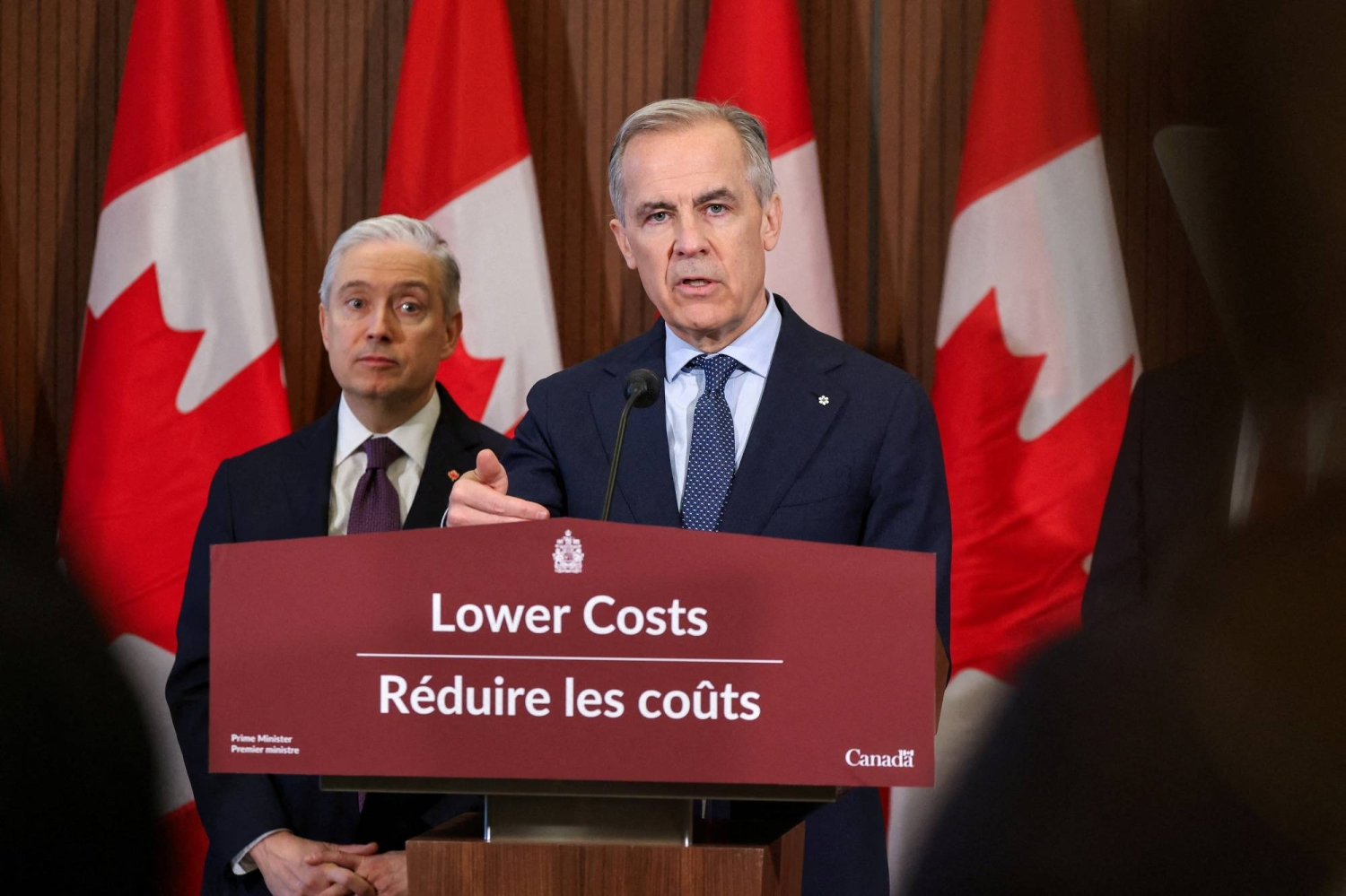
Prime Minister Mark Carney used a direct-to-camera video address Sunday to tell Canadians that their country's deep economic integration with the United States, long treated as a bedrock of prosperity, has turned into a vulnerability that must be corrected.
"The world is more dangerous and divided," Carney said in the roughly 10-minute video, released on YouTube under the title "Forward Guidance." "The U.S. has fundamentally changed its approach to trade, raising its tariffs to levels last seen during the Great Depression. Many of our former strengths, based on our close ties to America, have become weaknesses — weaknesses that we must correct."
The prime minister did not mention President Trump by name, but the subtext was unmistakable. "The U.S. has changed and we must respond," he said, framing the message as the first in a planned series of regular addresses. "I will never sugarcoat our challenges. Instead, I'll talk to you directly and regularly about the plan."
A format borrowed from the central bank
The title of the video was a deliberate callback to Carney's previous career. He led the Bank of Canada during the 2008 financial crisis and later the Bank of England through the turbulence surrounding Brexit, where "forward guidance" was central bank terminology for signaling policy intent to markets.
"It was designed to assure people that, however difficult the situation seemed on any given day, that we were acting, and importantly, that we would continue to act with overwhelming force against our problems until they were solved," Carney said. "And that's the spirit I'm talking to you about today."
The setting was unusually personal. On his desk sat a miniature figurine of Major-General Sir Isaac Brock, the British officer who died defending Upper Canada against a U.S. invasion in the War of 1812. Carney said the piece had been given to him roughly a year ago by actor Mike Myers.
"Brock was a hero who fought and gave his life for our forebearers in the War of 1812," Carney said. "Before Canada even existed on paper, it had a shape in Brock's imagination." He went on to cite Shawnee leader Tecumseh, who united Indigenous nations against American expansion, and Colonel Charles de Salaberry, who turned back a U.S. force in Lower Canada in 1813.
Fen Osler Hampson, Chancellor's Professor at Carleton University and co-chair of its expert group on Canada-U.S. relations, read the historical allusions as deliberate. The prime minister, he said, was signaling that Canada is "in a battle for our own survival," and that he intends to keep the public informed through periodic addresses in the manner of Franklin D. Roosevelt's fireside chats.
The tariff backdrop
The economic conditions driving the speech are concrete. The United States has layered duties on a range of Canadian exports, including a 10 percent baseline tariff on goods not covered by the Canada-U.S.-Mexico Agreement, a 50 percent levy on products that are almost entirely steel, aluminum, or copper, a 25 percent rate on items largely composed of those metals, and a 15 percent tariff on many types of Canadian heavy equipment.
Roughly 70 percent of Canadian exports go to the United States. Ottawa has said the cumulative effect has been to displace workers, disrupt supply chains, force firms to reconsider sourcing, and suppress investment in an environment of persistent uncertainty.
Carney pointed directly to those pressures. "Workers in our industries most affected by U.S. tariffs in autos and steel and lumber are under threat," he said. "Businesses are holding back investments restrained by the pall of uncertainty that's hanging over all of us."
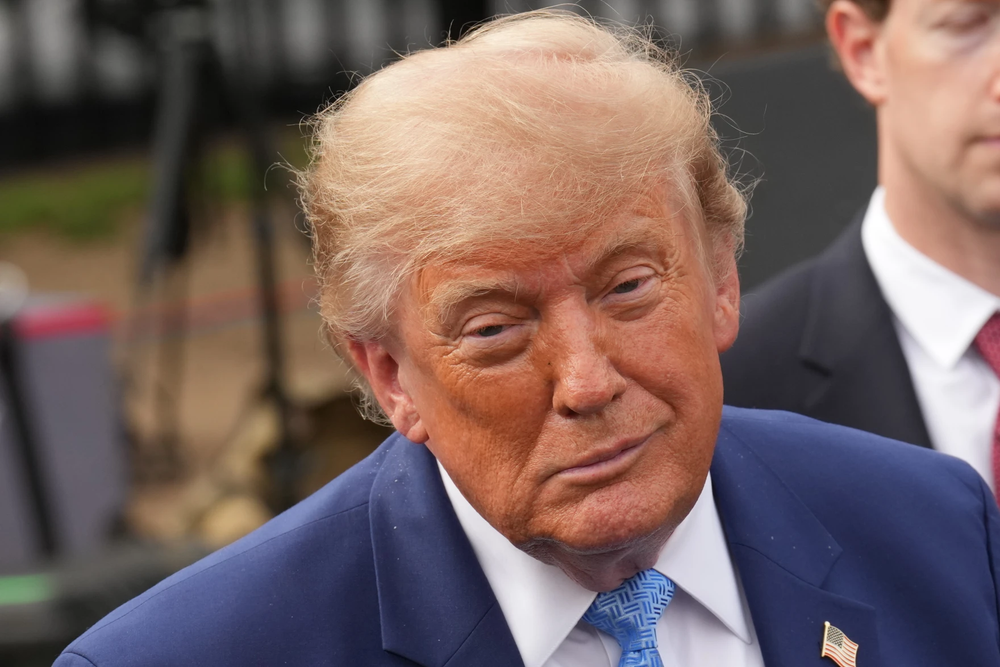
He also referenced Trump's repeated musings about annexing Canada as the 51st state — comments that have drawn sustained objection from Canadian officials of both parties — without naming the president.
The speech came two days after Commerce Secretary Howard Lutnick publicly derided Canada's approach to negotiations. "That is, like, the worst strategy I've ever heard," Lutnick said of the Canadian side's view that time was on its negotiators' side. "They suck, they — look, we are a $30-trillion economy, right?" He also singled out Ottawa's recent deal with Beijing, under which Canada agreed to admit 49,000 Chinese electric vehicles at a 6.1 percent tariff in return for lower Chinese duties on Canadian canola, lobster, crab, and peas. "Is this nuts?" Lutnick said.
The political moment
Carney delivered the address days after securing a parliamentary majority for his Liberal government in a series of special elections, giving him greater latitude to act without the support of other parties. A scheduled review of the continental trade agreement is set for July, and U.S. officials have signaled they want substantial changes.
Deborah Yedlin, chief executive of the Calgary Chamber of Commerce and a former colleague of Carney's at Goldman Sachs, described the video as "a measured explanation of the government's strategy" and "in part, a plea for patience."
Carney used the address to make a case against a wait-and-see approach favored by his political opponents. "There are some who say there's no need for a comprehensive plan. They believe we should wait it out in the hope that the United States will return to normal, that the good old days will come back," he said. "But hope isn't a plan, and nostalgia is not the strategy."
The rebuttal from the Conservative Party was swift. Deputy leader Melissa Lantsman released her own video accusing the prime minister of substituting rhetoric for results. "What has Carney delivered? More speeches, more so-called guidance, more agreements to make agreements," she said. "Canadians don't need forward guidance. They live in the real world, not the Bank of Canada press conference world." In a separate post, she wrote that "one year later, we're still waiting for the bold part."
The road ahead
Carney laid out the broad strokes of the response he intends to pursue: attracting new foreign investment, doubling Canada's clean energy capacity, reducing internal trade barriers among the provinces, increasing defense spending, cutting taxes, and expanding housing affordability programs. He pointed to recent trips abroad as part of a push to "strike new partnerships abroad so we can sell into new markets."
A Royal Bank of Canada study published last week, "The Growth Project," argued that reducing reliance on the United States would require investment of roughly $1.8 trillion over the next decade and a "step change" in policy across oil and gas, mining, electricity, agriculture, space, and defense.
Carney closed the address by returning to the figurine on his desk and a broader appeal to national cohesion. "We have to take care of ourselves because we can't rely on one foreign partner," he said. "We can't control the disruption coming from our neighbors. We can't bet our future on the hope that it will suddenly stop. But we can control what happens here."
There was no immediate reaction from the White House Sunday evening. Carney's office did not respond to questions about the timing of the video or the choice to highlight figures who resisted American expansion. The next round of direct engagement between the two governments is expected around the CUSMA review process this summer.
Author

We cover the world’s chaos so you don’t have to scroll twelve feeds to understand it.
Sign up for Atlas newsletters.
Stay up to date with curated collection of our top stories.