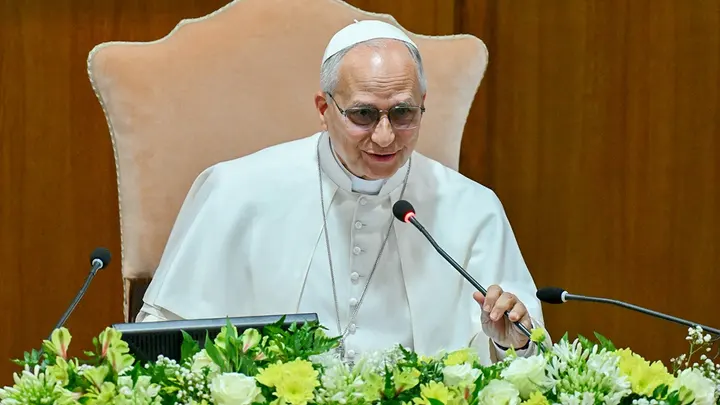
Pope Leo XIV used the first encyclical of his papacy to call for artificial intelligence to be “disarmed,” placing the Vatican directly into the center of a debate now being fought by governments, technology companies, military planners, labor leaders, and ethicists. The document, Magnifica Humanitas, was released Monday at the Vatican and runs nearly 43,000 words. It is the most formal statement yet from the Catholic Church on artificial intelligence and one of the strongest interventions by any global religious leader on the technology’s political and moral consequences.
Leo’s core argument was not that AI should be rejected. He wrote that technology can serve human development when it remains subordinate to human dignity, public accountability, and the common good. His warning was directed instead at the systems of power developing around AI: private control of data, military automation, mass displacement of workers, and the use of algorithmic tools to classify, monitor, exclude, or target people.
“AI now demands to be disarmed,” Leo said, calling for it to be freed from the forces that could turn it into an instrument of “domination, exclusion, and death.” He compared the challenge to nuclear energy, arguing that a powerful technology must remain in service to the public good rather than the narrow interests of states, corporations, or military planners.
The meaning of “disarmed”
Leo’s use of the word “disarmed” was deliberate. He did not define it as abandoning artificial intelligence or halting scientific work. The encyclical instead treated disarmament as a political and moral act: removing AI from incentive structures that reward speed, concentration of power, secrecy, and strategic dominance.
He called for “robust legal frameworks, independent oversight, informed users and a political system that does not abdicate its responsibility.” The point was that voluntary ethics statements from companies are not enough if the underlying decisions remain controlled by a small group of executives, engineers, investors, and national security officials.
The pope argued that AI systems are not neutral tools. They reflect the choices of those who design them, the data used to train them, the incentives behind their deployment, and the institutional goals they are made to serve. In that framework, the question is not only whether an AI model works, but what it is being optimized to do and who bears the cost when it is wrong.
Leo was especially critical of the concentration of data and technical capacity in private hands. He warned that a small number of companies and powerful actors could shape information flows, consumer behavior, political debate, and economic patterns in ways that are difficult for citizens or governments to see.
His answer was not a single global regulator or a specific law. It was a demand that elected governments, civil society, researchers, and religious institutions treat AI as a public question rather than a private industry problem.
War, weapons, and lethal decisions
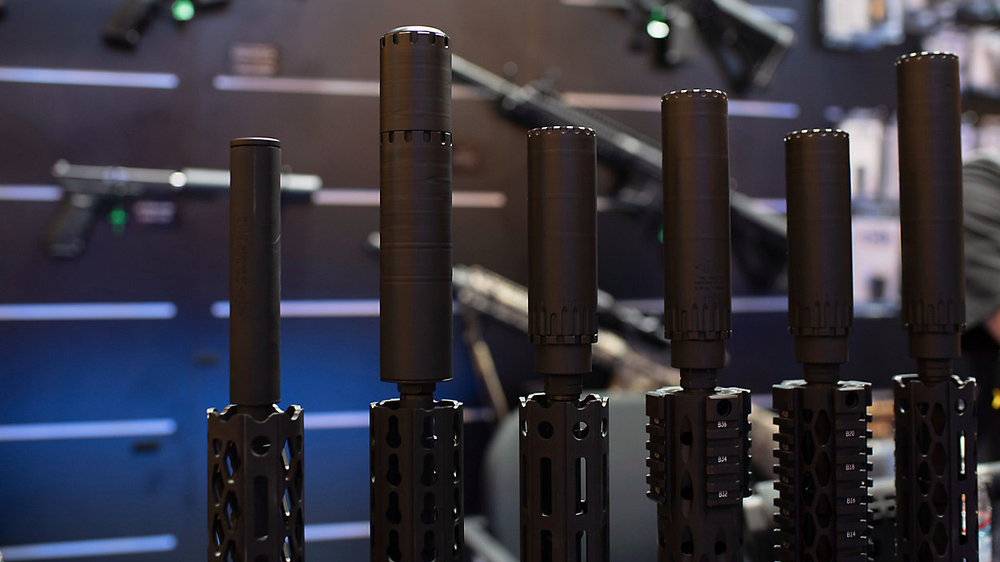
The strongest passages in the encyclical concerned war. Leo wrote that artificial intelligence is already altering the conduct of conflict by making targeting faster, more remote, and potentially less accountable. He said autonomous weapons systems have advanced to the point that some appear to be moving beyond meaningful human control.
The pope said it is “not permissible” to entrust lethal decisions to AI systems. Any use of artificial intelligence in warfare, he wrote, must be subject to the strictest ethical constraints. His concern was not limited to fully autonomous weapons. He also pointed to AI-supported targeting, algorithmic decision chains, drone swarms, cyber operations, and information warfare as areas where human responsibility can become blurred.
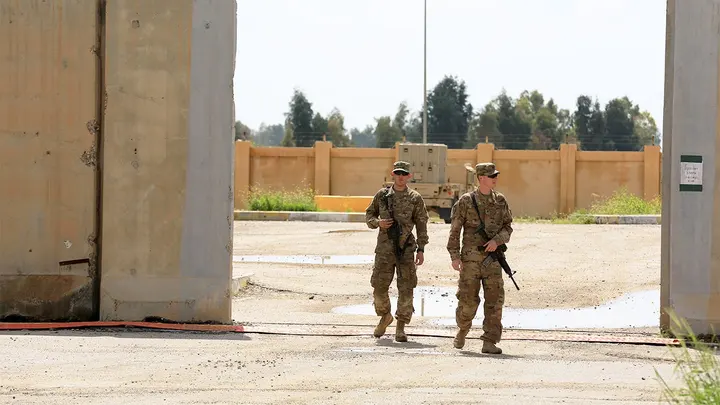
That warning has immediate political context. The United States, China, Israel, Russia, and several European states are all investing heavily in AI-enabled military systems. The technology is being explored for target identification, battlefield logistics, intelligence analysis, drone coordination, cyber defense, and command support. Leo’s encyclical entered that debate by making a clear moral distinction: machines may assist humans, but they cannot replace human judgment in decisions over life and death.
The document also marked one of the clearest papal repudiations of the traditional “just war” framework in its modern use. Leo wrote that the theory has too often been used to justify force and is now outdated in an age of advanced weapons, automated systems, and mass civilian exposure. He wrote that no algorithm can make war morally acceptable.
Labor, inequality, and new forms of control
The encyclical placed labor at the center of the AI debate. Leo signed the document on May 15, the 135th anniversary of Rerum Novarum, Pope Leo XIII’s landmark 1891 encyclical on workers’ rights during the Industrial Revolution. The parallel was intentional. The new pope framed AI as a comparable turning point, one that could reorder work, wealth, and political power.
He warned that automation could raise productivity while reducing workers to narrow, repetitive, monitored tasks. He wrote that the pursuit of profit cannot justify the systematic sacrifice of jobs, because the human person is an end and not a means. He also argued that the market alone cannot be trusted to manage the transition, especially when the companies developing the technology have strong incentives to move faster than public institutions can respond.
Leo also extended the discussion beyond white-collar displacement. He referred to “new forms of slavery” tied to the digital economy: content moderators exposed to disturbing material, workers in supply chains, and children extracting rare earth minerals used in devices and computing infrastructure. He described bodies being worn down so that the “computational flow” can continue uninterrupted.
The argument was broader than job loss. Leo was describing a system in which the burdens of AI may be pushed onto people least able to benefit from it: workers in poorer countries, children, low-wage moderators, people filtered by opaque decision systems, and communities affected by the infrastructure required to run large-scale AI.
A Vatican document with Silicon Valley in the room
The Vatican presented the encyclical alongside several experts, most notably Christopher Olah, a co-founder of Anthropic. His presence drew attention because Anthropic is one of the leading AI companies and has been involved in a legal fight with the Trump administration over military access to its models.
Olah told the Vatican audience that frontier AI labs operate under incentives and constraints that can conflict with doing the right thing. He said decisions about AI should not be left only to computer scientists or industry leaders, because the consequences reach far beyond engineering.
The Vatican’s inclusion of an AI executive was not treated by officials as an endorsement of the company. It was presented as part of a broader dialogue the church has pursued with technology leaders for years. Still, the optics were notable: a pope warning about the concentration of private technological power while appearing with a senior figure from one of the most powerful AI firms in the world.
That tension did not weaken the message. It sharpened it. Leo was not writing from outside the modern technological order. He was addressing it directly, in the presence of one of its builders.
A call for limits before the system hardens
What makes Magnifica Humanitas important is not that it introduced a technical policy program. It did not. Its significance lies in the moral boundary it tried to draw before AI becomes even more embedded in government, markets, weapons systems, schools, hospitals, and private life.
Leo’s position was that artificial intelligence must remain answerable to human beings and human institutions, not the other way around. He called for slower adoption where necessary, stronger safeguards, protection for children and workers, transparency in military use, and limits on private control of the data and systems now shaping public life.
The encyclical does not settle the AI debate. It gives it a new reference point. In Leo’s framing, the issue is no longer simply whether artificial intelligence will make economies more efficient or militaries more capable. The issue is whether societies will retain enough political and moral control to prevent the technology from becoming a system of management over human life itself.
Author

We cover the world’s chaos so you don’t have to scroll twelve feeds to understand it.
Sign up for Atlas newsletters.
Stay up to date with curated collection of our top stories.