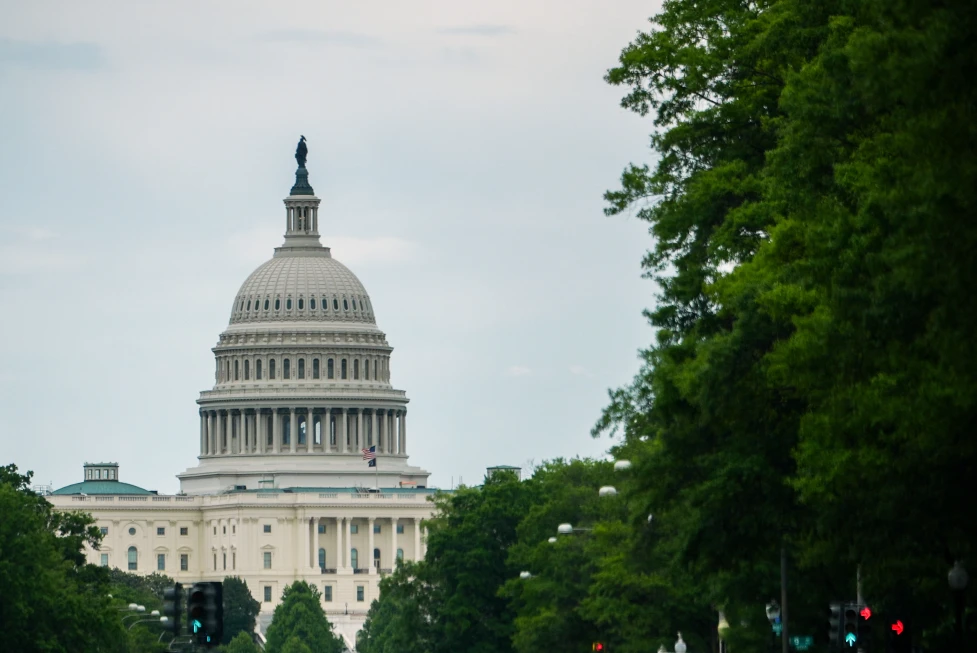
The U.S. Senate unanimously approved a resolution on Thursday to withhold senators' salaries during future government shutdowns, an attempt to share some of the financial pain that has fallen on federal workers during a record stretch of funding lapses.
The measure was adopted by voice vote. A day earlier, it had cleared a procedural hurdle 99-0 with one senator absent. Majority Leader John Thune of South Dakota and Minority Leader Chuck Schumer of New York both publicly backed it ahead of the vote.
Sponsored by Sen. John Kennedy, Republican of Louisiana, the resolution directs the secretary of the Senate to withhold pay any time one or more federal agencies are unfunded. Senators do not lose the money outright — it is held in an escrow account and released as back pay once the government reopens.
"This is about shared sacrifice," Kennedy said on the Senate floor. "This is about putting our money where our mouth is."
Mechanics and the November Trigger
The resolution applies only to the Senate. It does not need House approval or President Donald Trump's signature.
Because the 27th Amendment bars any change to congressional compensation from taking effect before the next House election, the new rule will not begin until after the November 3 midterm vote. That means a shutdown at the end of the fiscal year on September 30 would not be covered, but a lapse in funding later in the year would be.
A "shutdown" under the resolution is defined as the lapse of appropriations for at least one federal department or agency. Partial shutdowns — like the recent funding gap at the Department of Homeland Security — would trigger the pay freeze the same as a full one.
Kennedy said he initially wanted the measure to take effect immediately and to strip senators of pay outright rather than place it in escrow. The escrow language, he said, was an "accommodation" needed to bring colleagues on board.
Two Record Shutdowns
The resolution lands at the end of a stretch in which the federal government has been at least partially closed for much of the past eight months.
In the fall, the entire federal government shut down for 43 days, the longest government-wide closure on record. The trigger was a dispute over the expiration of enhanced Affordable Care Act premium tax credits, with Senate Democrats blocking a stopgap funding bill passed by the House.
That was followed earlier this year by a 76-day partial shutdown of the Department of Homeland Security — the longest funding lapse ever to affect a single federal agency. The dispute centered on immigration enforcement, with Democrats refusing to fund Immigration and Customs Enforcement and Border Patrol without changes such as a requirement that federal agents obtain judicial warrants before entering private homes. The department reopened last month.
Members of Congress continued to draw their $174,000 annual salaries throughout both shutdowns. Federal workers either went on unpaid furlough or worked without paychecks. Some took second jobs to keep up with bills; others defaulted.
The Constitution itself effectively guarantees lawmaker pay, and a permanent appropriation dating to 1983 has insulated congressional salaries from the regular appropriations cycle.
Kennedy's Pitch and Other Voices
Kennedy, who is not related to the well-known political family, told colleagues that lawmakers "ought to hide our heads in a bag" after the back-to-back closures.
"Shutting down government should not be our default solution to our refusal to work out our issues and our differences," he said.
He also tied the measure to the political calendar, telling reporters he was "very concerned that my Senate colleagues on the Democratic side are going to try to shut down government yet again right before the elections to try to create chaos to affect the midterm elections." If wrong, he said, "I will come here and apologize to every senator by name."
Sen. Roger Marshall of Kansas, a Republican, called the resolution "one more tool in the toolbox" to push senators to the table during funding fights. Sen. Lindsey Graham of South Carolina had previously gone further, proposing a constitutional amendment that would permanently forfeit lawmaker pay during shutdowns rather than escrow it. Graham's amendment never advanced; ratification would have required three-fourths of state legislatures.
The escrow vote followed months of pressure from Kennedy on GOP leadership. Thune ultimately agreed as part of the negotiations that ended the DHS shutdown.
The House and What Comes Next
The resolution does not bind the House of Representatives, where companion legislation has been introduced. Speaker Mike Johnson, Republican of Louisiana, has said only that he will "see what consensus we can build on it."
Kennedy, asked why he had not extended the measure across the Capitol, declined to push the question. "The House's business is the House's business," he said. He acknowledged tension between the chambers: "There's a very strong undercurrent of animosity among some of my friends in the House. It's quickly becoming like two kids fighting in the back of a minivan."
Federal funding lapses again on October 1 unless Congress passes new spending bills or another stopgap. Because the resolution does not take effect until after November 3, any shutdown that begins at the start of the fiscal year would not affect senators' paychecks. A second lapse later in the year would.
Author

We cover the world’s chaos so you don’t have to scroll twelve feeds to understand it.
Sign up for Atlas newsletters.
Stay up to date with curated collection of our top stories.